Leda Takes Back the Mina Doll and Throws It Away
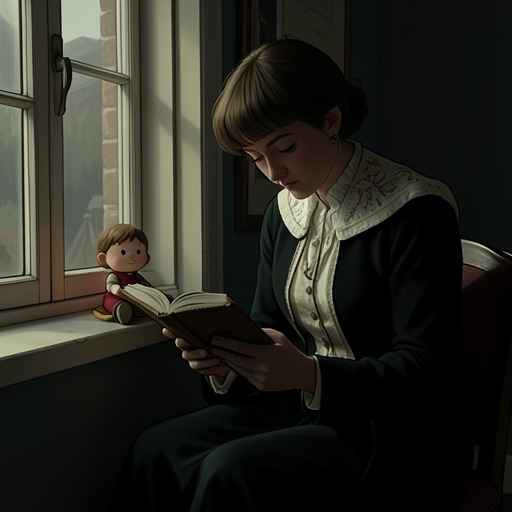
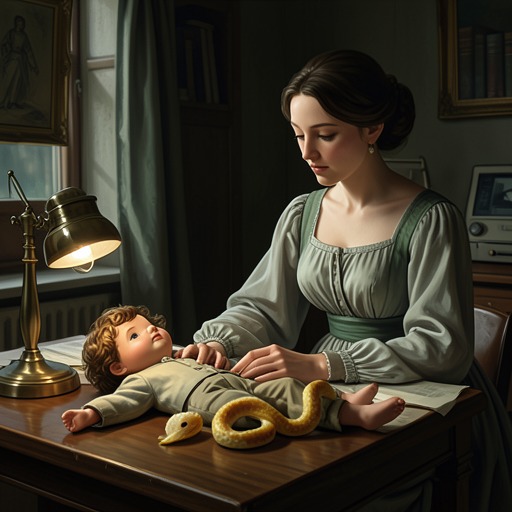
The Lost DaughterLeda Takes Back the Mina Doll and Throws It Away is a flashback to a moment when an attempted gift becomes a violent struggle over possession, memory, and maternal strain. Leda gives Bianca the doll she treasured as a child, then takes it back after finding it defaced; she throws it from the balcony and watches cars mutilate it. The episode exposes the distance between her intention to comfort her daughter and the anger that overtakes her, while Bianca’s response makes the damage more than material.
Background and the Gift
Leda recalls the incident from a period when she felt inadequate and depleted. She describes herself as unable to study, playing without joy, and living in a body that seemed inanimate and without desire. When Marta howled in another room, the interruption could feel like a release: Leda would cut short her game with Bianca to attend to the younger child, leaving Bianca to cry. Leda felt innocent of abandoning her firstborn, telling herself that Marta was the one pulling her away.
Against this background, Leda decided to give Bianca Mina, the doll that had been her own when she was little. She imagined the gift as a way to ease Bianca’s envy of her younger sister, and expected Bianca to care for Mina as devotedly as Leda had in childhood play. Bianca did not share that attachment. She set Mina aside and preferred an ugly rag doll with stringy yellow yarn hair, a present her father had brought back from somewhere. Leda was hurt by the mismatch between the meaning she had invested in the gift and the indifference with which Bianca received it.
The Balcony Confrontation
The incident took place on a balcony Bianca liked. In spring, Leda left her there for air and sun because she did not have time to take her outside, although traffic noise and exhaust rose from the street. Leda remembers being exhausted and angry, short of money, and barely sleeping; she had also been unable to open a book for months. These circumstances frame the outburst, without making it inevitable: she found Bianca sitting on Mina as if the doll were a chair, while playing with her other doll.
Leda ordered Bianca to get up and accused her of being cruel and ungrateful for mistreating something precious from Leda’s childhood. In her anger, she said that giving Mina away had been a mistake: the doll was hers, and she would take it back. Bianca remained seated and answered with measured insistence that Mina was hers. Leda shoved her, although Bianca was only three. The child seemed to Leda, in that instant, older and stronger than she was; when Leda tore Mina away, Bianca’s eyes showed fear.
The doll had been stripped of its clothes, shoes, and socks and scribbled over with markers from head to foot. Leda knew the damage could be corrected, yet it seemed irreparable to her, as did everything in those years, including herself. She hurled Mina over the balcony railing. As the doll fell toward the asphalt, Leda felt a cruel joy and saw it as an ugly creature. She leaned against the railing and watched cars pass over it, mutilating it, for an uncertain length of time.
Aftermath and Significance
Bianca, too, watched from the balcony, kneeling with her forehead pressed against the bars. Leda picked her up; Bianca yielded to being held. Leda kissed and hugged her for a long time, as if she wanted to take her back into her body. Bianca’s protest—“You hurt me, Mama, you’re hurting me.”—makes the embrace register as both comfort and a continuation of harm: Leda means to gather her daughter close, but Bianca names the pain still present in that closeness.
The narration then returns from the remembered scene to the storm, which has moved quickly onto land with blinding lightning and thunder. Leda closes the bedroom windows, lies against the pillows, and begins filling pages with notes; reading and writing have long been ways for her to soothe herself. The movement from the destroyed doll to the written page does not erase the episode. Instead, it places an act Leda can narrate beside an act she could not repair: the doll’s physical damage, Bianca’s fear, and the mother’s effort to recover composure all remain distinct parts of the memory.