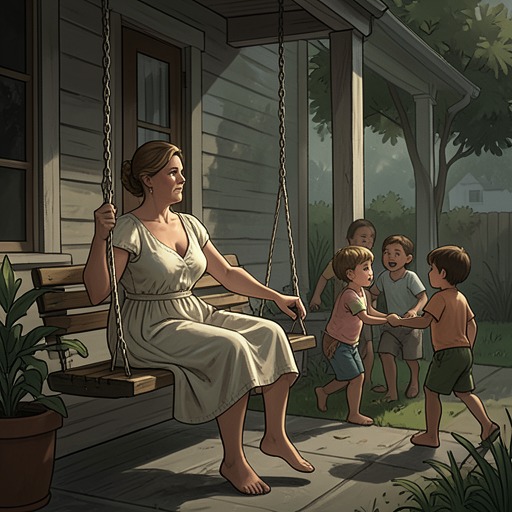
Leda’s Letters to Her Daughters
The Lost DaughterLeda’s Letters to Her Daughters are a paired attempt at belated disclosure: written for Bianca and Marta, they recount how Leda abandoned them and distinguish the impulses that drove her from reasons she cannot confidently claim. The letters make private history available to her daughters, but they do not produce the conversation she hopes for; their silence and Bianca’s dry retort expose the distance between writing about motherhood and being heard within a family.
Composition and Intended Audience
Two years before recalling the letters, Leda had a presentiment that her daughters would be gone for a long time. She made two copies, one for each daughter, and left them in their rooms. The physical arrangement is intimate and deliberate: each daughter receives her own account, placed in her own space, rather than being addressed in a conversation Leda might have to conduct face to face.
Leda says she wrote in detail about how she had abandoned Bianca and Marta. Yet she carefully limits what the account claims to explain. She wanted to describe not her reasons—she questions what those could have been—but the impulses that had sent her away more than fifteen years earlier. The distinction leaves the letters neither a straightforward defense nor a complete explanation: they offer a record of what moved her without resolving whether those impulses can justify what she did.
What the Letters Disclose
The account includes an admission Leda had not previously made to her daughters: Brenda had given Professor Hardy her text. Leda says she had kept this from everyone, including Gianni and her professor, and had never sought Brenda out. In the letter she wrote, “I needed to believe that I had done everything alone. I wanted, with increasing intensity, to feel myself, my talents, the autonomy of my abilities.” The confession recasts her academic success as entangled with a concealed debt and with her desire to experience herself as independent.
That admission belongs to a wider history of competing demands and frustrated ambition. Leda recalls feeling desolate while caring for her young daughters: when Marta cried, she left Bianca’s game to tend to the baby and felt, wrongly or not, that the second daughter was tearing her away from the first. In another recollection, while trying to work on an essay, she struck five-year-old Bianca after the child hit her, then continued the controlled but real violence until Bianca understood that it was not a game. These episodes illuminate the difficult maternal life against which Leda’s later account of her departure must be read; the evidence does not establish that every episode appears in the letters themselves.
Reception and Silence
The daughters never answered the letters or asked Leda to talk about what she had written. Their silence leaves the disclosure without the exchange she appears to seek. On one occasion, when Leda made a slightly bitter allusion to the letters, Bianca replied as she was leaving, “lucky you, you have time to write letters.” Her response turns the act of writing into a sign of distance: Leda has time to compose an account, while the daughters do not thereby become participants in it.
Leda reflects that it is foolish to think children can understand a parent’s self-description before they are at least fifty. She wants to be seen as a person, not merely as a function, and wants her daughters to recognize that they begin from her history. The letters preserve that wish in written form, but their lack of response leaves unresolved whether the account can cross the gap between a mother’s self-understanding and her daughters’ experience of her.
Narrative Significance
The letters frame explanation as both necessary and limited. Leda wants her daughters to know the impulses behind her leaving, yet she does not present those impulses as settled reasons or as a plea that they absolve her. Her later admission about Brenda further complicates the image of self-sufficiency she had wanted to believe in: the letter tells the daughters that the story of her talents and independence also contains an unacknowledged reliance on someone else.
As an object within Leda’s family history, the two copies embody a one-sided form of communication. They make confession possible across years of separation, but cannot compel a reply or repair the relationship. Their significance rests in that tension: Leda writes to be recognized beyond motherhood, while the daughters’ silence leaves the consequences of her earlier absence present in the very act meant to explain it.