Mina
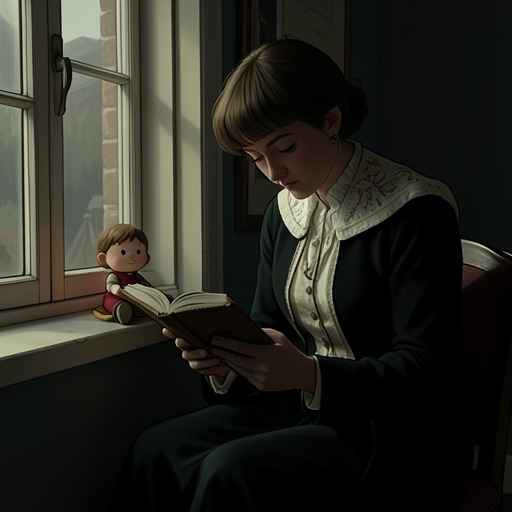
The Lost DaughterMina is Leda’s childhood doll and a keepsake she tries to pass on to Bianca. The attempted gift, Bianca’s indifference, and Leda’s decision to reclaim and discard the doll make Mina more than a cherished toy: her changing place in the family gives material form to the strain between maternal care, personal memory, and resentment. Years later, while handling Elena’s separate doll, Leda recalls Mina and the painful episode that ended their shared play.
Identity and Early History
Leda remembers Mina as a doll with beautiful curly hair whom she had cared for and never lost. Her mother said that Leda herself had given the doll its name. The name brings to mind a child’s language for motherhood and a word once used for a doll, joining Mina to play that imitates care. The association is especially charged because Leda’s own mother had not welcomed being made into a doll: she resisted Leda’s attempts to comb and decorate her hair, wash and dress her, and draw her into games involving her body.
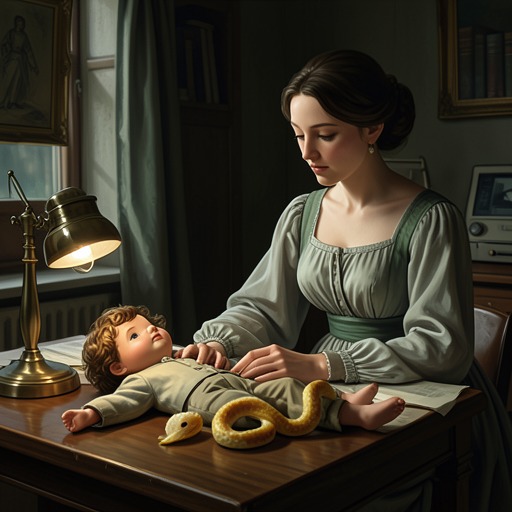
As an adult, Leda says she kept the disappointment of that refusal in mind. When Bianca was little, she tried to offer what she had wanted from her own mother by allowing Bianca to treat her as a doll. Under the kitchen table, which served as their playhouse, Leda lay down and let Bianca pretend to care for her. The game took place amid fatigue and competing demands: Marta slept poorly, Bianca needed attention, and Leda was trying to remain patient and be a good mother. Mina therefore belongs to a chain of remembered play in which a child’s care of a doll and a mother’s willingness to become one overlap.
The Gift to Bianca
Leda gave Mina to Bianca during a period when she felt generally inadequate. She hoped that handing over her own childhood doll would ease Bianca’s envy of her younger sister, Marta. The gift carried an expectation as well as affection: Leda imagined Bianca devoting herself to Mina as she had once devoted herself to Leda during their games. Bianca did not share that attachment. She set Mina aside and preferred a rag doll with yellow yarn hair that her father, Gianni, had brought home.
Leda was hurt by Bianca’s preference, a response that reveals how much of the gift remained bound to Leda’s own history. Mina was not simply a new possession offered without conditions; she was an object Leda had treasured and a hoped-for bridge between mother and daughter. Bianca’s indifference frustrated that hope. The difference between the doll Leda valued and the one Bianca chose also shows that the gift did not make their desires coincide: Bianca’s preference was her own, while Leda’s emotional investment remained attached to her childhood keepsake.
The Balcony and Its Aftermath
The conflict came on a spring day when Bianca was playing on the balcony, a place Leda left her when she could not take her outside. Leda was exhausted, angry, short of money, and unable to find time to read. She found Bianca sitting on Mina while playing with another doll. Leda demanded that she get up, accused her of mistreating something precious from Leda’s childhood, and said she regretted giving it to her. In anger, she reclaimed Mina and threw the doll over the balcony railing.
The act turned a disagreement over a toy into a sudden rupture in their play. Leda remembers feeling a cruel satisfaction as Mina fell and was ruined below; Bianca watched, frightened. Leda then picked her daughter up, held and kissed her, trying to draw her close again. Bianca told her that she was hurting her. The abrupt movement from rejection and destruction to an embrace does not cancel either part of the encounter. Instead, it leaves Mina at the center of a scene where Leda’s attachment to her own past and her tenderness toward Bianca coexist with anger that overwhelms them both.
Memory and Narrative Significance
Mina returns in Leda’s recollection while she is alone with Elena’s doll, which she has taken from the beach. The later doll is a different object, but its presence prompts Leda to consider buying clothes for it as a possible reparation to Elena. That impulse leads her back to her memories of Mina: her own careful attachment, her mother’s refusal to join in bodily play, the games with Bianca, and the failed attempt to pass on a childhood treasure. The distinction between the two dolls matters. Mina belongs to Leda’s past with Bianca; Elena’s doll belongs to a later situation that awakens that past.
The recollection also places the balcony incident within Leda’s broader experience of maternal exhaustion. She remembers the years when she could not study, felt without desire, and experienced Marta’s crying as a reason to leave Bianca’s game. That context does not erase her responsibility for the way she treated Bianca or turn the doll’s destruction into a simple expression of love. It helps explain why Mina’s story resists a single meaning: the doll is cherished, offered, rejected, reclaimed, and discarded. Through those changes, Leda’s account shows how an object carrying childhood memory can become entangled with the unequal demands of caregiving and with a daughter’s independent preferences.