Nina Asks to Borrow the Narrator’s Apartment for a Rendezvous with Gino
The Lost DaughterNina Asks to Borrow the Narrator’s Apartment for a Rendezvous with Gino is a brief domestic negotiation that becomes a breaking point between Nina and Leda. Nina wants a private place to meet Gino, and Leda agrees to lend her the apartment; but the keys do not settle what Nina needs from her. When Leda brings out Nani, the practical offer is overtaken by an angry struggle over the doll, their relationship, and the meaning of Leda’s help. Nina leaves with Nani, not the keys, after stabbing Leda with the hatpin Leda had given her.
The Request and Leda’s Unease
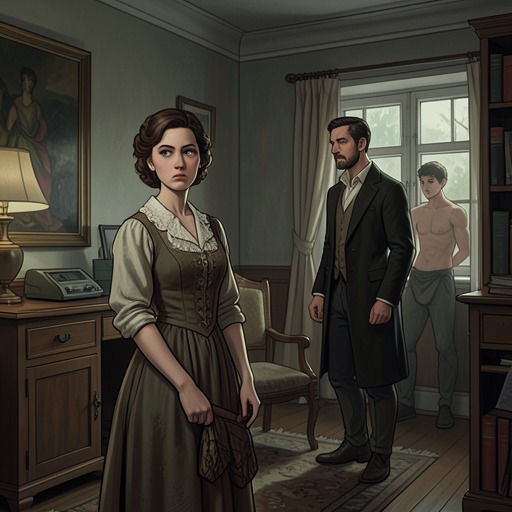
The request reaches Leda indirectly. A boy tells her that Nina wants to know whether she will lend them her place for a few hours. The plural makes Leda pause: she wonders whether the wording conceals a request originating not with Nina but with the boy himself. She does not treat that suspicion as fact. Instead, she responds by asking to speak to Nina directly, and insists that it happen as soon as Nina can come.
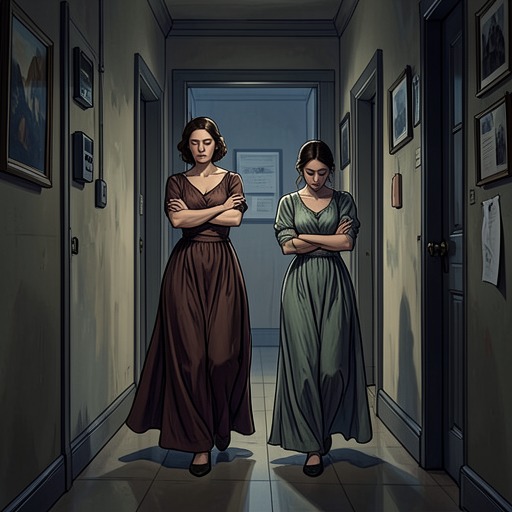
That decision changes the request from a simple exchange of favors into a conversation between the two women. When Nina arrives, Leda notices that she is wearing the hat with the pin Leda gave her. As Nina removes them and sets both on the living-room table, Leda reads the gesture as a possible sign that Nina is showing her she uses the gift. The hat and pin are thus present before the apartment keys become the scene’s focus: they carry the history of Leda’s gift into a meeting whose warmth proves uncertain.
The Offer and Nina’s Admission
Nina says that the place is lovely. Leda asks directly whether she really wants the keys, and Nina replies that she does, if Leda is willing. They sit on the sofa, where Leda reminds her gently that she had said she was happy with her husband and that Gino was only a game. Nina confirms both claims, but uneasily. The mismatch between her assurances and her request remains in the room; Leda does not force a confession or claim to know more than Nina has said.
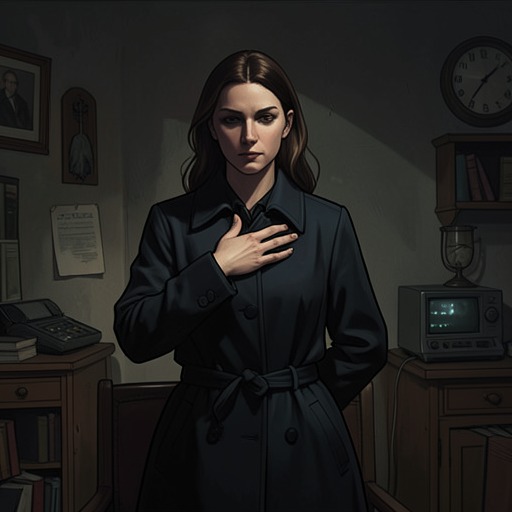
After Leda asks what follows from those assurances, Nina says, “I can’t take it anymore.” Leda searches her face; Nina does not look away. Leda agrees and takes the keys from her purse, placing them on the table beside Nina’s hat and pin. The decision is concrete: Leda is offering the apartment for a few hours, while Nina’s statement gives the request an urgency that her earlier description of Gino as a game had concealed. Yet Nina does not seem happy when she looks at the keys. Her question, “What do you think of me?” makes clear that the exchange is not only about access to a private place; she is also asking for Leda’s judgment, though the scene does not supply a simple answer.
Leda tells Nina to do what she feels she wants to do. When Nina asks, “Will you help me?” Leda answers that she is. She offers her address, and, just as Nina is about to take the keys, stops her to say she has something else to give her. The movement from lending the apartment to producing another object alters the encounter’s course: Nina had been playing with the keys and wearing a half-smile, but when Leda returns from the bedroom with Nani, that smile vanishes.
Nani, Rejection, and the Hatpin
Nina takes Nani from Leda with what the narration describes as a fierce gesture of reappropriation. She calls Leda an unnatural mother, says in dialect that she has to go, and then tells Leda in Italian that she wants neither to see her again nor to receive anything from her. The doll’s return does not resolve the conversation; it transforms it. Leda’s offer of the keys had been accepted, but the exchange around Nani brings Nina’s anger to the surface and makes the two women’s relationship itself part of the confrontation.
Leda tells Nina to take the keys and explains that she is leaving that night, so the house will be empty until the end of the month. She turns toward the window because she cannot bear to watch Nina in such a rage, and murmurs that she is sorry. Nina does not take the keys. Instead, as she hisses insults in dialect, Leda feels a sudden pain in her left side and sees the pin’s point appear above her stomach, just beneath her ribs. Nina drops the pin, leaves her hat and the keys behind, and runs out with Nani, closing the door.
The violence is sharp but its injury remains slight in the immediate aftermath. Leda finds a tiny drop of blood on her skin; it darkens and clots, and the burning pain fades. She looks at the hat and the blood, turns on the light, and begins packing, moving cautiously as if gravely injured. The rejected keys and abandoned hat remain in the apartment, while the doll goes with Nina: the objects mark the opposite outcomes of the offer and the rupture.
Consequences and Narrative Significance
The meeting reverses the apparent terms of Leda’s kindness. She has agreed to help Nina and has placed the keys within reach, but Nina’s departure makes clear that access to the apartment is not what finally governs the encounter. Nina accepts Nani and rejects the rest: the keys, the hat, and Leda herself. The physical attack with the gifted pin makes that rejection bodily, while the small, quickly fading wound leaves the scene’s emotional consequences more prominent than its injury.
The episode also moves directly into Leda’s departure. After packing, dressing, and putting on her sandals, she receives a call from Marta; Bianca is there too, and the sisters speak together, playfully exaggerating Leda’s Neapolitan cadence. That call follows the scene of Nina’s anger without erasing it. Leda is preparing to leave that night, and the encounter ends not with the borrowed apartment in use, but with Nina gone carrying Nani and Leda turning toward the journey home.