
The Body as a Temple
The Lost SymbolThis flow traces the novel’s recurring argument that ancient religious language may describe human consciousness and embodied potential.
increasing Bearing strength in each event
 decreasing
Bearing strength in each eventdecreasingA Question of Hidden Knowledge

The Ancient Mysteries
A Repeated Tradition
Langdon describes a cross-cultural belief that hidden knowledge can awaken dormant human capacities. He treats the belief as historically significant without accepting its miraculous claims.
Protection and Danger
The metaphor of fire explains why traditions might conceal knowledge: illumination can guide, but it can also harm. The novel leaves open whether this is sensible caution or a structure that protects authority.
A Soul Measured

A Scientific Test
The Microbalance
Katherine uses a precision microbalance and a sealed capsule to observe a dying volunteer’s body. The measured weight changes shortly after death.
A Question, Not Proof
Peter interprets the result as possible evidence of a soul, while Katherine’s method invites further scientific scrutiny. The experiment dramatizes the tension between measurable observation and a conclusion that exceeds the data.
The Brain as a Temple
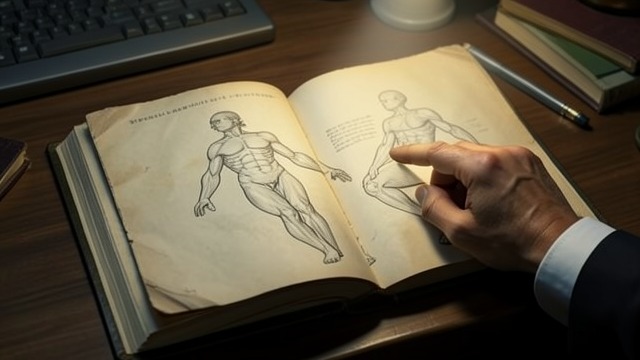
Scripture and Anatomy
Katherine’s Interpretation
Katherine suggests that scriptural descriptions of temples, heaven, and nourishment may encode ideas about the body and mind. She connects religious language to anatomy and focused mental states.
A New Reading Practice
Her claim asks readers to treat sacred texts as layered systems rather than literal records alone. The interpretation is provocative, though the novel does not resolve the scientific debates it raises.
Practice and Potential

Intention as Skill
A Learned Capacity
Katherine compares focused thought to learning an instrument: the capacity may be human, but its expression requires practice, discipline, and concentration.
Unequal Ability
The comparison reframes miraculous stories as possible differences of degree rather than violations of nature. Langdon remains skeptical but is willing to consider a changed perspective.
Many Minds Together
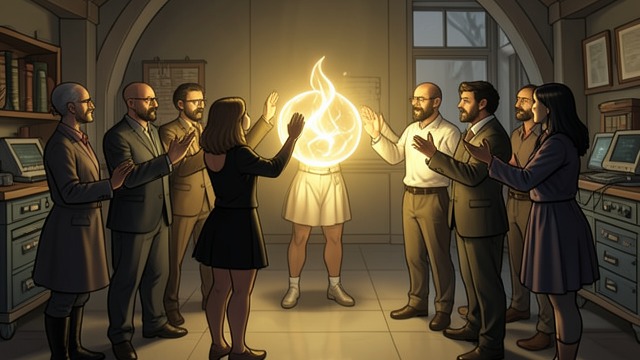
Consciousness in Concert
Exponential Influence
Katherine argues that minds acting in unison may amplify the effect of shared intention. Communication networks and collective practices become modern settings for this possibility.
A Shared Image of God
Langdon connects the idea to the plural Hebrew name Elohim and to the phrase E pluribus unum. The novel closes this argument as an invitation to think collectively, not as a completed scientific proof.
During Langdon and Sato’s early discussion
Months before the central events, in Katherine’s laboratory
Near dawn, atop the Capitol dome
During the conversation beneath the Rotunda fresco
At sunrise, during Katherine and Langdon’s final conversation
