Katherine Solomon
The Lost SymbolKatherine Solomon is a Noetic Science researcher whose work seeks to test the mind’s potential and recover knowledge she believes ancient thinkers understood more fully than modern science does. At the Smithsonian Museum Support Center, she builds that inquiry into a high-security laboratory called The Cube; when her research and her brother Peter Solomon’s connection to a hidden Washington secret become entangled in a violent search, she proves as determined in the field as she is in the laboratory. The destruction of her equipment does not destroy her work: Peter has kept backups, and Katherine ends the night with both her brother and her scientific mission still in reach.
Identity and Family Background
Katherine grew up in a close relationship with Peter, who was eight years older. Their father died of cancer when Katherine was seven, and Peter, only fifteen at the time, began assuming the responsibilities of the family patriarch far earlier than expected. As an adult, he continued to watch over his sister. Katherine had little memory of their father, but she carried the family’s history in objects as well as relationships: her gold Cartier watch was a gift from her mother for her eighteenth birthday. Her mother was later murdered, dying in Katherine’s arms, and the watch’s daily removal at the Smithsonian Museum Support Center brings that loss back into her thoughts.
Katherine never married. She had suitors, and Peter occasionally urged her toward marriage, but science had become the central commitment of her life; she felt no regret about that choice. This independence does not make her detached from family. Peter’s safety can unsettle her concentration and overturn her priorities, while his protective attention remains a persistent part of their bond. Her professional life and private loyalties are therefore not competing identities so much as two sources of purpose, repeatedly brought into conflict by the night’s events.
The Cube and the Noetic Research
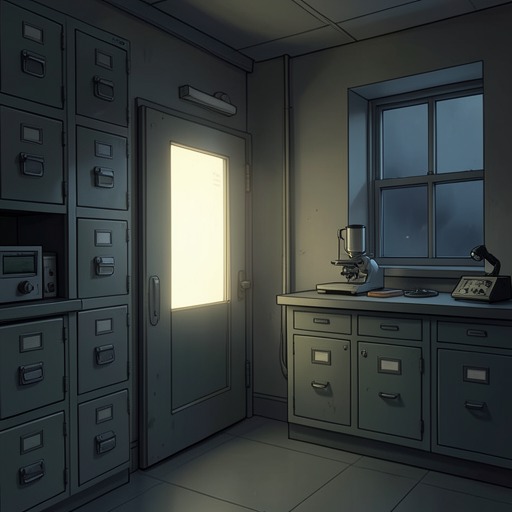
The Smithsonian Museum Support Center is a vast, guarded storage and research complex outside Washington, with interconnected pods and more than twelve miles of storage cabinets. Katherine’s laboratory lies deep within Pod 5. Reached through an unlit stretch of the building, it becomes both workplace and refuge: Katherine remembers entering the darkness for the first time three years earlier, unsure how to find her way, and recognizes how much she has changed by the time she returns to the same heavy door. The passage through darkness remains a physical test, not merely a route to her research. Later, she crosses it at a run while trying to escape danger and reach the exit.
The Cube is a massive, windowless laboratory whose interior walls and ceiling are covered with titanium-coated lead fiber. Frosted Plexiglas partitions separate its laboratory, control room, mechanical room, bathroom, and small research library. Its equipment includes paired electroencephalographs, a femtosecond comb, a magneto-optical trap, and quantum-indeterminate Random Event Generators. The contrast between those specialized instruments and the mystical implications of their results defines Katherine’s project: the devices are thoroughly modern, while the questions they address concern the mind’s supposedly untapped capacities.
Katherine’s research has, in her view, implications extending from physics and history to philosophy and religion. Her central proposition is that humanity has barely explored its mental and spiritual abilities. She had come to Noetic Science when the field was little known; as its possibilities widened, it became more than an academic interest. Peter had introduced her to ancient texts, and her reading persuaded her that modern science was not simply discovering new truths but rediscovering knowledge that earlier civilizations had possessed and later forgotten. Katherine’s mission becomes the use of advanced science to recover that lost understanding, because she believes the world needs it.
The Investigation and Her Choices
The crisis begins to reach Katherine through a call linking what Peter believes is hidden in Washington to her own life. She is already unsettled when she arrives at the Smithsonian Museum Support Center, and her trust in a new acquaintance develops with striking speed. During a conversation, Christopher Abaddon asks whether Peter has told her about a treasure of lost ancient wisdom and the role he believes he plays in protecting it. Katherine does not understand the claim, but it draws her into a mystery whose stakes are now personal as well as intellectual.
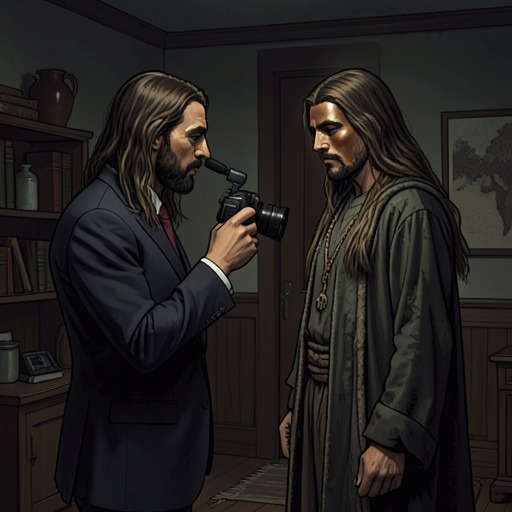
As Katherine and her assistant Trish Dunne investigate a heavily redacted file, they search for clues about an ancient portal and a possible underground location. Katherine waits for results from Trish’s search and for contact from Peter, while considering whether they may need a hacker to pursue the file. A text from Peter briefly seems to offer another way forward. The shift from research to danger becomes unmistakable when Robert Langdon calls: Peter is in serious trouble. Katherine moves at once to find out what has happened, even running through the darkness of Pod 5 while a guard checks recorded security footage. Her determination is practical and immediate; she does not wait for a complete explanation before trying to reach the people involved.
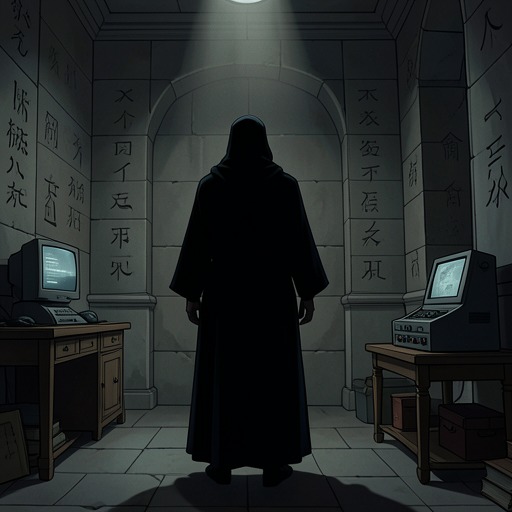
Mal’akh’s attack makes the laboratory itself a target. Katherine escapes, calls emergency services from a gas station, and directs them to investigate an intruder at the Smithsonian Museum Support Center, to look for Trish, and to check Christopher Abaddon’s address. The lab is then destroyed in a hydrogen fire that tears through Pod 5 and scatters its equipment and storage materials. Katherine is already driving away when she sees the flash behind her. The loss is enormous, but her actions have carried information beyond the building: she has alerted authorities and tried to secure help for Trish and Peter.
Working with Robert Langdon
After Katherine and Langdon reunite with Warren Bellamy’s help, the investigation turns on a conflict between protecting the secret and saving Peter. Langdon is carrying Peter’s pyramid and has been urged not to open the package containing its capstone. Katherine challenges that instruction directly. If the capstone is needed to decipher the pyramid, and deciphering the pyramid is their route to Peter, she sees no reason to leave it sealed. Bellamy’s insistence that the secret must remain intact, even at the cost of Peter’s life, meets Katherine’s insistence that the search must serve the person who is missing. Her position is not indifference to the secret; she refuses to let its protection become more important than the immediate human stakes.
Katherine’s own knowledge becomes essential as the clues change from symbols to scientific procedure. When a transformation of a cube reveals the Rose Cross, she helps connect the repeated reference to the thirty-third degree with temperature as well as Masonic rank and degrees of rotation. Isaac Newton’s association with the phrase Isaacus Neutonuus points her toward the Newton scale. In a kitchen, she uses the behavior of heated water and then switches off the lights and exhaust fan. With the room dark, the metal capstone beneath the water begins to glow and letters emerge. Katherine’s contribution is not simply to confirm Langdon’s symbolic expertise: she recognizes that the puzzle can be made to yield through ordinary physical processes.
The pursuit also exposes her vulnerability without diminishing her agency. Mal’akh traps Langdon in a water-filled enclosure and tries to use Katherine’s fear for him to force cooperation. She pleads for his release and offers to tell Mal’akh what he wants to know. After she is recovered, she reports that Peter is alive and describes the circumstances of her reunion with him: his wheelchair, the knife, his references to sacrifice, and the danger in which she had been left to hurry him into cooperation. She also passes on Peter’s claim that Mal’akh has deciphered the grid on the pyramid’s base and intends to go to a sacred mountain. Even in shock, Katherine becomes a crucial source of information for the next stage of the search.
Return and Narrative Significance
At the Temple Room, Katherine finds Peter alive and being tended to by a medic. Mal’akh lies dead on an altar nearby, but Katherine turns away from the body and searches the chamber for her brother. The reunion gives physical form to the purpose that has driven her through the investigation: she has not treated Peter as an expendable part of a larger secret. Her relief arrives alongside the knowledge of what the night has cost, including the destruction of The Cube and the loss of the equipment through which she conducted her work.
Peter’s news changes the meaning of that destruction. He had secretly kept backups of Katherine’s Noetic research in the Smithsonian Museum Support Center’s executive offices, following her progress without disturbing her. When Katherine confirms that the research is safe, the preservation is more than a practical recovery of data: it means that the work she has devoted herself to can continue despite the destruction of its laboratory. Her reunion with Langdon at the Washington Monument follows this confirmation, and their final conversation returns her attention to the intellectual questions that have sustained her.
Katherine connects Noetic Science to the ancient study of thought, arguing that the new field may in fact be among humanity’s oldest sciences. She points to ancient texts’ sustained interest in mental power and universal consciousness, while Langdon observes that the mind was the only technology available to early philosophers. The exchange brings her family’s ancient texts, her laboratory instruments, and the night’s coded objects into a single line of inquiry. Katherine’s narrative role rests on that convergence: she is both a scientist testing claims and a researcher willing to learn from the past, while her decisions repeatedly insist that knowledge matters most when it serves living people. The night ends not with the return of her laboratory, but with her brother safe and the research preserved.