Masonic duty to protect the Ancient Mysteries
The Lost SymbolThe Masonic duty to protect the Ancient Mysteries is an obligation to guard concealed wisdom from those considered unworthy of it. In the novel, Warren Bellamy gives this principle its sharpest form when he tells Robert Langdon that safeguarding the secret may require abandoning Peter Solomon to his captor. The duty is therefore more than a rule against disclosure: it places institutional trust, a disputed inheritance of knowledge, and immediate human lives in direct conflict.
The Rule Within Masonic Secrecy
Freemasonry is presented as a society with secrets, not simply a secret society. Its members and buildings are visible, but access to its deepest knowledge depends on belonging, advancement, and demonstrated trustworthiness. Langdon explains this distinction through the analogy of a corporation whose employees may know its public existence without being entitled to its most protected information. In this structure, secrecy creates boundaries around knowledge and makes trust a condition of access.
The account of Masonic belief complicates any equation between secrecy and religion. Members must believe in a higher power, but Freemasonry prescribes no single theology, promises no salvation, and does not seek converts; religious discussion is prohibited in lodges. The institution is described as open to men of different races, colors, and creeds, while its male membership limit remains a point of criticism. These details frame the duty to protect the Ancient Mysteries as an internal obligation within a distinctive fraternity, not as proof that every Mason belongs to a hidden ruling cabal. Langdon recognizes that public perceptions range from harmless ritual to imagined world-controlling conspiracy, while the novel leaves room for distinctions between ordinary membership and inner circles with more restricted knowledge.
What the Duty Protects
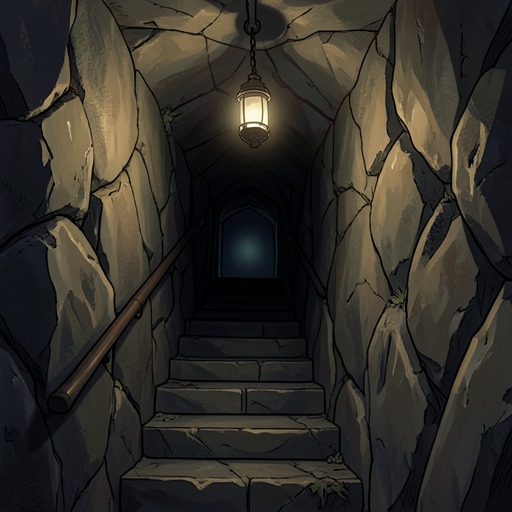
The protected object is associated with the Masonic Pyramid and the possibility that it maps the location of ancient wisdom. Bellamy tells Langdon that the pyramid is not merely a legend: its capstone serves as the key that explains how to read it. He describes a tradition in which the pyramid points toward the entrance to a spiral staircase descending hundreds of feet, with the ancient wisdom supposedly buried below. Bellamy has never seen the staircase himself; his account rests on reports from older Masons. The story thus makes the duty consequential while keeping its promised treasure uncertain.
The idea of transmitted wisdom reaches beyond the pyramid. Langdon recalls accounts tracing the Ancient Mysteries from early Egyptian Mystery Schools into Renaissance Europe and then to the Royal Society of London, known as the Invisible College. The supposed inheritors include Isaac Newton, Francis Bacon, Robert Boyle, and Benjamin Franklin. Newton’s private papers, discovered in 1936, revealed his intense interest in alchemy and mystical knowledge; a letter to Boyle urged silence about what they had learned, warning that it could not be communicated without immense damage to the world. Langdon doubts that secret wisdom explains the achievements of later scientists, even as he acknowledges the historical evidence of their mystical interests. That tension—between a tradition’s claims and a careful investigator’s uncertainty—shapes what the duty asks its guardians to protect.
Bellamy’s Test of Langdon
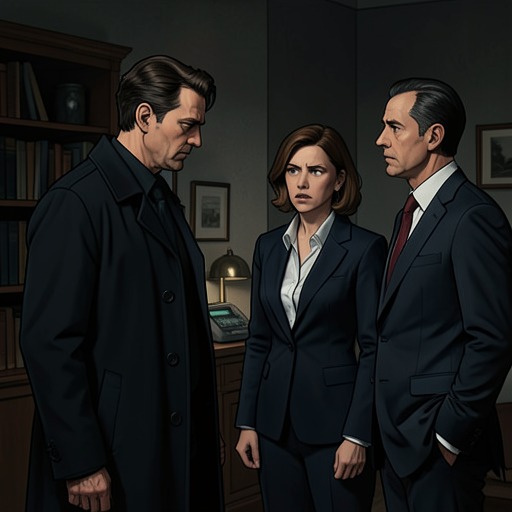
Bellamy makes the rule personal after Langdon receives the capstone from Peter. He argues that Langdon need not believe either in the pyramid’s power or in the staircase’s existence. What matters, Bellamy insists, is the moral obligation to preserve the secret entrusted to him. Because Peter gave Langdon the capstone in confidence, Bellamy says he must honor that trust even if doing so means sacrificing Peter’s life.
Langdon rejects the proposed exchange. He is angry that Bellamy would place the pyramid above Peter, a fellow Mason, and challenges the idea that Masons are sworn to sacrifice their lives for a stone pyramid and an unseen staircase. Bellamy answers that a Mason’s duty to protect another Mason has one exception: the great secret guarded for all humanity. He does not claim that every Mason knows this rule or accepts the same account of the treasure; instead, he invokes circles within circles, where access to information is uneven. The conflict exposes the cost of treating a collective obligation as absolute: Bellamy’s fidelity to the rule demands abandonment, while Langdon’s responsibility to Peter demands rescue.
Bellamy also explains why Peter entrusted the object to someone outside the brotherhood. The pyramid had been targeted before by people who entered Masonic ranks with unworthy motives, so keeping it beyond the organization could itself be a safeguard. Langdon’s outsider status is not a breach in the chain of custody but part of Peter’s protective design. The arrangement separates knowledge from membership: the guardian’s reliability matters more than formal initiation.
Inheritance, Failure, and Consequence
The duty had already been tested within Peter’s family. When Zachary Solomon was eighteen, Peter presented him with a choice between his inheritance and the responsibility of guarding the pyramid while receiving an education in Freemasonry. Zachary rejected the Masons and the ancient mysteries, chose his money, and left after Peter warned him never to speak of the pyramid. Peter believed Zachary did not understand the object’s significance and kept the pyramid in his own vault, while Bellamy continued to hold the capstone separately. Their decision preserved the separation between the two pieces, but it also left the secret dependent on a small number of trusted custodians.
Six years later, on Christmas Day, an intruder broke into the Solomon estate seeking the pyramid and killed Isabel Solomon. In the aftermath, Peter admitted to Bellamy that he should have listened to him. Bellamy brought the capstone, still wrapped in faded brown paper and sealed with Peter’s ring, bringing the two parts closer together than they should have been. The attack gives the duty a human consequence: secrecy and precaution did not prevent violence, and Peter’s sense of responsibility became entangled with grief and guilt.
Peter later entrusts the capstone to Langdon, extending the protective arrangement beyond the family and beyond the brotherhood. The pyramid’s clues are then worked through as a sequence of interpretations rather than a single revelation: marks on Peter’s hand change meaning when the hand is turned upside down; the pyramid’s cipher is read through a Masonic grid; and the later base inscription leads to an order-eight magic square associated with Benjamin Franklin. The duty to protect the Ancient Mysteries supplies the stakes for this process, while the puzzle itself tests who can interpret the signs and what they are willing to do with the result. The rule’s enduring tension is that protection can require silence, but it can also be invoked to justify abandoning the very people the fraternity is meant to serve.