The Jungle
The Lost SymbolThe Jungle is the rainforest greenhouse at the U.S. Botanic Garden, a glass-canopied living museum beside the United States Capitol. A familiar and usually nurturing place to Warren Bellamy, it becomes the setting for his detention and interrogation by Inoue Sato. Its transformation from an environment of warmth and growth into a sealed nighttime enclosure gives the location a decisive role in the struggle over Robert Langdon, the pyramid, and the capstone.
Setting and Environment
The Jungle is described as the centerpiece of the U.S. Botanic Garden, technically a rainforest housed inside a towering greenhouse. Rubber trees and strangler figs rise beneath its glass ceiling, while a canopy catwalk offers visitors a route through the upper foliage. Vapor nozzles send mist down through the structure, lending the space its earthy smells and humid atmosphere. The greenhouse is only about three hundred yards from the United States Capitol and is technically part of the Capitol Complex, close enough to political power to be reached quickly but enclosed enough to feel like a world apart.
That enclosure depends on doors that make the greenhouse airtight when shut. In daylight, sunlight glinting through mist and the warmth of the plants make the environment comforting to Bellamy, who knows it well. At night, with moonlight replacing sunlight, the same glass ceiling and humidity intensify his fear. The Jungle is not simply a scenic interior: its controlled atmosphere, sealed access, and living canopy shape what can happen there.
Bellamy’s Detention
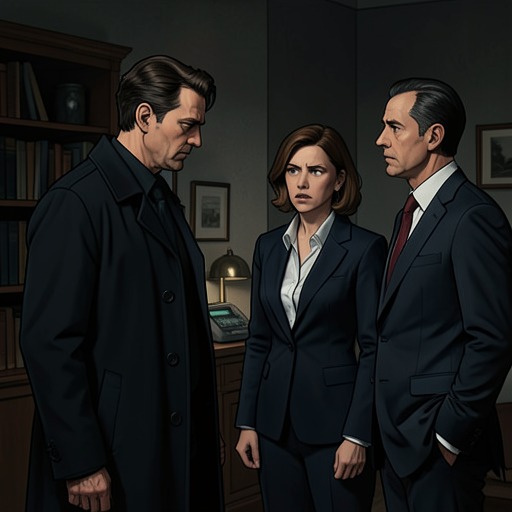
After being blindfolded and driven only a short distance from the Library of Congress, Bellamy is taken through service access into the greenhouse. He recognizes the place first by its earthy smell and humid air, then by the familiar winding walkway. The realization is especially unsettling because he runs the facility: the access is being granted by his own key fob. A place in which he ordinarily feels at home has been turned against him before he can even see who has brought him there.
His captors seat him on a bench and reattach his handcuffs behind his back. They leave him blindfolded, alone, and unable to free his hands. Bellamy understands that the closed glass room is airtight and fears no one will find him until morning. When he hears breathing close by, the apparent solitude gives way to a more immediate threat. Inoue Sato then removes his blindfold while lighting a cigarette only inches from his face. The greenhouse’s silence and isolation have prepared the encounter as an ambush rather than a formal questioning.
Sato’s Interrogation
Sato questions Bellamy about his actions at the Capitol. She identifies him as the person who secretly entered the SBB, attacked Chief Anderson and herself, and helped Langdon escape with the pyramid and capstone. Bellamy does not regret his choice and demands to know where Peter Solomon is, while suspecting that Sato has access to information about the night’s events that she has not explained.
Sato answers by insisting that she, too, understands the need to keep secrets. She says the man who kidnapped Peter poses a danger capable of changing the world, and argues that her best chance to prevent disaster is to cooperate with him. She therefore wants Bellamy to contact Langdon and persuade him to surrender, along with the pyramid and capstone, so that Sato can place Langdon in her custody and have him decrypt the inscription. Bellamy refuses, citing his vows of secrecy and declining to help her. The Jungle becomes the confined setting for a contest between Sato’s coercive demand and Bellamy’s refusal to betray the secrets he is sworn to protect.
Sato’s next move links the greenhouse to the pursuit beyond it: after receiving a phone call about the taxi carrying Langdon and Katherine Solomon, she orders that they be brought to the U.S. Botanic Garden through the service entrance and again demands the pyramid and capstone. The secluded greenhouse is thus not merely where Bellamy is held; it is also a destination in Sato’s attempt to bring the fugitives and the objects under her control.
Narrative Significance
The Jungle’s dramatic force comes from the reversal of its ordinary character. A carefully calibrated environment associated with growth, warmth, and mist becomes a place where Bellamy sweats against painful restraints and cannot call for help. Its natural atmosphere does not offer escape or protection; the sealed greenhouse makes it easier to isolate him. Even the cigarette in Sato’s hand underscores the intrusion of interrogation into an environment maintained with unusual care.
The location also brings the conflict over secrecy into a space Bellamy personally knows and manages. His own key fob opens the way for his captors, making the greenhouse’s systems of access part of his vulnerability. By setting Sato’s demands beneath the glass canopy, the story places a struggle over hidden knowledge inside a public institution devoted to living collections, yet keeps the decisive encounter concealed behind closed doors. The Jungle’s familiar landscape remains recognizable, but its meaning has shifted: for Bellamy, it is home turned into a trap.