The Library of Congress Escape
The Lost SymbolThe Library of Congress Escape turns a refuge into a trap and an overlooked piece of library machinery into a route to freedom. Robert Langdon and Katherine Solomon flee the reading room with the Masonic Pyramid and its Gold Capstone, while Warren Bellamy stays behind to draw their pursuers away. Their survival depends not on vanishing into the library’s famous shelves, but on using the concealed system that moves books between its buildings.
Background and Stakes
The escape follows the destruction of Katherine’s laboratory. When she reaches the United States Library of Congress, Bellamy opens the massive bronze doors, and she rushes into Langdon’s arms. The reunion offers a brief pause in a night of fear: Katherine has lost years of research, and she knows the same man who destroyed her work also killed her mother and nephew. Langdon promises that they will find Peter Solomon, but the crash from below interrupts her attempt to explain what has happened. Bellamy immediately urges them to leave.
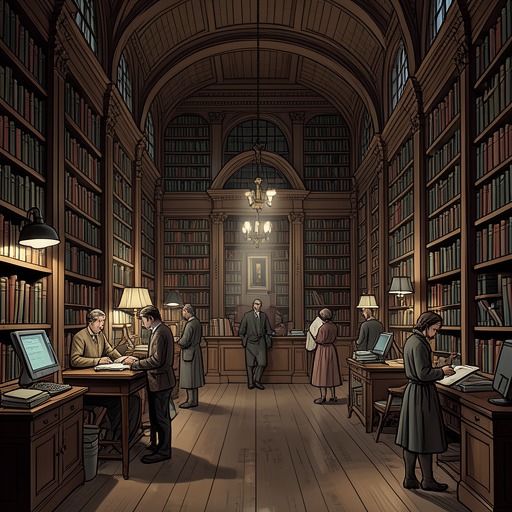
In the illuminated Main Reading Room, Bellamy directs Langdon and Katherine to a reading desk, where his leather bag and the small cube-shaped package are waiting. When he places the stone pyramid alongside the package, Katherine recognizes the object as the pyramid that has so profoundly harmed her life, despite never having seen this engraved version before. Bellamy gives Langdon the bag and tells him to keep it safe. The object is not simply another piece of evidence: Peter had entrusted its protection to Langdon, and the Gold Capstone must remain with it. Protecting both pieces now competes with the urgent need to escape.
The Central Intelligence Agency team forces its way into the room using Key4, an explosive designed to open locked doors with limited collateral damage. Turner Simkins leads the operation. His team darkens the room, puts on night-vision goggles, and searches with weapons raised. The fugitive pair cannot wait for Bellamy to explain the route or the pyramid’s wider significance. The pursuit has reached the room, and the apparent exits are already under observation.
The Reading Room and Bellamy’s Diversion
Bellamy takes Langdon and Katherine behind the central circulation desk, an octagonal structure surrounding a large wooden console. An opening in the console leads down a steep staircase to a small industrial-looking room beneath the reading room. The pursuers read the signs of recent passage: heat retained by chairs and a desk lamp, handprints on the counter, and fingerprints on a keypad. Thermal imaging turns the fugitives’ route into a trail, locating where they have been rather than merely where they are.
The agents follow the heat traces to the console and discover that the apparent cabinet is a raised ceiling over the stairs. Below, they find machinery and a heavy steel door. Simkins orders it breached, and the agents enter the underground stacks, where miles of shelves extend through the United States Library of Congress. At first, the maze looks like a promising hiding place. But the temperature-controlled environment makes heat signatures conspicuous, and motion-activated lights illuminate the fugitives’ path in a narrow, shifting strip. The building’s scale offers cover only until its systems begin to reveal movement.
That difficulty helps explain Bellamy’s decision to split from Langdon and Katherine. He opens a door into the stacks with his key card, gives the card to Langdon, and says that he will draw the agents away. His immediate concern is that the pyramid and capstone remain in safe hands; the escape plan is built around preserving those objects even if it costs him his own chance to leave unseen. He then directs Langdon and Katherine toward a different route, one that does not depend on outrunning the team through lit corridors of shelving.
The Conveyor Route
Bellamy clears a large crate of books from a conveyor belt and tells the pair to lie on it, with their hands kept inside. The belt runs toward an opening in the wall, a space meant for transporting books rather than people. Langdon hesitates, but Katherine climbs aboard first, lying on her back with her hands crossed over her chest. With the agents already closing in upstairs, Langdon follows, placing his daybag on the belt and positioning himself at Katherine’s feet.
The route belongs to the building’s ordinary circulation system. Because the United States Library of Congress occupies three separate buildings, requested books can travel long distances on conveyors through underground tunnels. The machinery that makes the institution function as a library becomes their means of escape. Bellamy gives Langdon his key card and tells him to follow the conveyor to its end, get off before it circles back, and use the card to leave. Langdon has little opportunity to question where the route leads: Bellamy starts the machinery, and the moving belt carries him and Katherine into darkness.
The escape is not presented as a clean disappearance. As Langdon is carried away, he sees Bellamy race into the stacks and close the door behind him; moments later, a laser sight appears on the stairs. Aboveground, Simkins’s team uses thermal traces to follow the route from the reading room into the underground rooms and onward to the stacks. The conveyor gives Langdon and Katherine a head start by taking them beyond the obvious search area, while Bellamy remains behind to make the pursuers believe he is still the more immediate target.
Consequences and Significance
The diversion works long enough for Langdon and Katherine to get away from the reading room, but Bellamy is soon found running through the illuminated stacks. Simkins’s team catches up and uses a nonlethal projectile that hardens into a web around Bellamy’s legs, bringing him down. Langdon is not with him. When the agents demand to know where Langdon has gone, Bellamy maintains his deception, claiming that he sent Langdon elsewhere and does not know his current location. His account sends agents away in pursuit of a false lead while the other agents take him into custody.
Before his capture, Bellamy has also managed to contact a man who can offer Langdon sanctuary and knows about the Masonic Pyramid and the hidden spiral staircase it is believed to indicate. Bellamy has left Langdon with the key card and instructed him to trust the person who will call. This knowledge makes the escape more than a flight from immediate danger: it carries the pyramid toward the next stage of the search, while separating Langdon and Katherine from the ally who has protected them.
The sequence sets two routes against one another. The agents use surveillance technology, heat, and light to make the library legible as a trail; Bellamy counters by exploiting an unremarkable service system whose purpose is to move books invisibly through the institution. Yet the price of the escape is clear. Langdon and Katherine leave the reading room with the Masonic Pyramid and Gold Capstone, but Bellamy is left behind, captured, and unable to accompany them. The library offers shelter only through movement, concealment, and sacrifice.