Trish Dunne
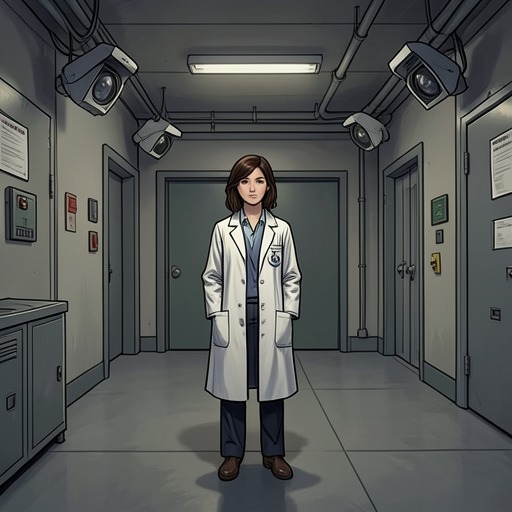
The Lost SymbolTrish Dunne is a gifted metasystems analyst whose technical ingenuity helps Katherine Solomon investigate a hidden historical mystery. Loyal to Katherine and trusted with access to her secretive laboratory, Trish builds a search system that locates a crucial redacted document; later, Mal’akh kills her and takes her credentials, making her expertise and access part of the threat against Katherine’s research.
Identity and Background
At twenty-six, Trish is a brilliant data modeler with experience analyzing, modeling, and predicting the flow of massive data fields. Before joining Katherine’s team, she worked as a metasystems analyst in the technology industry, then left that job to freelance and write a blog about computational metasystem analysis. She had also licensed software she wrote in college, a success that brought her financial independence. Her combination of programming skill, curiosity, and practical experience makes her unusually well suited to Katherine’s work.
Trish first attracted Katherine’s attention through her blog, where she argued that metasystems modeling could help turn Noetic Science into a more rigorous field of study. Katherine had written a book on Noetic Science and was interested in the intersection Trish identified. Their initial conversation included a discussion of whether powerful software could be abused: Trish argued that knowledge is a tool whose effects depend on the person using it. Katherine tested that view with a thought experiment about the mass of a single grain of sand and the cumulative gravity of countless grains. Trish followed the reasoning to its implication: if thoughts have measurable mass, a shared thought might exert a tangible physical force. The exchange reveals both her ability to reason across disciplines and the intellectual connection that brought her into Katherine’s laboratory.
Work with Katherine Solomon
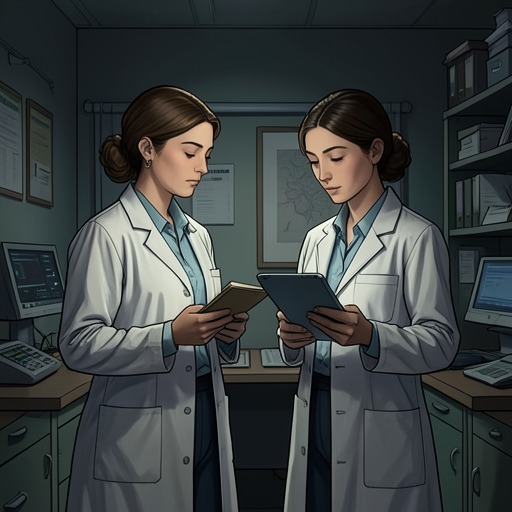
Trish becomes Katherine’s metasystems analyst and a close working partner. She is the only other person permitted into the restricted laboratory, and she has signed a stringent nondisclosure agreement. Katherine relies on her for technically demanding research, including specialized optical-character-recognition translation modules capable of handling obscure languages such as Old Frisian, Maek, and Akkadian. Trish is not simply a general computer operator: she builds tools suited to the unusual scale and subject matter of Katherine’s investigations.
Her loyalty is personal as well as professional. She remembers Katherine’s invitation as a remarkable break from the cubicle-farm career she had left behind, and she is willing to take on work beneath her technical level because she wants to help Katherine. When Katherine arrives worried that Peter Solomon is late and unreachable, Trish is working in the control room and responds with humor before offering to help investigate a legend Katherine has heard from a trusted source. Katherine wants to know whether the account can be corroborated anywhere in history, in any language. Trish accepts the challenge and begins constructing a search system around a list of carefully chosen phrases.
The Search for the Redacted Document
Trish’s solution is a program she calls a delegator. Instead of waiting for one search engine to crawl the online world, the program locates the search functions of databases maintained by libraries, museums, universities, and governments, then submits Katherine’s phrases to many of them in parallel. The method harnesses thousands of search engines and is designed to return results in minutes rather than the much longer period a conventional crawl might take. Trish also understands that keyword choice matters: the search must be distinctive enough to identify a match without being so restrictive that it misses one.
The search returns more than a dozen documents containing all of Katherine’s phrases, but Trish recognizes that most are false leads: enormous archives and message boards can contain a wide range of words simply because they contain so much material. She and Katherine identify a much smaller file, apparently no more than a page, that contains the phrases together. It is heavily redacted, allowing a search of the text while revealing only a limited portion of its contents. The discovery confirms that the unusual combination of terms exists in a single document, but its concealment makes the source as important as the text itself.
Trish attempts to trace the document’s network route. Her traceroute repeatedly stops at a device that absorbs the signal, and a database search for the address returns no owner. She can tell that the server is somewhere in the Washington, D.C., area, but cannot identify it by ordinary means. Katherine asks whether Trish knows a trustworthy hacker. Although Trish initially points out that hiring one is not a good idea, Katherine insists and authorizes her to offer double payment for fast results, using a blocked-number phone and not giving her name. Trish agrees to make the call. When Peter’s first text message arrives, she suggests that they might ask him about the document before proceeding; Katherine instead tells her to continue. Trish’s work has turned a vague historical claim into a concrete, concealed digital lead, even though the document’s owner and full contents remain unresolved in the evidence here.
Access, Attack, and Death
Trish’s access to the laboratory becomes consequential beyond her research. She is trusted with a key card and a personal identification number, and Mal’akh recognizes that these credentials could help him reach Katherine’s protected data. In disguise, he accompanies Trish through the Smithsonian Museum Support Center’s restricted spaces, posing as a visitor interested in its preserved specimens. Trish guides him to the giant squid specimen in SMSC Pod 3 and explains what they are seeing. Her professional courtesy and knowledge of the facility place her in the position of escorting a person who intends to exploit her access.
Mal’akh attacks her and demands the number associated with her key card. Trish gives him 0804, her birthday, after he threatens her. He kills her at the specimen tank and places her body inside it, concealing the killing among the preserved remains. He takes her key card and keeps the PIN, planning to use them as a way around the security of Katherine’s data-storage room. The credentials she had been entrusted with to perform her work thus become instruments Mal’akh can use against the laboratory and its research.
Narrative Role and Significance
Trish’s storyline links two forms of technological power. Her delegator makes scattered, digitized collections searchable at unprecedented speed; the hidden document it finds demonstrates how information can be made searchable yet kept obscure. Later, her key card embodies a more immediate vulnerability: secure knowledge depends not only on encryption and redundant storage but also on the people who are allowed to enter the system. Trish’s technical competence opens a path toward the mystery, while Mal’akh’s theft of her credentials turns that same access into a danger for Katherine.
Her relationship with Katherine gives the investigation a practical and human center. Katherine supplies the question and the carefully selected phrases; Trish supplies the programming, the global search method, and the persistence needed to distinguish a meaningful result from a mass of irrelevant matches. Her death abruptly removes the trusted collaborator who had made that search possible. The contrast is central to her role: Trish treats information as a tool whose consequences depend on its user, but Mal’akh’s attack shows how readily technical access and collected knowledge can be redirected toward harm.