United States Capitol
The Lost SymbolThe United States Capitol is more than the setting for the crisis in The Lost Symbol: its public grandeur, concealed rooms, and soaring dome shape the novel’s central journey from a shocking discovery underground to a final vision of illumination above the city. A building designed to embody the republic becomes, in turn, a maze of secrets, a refuge and battleground, and a symbolic map for the story’s questions about knowledge and human potential.
Monumental Public Architecture
At the eastern end of the National Mall, the United States Capitol stands on a raised plateau that Pierre L’Enfant described as a pedestal awaiting a monument. The scale is imposing: the building extends more than 750 feet in length and 350 feet in depth, contains over sixteen acres of floor space, and has 541 rooms. Its neoclassical design deliberately recalls ancient Rome, linking the architecture to the ideals the country’s founders drew upon in shaping the new republic’s laws and culture.
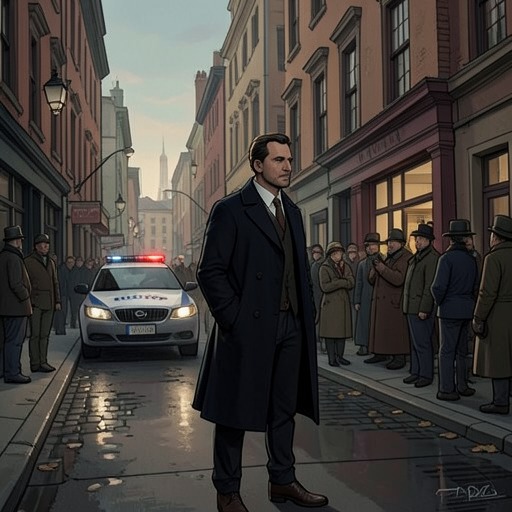
The novel first brings Robert Langdon to the building through its recently completed subterranean visitor entrance. Approaching on foot from First Street, he has to cover roughly four hundred yards downhill in the rain after security restrictions keep vehicles away from landmark buildings. The Capitol Visitor Center is presented as an underground civic complex, with more than half a million square feet for exhibits, restaurants, and meeting halls. A vast glass ceiling frames the Capitol Dome above it; muted lighting and pearl-colored finishes make the space feel unexpectedly airy to Langdon, despite his severe claustrophobia. Its openness briefly counters his fear of enclosed spaces, but he has only minutes before his lecture and runs on toward the checkpoint.
That threshold also establishes the building as a place where public access and security meet. At the checkpoint, a man with a shaved head, a limp, and an arm in a sling passes through while concealing a ring beneath bandages. Later, the Rotunda’s surveillance footage shows the same visitor stop at its center, kneel as if to tie a shoe, leave an object, and hurry away. The object proves to be Peter Solomon’s severed hand, displayed upright on a wooden base. The sudden change from a managed tourist space to a crime scene makes the building’s openness feel vulnerable: the hand has crossed its security boundary and been set at the symbolic center of the Capitol.
The Rotunda and the Security Maze
The Capitol Rotunda is where Langdon recognizes the hand by Peter’s familiar ring. The recognition turns an unexplained disturbance into a personal crisis and draws the building’s security apparatus into the plot. Capitol police chief Trent Anderson oversees the complex from a basement surveillance center, where technicians monitor screens and coordinate officers. When the Rotunda camera records the visitor leaving the hand, Anderson rushes to respond; Inoue Sato soon takes control of the investigation, declaring the matter one of national security. The Rotunda’s ceremonial scale thus becomes the backdrop for a contest over who has authority to interpret the evidence and act on it.
From the Rotunda, Anderson leads Sato and Langdon downward through the Capitol Crypt, the circular chamber directly beneath the Rotunda floor. Forty Doric columns support the stone above. Rather than containing bodies, the crypt holds statues, a model of the Capitol, a storage area for the catafalque used in state funerals, and a four-pointed marble compass where the Eternal Flame once burned. The group crosses it without stopping, then enters a confusing network of numbered corridors. Senate-side and House-side designations, terrace levels, office blocks, and storage areas make the route difficult to follow; even Langdon doubts he could find his way out alone.
A tattoo on Peter’s hand points them toward SBB XIII, but the building’s records make the destination stranger than a simple storage room. The markings lead to a private area in the Capitol’s subbasement, a level whose name Anderson explains means subbasement rather than Senate Basement. Records show that most rooms in the SBB had been cleared and abandoned more than twenty years earlier, while SBB XIII remained designated private in a handwritten notation initialed by the Architect of the Capitol. That notation identifies Peter Solomon as the person for whose use the space had been set aside. The hidden room is therefore not an accidental remnant of the building: it is a deliberately protected place connected to Peter and to the secret he has guarded.
The Subbasement and SBB XIII
The route down makes the Capitol’s monumental surface feel increasingly remote. The stairs into the subbasement are steep and shallow; the air is cold and damp, the walls narrow, and the floor at the bottom is dirt. Langdon’s daybag scrapes against the staircase, and he refuses to leave it behind because it contains the package Peter entrusted to him. Below, the subbasement is less a conventional floor than a roughly fifty-foot corridor lined with small wooden doors. Anderson recalls that in Lincoln’s day the passage had a dirt floor and was filled with rats. The old, cramped infrastructure contrasts sharply with the public building’s carefully composed neoclassical spaces.
Most of the chambers appear abandoned. SBB IV, for example, contains collapsed wooden boxes and crumpled packing paper. SBB XIII is different: its door is shut, its old lock will not yield to the master key, and the seven characters on its copper plate match the marking on Peter’s palm. When a secondary key cannot be found, Sato orders Anderson to shoot the lock. Langdon protests that opening the door would amount to complying with the captor’s demand, but Sato insists on entering. She takes Anderson’s pistol and fires three times at the lock. The damaged door swings open onto a narrow stone chamber, about ten feet wide and thirty feet deep, whose rugged walls resemble a prison cell.
The room contains a skull, two leg bones, and a carefully arranged collection on a desk: an antique hourglass, a crystal flask, a candle, two saucers of pale powder, and a sheet of paper. The discovery transforms the subbasement from a hidden storage maze into a place of ritual and dangerous knowledge. Before the investigation can proceed, an intruder attacks. He knocks Anderson into the stone niche, scattering bones and artifacts and shattering the hourglass; he strikes Sato with a femur, then orders Langdon to take the pyramid and follow. The stranger is Warren Bellamy, Peter’s Masonic ally. He uses his keys to guide Langdon through the Capitol’s service corridors and out through the visitor center, while directing Nuñez to check on Anderson and to say nothing about their escape. The concealed passages serve not only to hide the room but also to make the building a route of flight.
Secrets, Custody, and Return
The Capitol’s subterranean geography is tied to the division of the Masonic Pyramid itself. Years before the present crisis, after an attack on the Solomon family, Peter and Bellamy reaffirmed their arrangement: Peter would keep the pyramid and Bellamy would keep its capstone. Bellamy later told Peter that the Capitol subbasement offered a secure hiding place. Peter liked the idea of concealing the object in what Bellamy understood as the symbolic heart of the nation. The location gives the pyramid’s concealment a double meaning: it is protected by the building’s inaccessible spaces and placed within a structure associated with the country’s civic identity.
That arrangement creates a conflict when Langdon is carrying the pyramid and Peter’s captor demands that he decipher it. Bellamy urges him to protect the secret rather than trade it for Peter’s life, invoking the Masonic duty to keep the Ancient Mysteries from those considered unworthy. Langdon resists the choice to abandon Peter and Katherine, and the pursuit continues beyond the Capitol. Later, after Mal’akh’s plan has been stopped, the building becomes a place of return rather than flight. At Peter’s request, Bellamy retrieves a very old black-iron key and prepares to show Langdon and Katherine a secret accessible only through the Architect. The key connects the institution’s official custodian to another, more symbolic meaning of the title.
The Dome and the Closing Image
Bellamy leads Langdon and Katherine to a narrow catwalk high inside the Capitol Dome, about 180 feet above the Rotunda floor. From there they can study The Apotheosis of Washington, the fresco by Constantino Brumidi that covers nearly five thousand square feet. Its figures, some fifteen feet tall, bring together mythical gods, scientific inventors, and George Washington ascending toward heaven. Langdon and Katherine recognize in the imagery a public expression of themes they have encountered throughout the night: the Ancient Mysteries, the union of science and older systems of thought, and the possibility of human spiritual development.
The dome also changes the scale of their experience of the building. Earlier, the Rotunda’s floor and the subbasement’s close walls made Langdon feel exposed or confined; here, Katherine walks fearlessly along the high circular passage while he struggles with vertigo. The dome’s acoustics let their voices carry along the wall, and Katherine persuades him to lie beside her on the narrow catwalk and look upward. From that position, Langdon notices that the fresco’s figures are arranged in two concentric circles, recalling the circumpunct symbol. The architectural image prompts a further connection to Katherine’s account of Noetic Science: she argues that thought shared by many minds has an effect greater than the sum of individual thoughts, and Langdon links this idea to the plural Hebrew name for God and to the words E pluribus unum painted in the fresco.
The final ascent continues through cramped metal stairs to a small door that opens onto a skywalk encircling the pinnacle of the dome. Beneath the bronze Statue of Freedom, Langdon and Katherine face east toward dawn and then west toward the National Mall and the Washington Monument. As sunlight reaches the monument’s capstone, Langdon reads the movement of light as a connection between heaven and earth. The Capitol’s height, its dome, and its position among the city’s monuments turn the ending into a change of perspective: the building that first concealed Peter’s secret now offers a vantage point from which Langdon can reconsider science, faith, and human potential. At sunrise, he feels hope—an emotional resolution framed not in the hidden chamber below, but at the highest point of the Capitol.