Warren Bellamy
The Lost SymbolWarren Bellamy is the Architect of the Capitol, a senior Mason, and one of Peter Solomon’s closest friends. In the crisis surrounding the Masonic Pyramid and its Solid-Gold Capstone, he becomes both Robert Langdon’s indispensable ally and a troubling guardian of secrecy: he will risk his position and safety to help Peter, yet insists that protecting the secret can require abandoning even the people he loves. His arc turns on the strain between personal loyalty and an inherited obligation to keep knowledge from those he considers unworthy.
Identity and Public Position
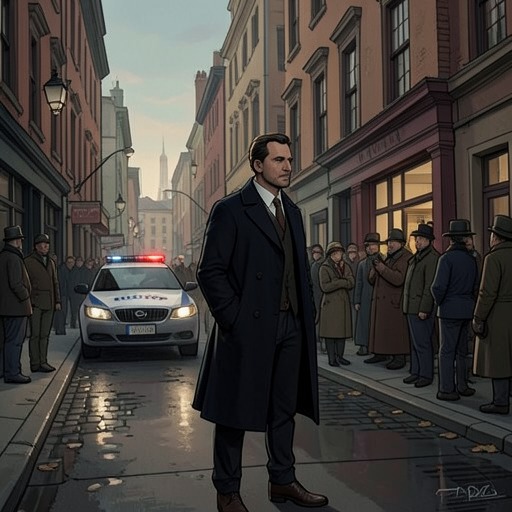
Bellamy has supervised the United States Capitol for twenty-five years. When he arrives there on the night of the crisis, his blue suit, close-cropped graying hair, slender build, and upright bearing distinguish him as a commanding presence. He expects to be obeyed not only because of his public office but because he employs Chief Anderson. His authority is practical as well as symbolic: he knows the building’s routes, carries keys that open doors throughout it, and can move through spaces others cannot readily access.
His Masonic identity is signaled by a ring bearing the double-headed phoenix and the number 33. The ring connects him to Peter Solomon as a brother of the highest degree, but it also places him within a hierarchy of knowledge that Langdon does not fully understand. Earlier, Langdon had used Peter’s conspicuous Masonic ring to explain that Masonry is a society with secrets rather than a wholly secret society. Bellamy’s actions give that distinction a sharper edge: the organization may be visible, but access to its most protected knowledge is uneven, guarded by trust, initiation, and vows.
Bellamy’s entrance into the immediate action is deliberate and risky. After learning that an incident has occurred at the Capitol and that the Central Intelligence Agency is involved, he refuses to announce his arrival to Chief Anderson. He heads below ground instead. When he finds Langdon in danger, he intervenes, helps him escape with the Masonic Pyramid, and takes him through the Capitol’s hidden routes. At the threshold of a sealed door, Bellamy gives Officer Nuñez instructions to lock it behind them, restore the masking tape, and tell no one that they passed through. He then identifies himself to Langdon and explains that Peter is a dear friend.
The Secret and Its Keepers
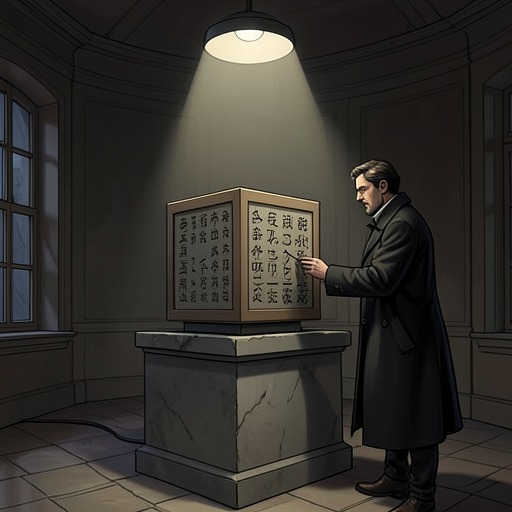
Bellamy believes the Masonic Pyramid may be more than a relic or cipher. He tells Langdon that the stone structure and capstone fit the legendary description and may point to a spiral staircase descending deep underground, where ancient wisdom is said to be buried. He does not claim to have seen the staircase himself; his knowledge comes from older Masons who insist that it exists. The distinction matters: Bellamy acts on a tradition he cannot personally verify, but treats its consequences as real enough to govern his choices.
His commitment is not simply credulity about a legend. Bellamy argues that a Mason has a duty to protect the secret from the unworthy, even when keeping it means refusing a bargain that could save Peter. He tells Langdon that Peter entrusted him with the capstone because he trusted him to preserve it, and that the obligation now falls to them. In Bellamy’s moral calculus, the brotherhood’s protected knowledge is held for all mankind; no individual, not even a fellow Mason, can take precedence over that responsibility.
That conviction produces a severe conflict with Langdon. Langdon doubts that a small stone pyramid can be the legendary structure and questions whether its promise of buried wisdom should outweigh Peter’s life. Bellamy sees the skepticism as an outsider’s limitation: some Masonic realities, he suggests, cannot be understood without preparation and initiation. He also argues that knowledge within the organization is distributed in inner circles, so the fact that many Masons know nothing of the staircase does not disprove its existence. His certainty therefore rests partly on trust in a guarded tradition, while Langdon’s resistance rests on the gap between that tradition and what can be demonstrated.
Rescue, Trust, and Divided Loyalties
Bellamy’s rescue of Langdon is an act of loyalty with immediate consequences. He has attacked Chief Anderson and Director Sato to prevent Langdon’s arrest and protect the pyramid, then guides Langdon through service passages and unfinished corridors. He understands that hiding in the Capitol cannot keep them safe indefinitely; instead, he chooses a room where they can hear anyone approaching and examines the pyramid with Langdon. When Sato’s purpose remains unclear, Bellamy considers the possibility that she has discovered the pyramid’s true potential.
The two men do not begin as equals in knowledge or trust. Langdon knows Bellamy by reputation but has never met him. Bellamy, by contrast, knows Peter’s regard for Langdon and believes Peter chose an outsider to guard the capstone precisely because keeping it outside Masonic circles might protect it from people with unworthy motives. Bellamy had not known that Langdon possessed the capstone, and says that Peter would have told at most one other person. Their alliance is therefore built under pressure: Bellamy asks Langdon to trust a duty he does not share, while Langdon follows him because Bellamy has already put himself at risk to save him.
Bellamy’s friendship with Peter does not make his position gentler. When Langdon protests that Peter is a brother who should be protected, Bellamy answers that the vow to protect the secret is the one obligation that outranks that bond. He urges Langdon to forget Peter and Katherine rather than surrender the pyramid. The demand reveals the painful cost of Bellamy’s ideals: he cannot reconcile every human attachment with the duty he has accepted, and he is willing to make that conflict explicit rather than pretend the choice is easy.
Deception and the Franklin Square Plan
Bellamy’s conduct becomes more complicated when he is captured and questioned by Central Intelligence Agency agents. He lies about Langdon’s whereabouts, sending some agents away from the place where Langdon and Katherine are escaping with the pyramid. At the U.S. Botanic Garden, Director Sato confronts him about his arrival at the Capitol, his attack on her and Chief Anderson, and his assistance to Langdon. Bellamy does not retract his choice. He also suspects that Sato has been receiving inside information, while Sato insists that she is trying to prevent a worldwide crisis and wants Langdon to surrender the pyramid and capstone.
At first, Bellamy refuses to help her. When Sato demands that he contact Langdon and persuade him to turn himself in, Bellamy maintains that he will not break his vows. Yet his refusal does not mean he is simply standing apart from the unfolding events. He has also been communicating with Peter’s captor, assuring him that Langdon is making progress. Bellamy admits that he has not been entirely honest with Langdon; his messages were a bluff intended to buy time for Peter, not an uncomplicated alliance with the captor.
The bluff shifts into a dangerous attempt to control what the captor learns. Bellamy sends a photograph of the capstone after its inscription has appeared, but positions his finger over part of the information. The image conveys the reference to Franklin Square while withholding the building number. The capstone’s brief revelation thus becomes a tool in Bellamy’s strategy: he gives the captor enough to keep the negotiation alive while preserving a piece of the address as leverage. When the captor calls, Bellamy offers to provide the missing information only in exchange for Peter’s safe return and agrees to meet at the center of Franklin Square. He also makes clear that Peter’s life is not the only stake, signaling that he understands the secret’s wider importance.
Capture, Revelation, and Aftermath
Bellamy is taken into custody by agents who bind and blindfold him and demand to know where Langdon is. He gives them a false account, claiming Langdon went to hide behind a statue, and draws some of the agents away. His consolation is that Langdon and Katherine are carrying the pyramid to safety and that he has finally reached a man who can offer them sanctuary. Even in captivity, Bellamy measures success by whether the two separated pieces of the Masonic Pyramid remain protected.
His memories of the Solomon family clarify how long that separation has mattered to him. Bellamy recalls attending Zachary Solomon’s eighteenth birthday at the Solomon estate in Potomac as a trusted friend and Masonic witness. The occasion followed the Solomon family’s inheritance tradition, but Bellamy understood that more than money was at stake. He remembers, too, that the pyramid and capstone had not been in the same room for many years. The memory links his personal history with Peter to his stewardship of the objects, without making him the source of every secret surrounding the family.
After Peter is safe, Bellamy returns visibly shaken and bruised. He confirms that he had kept information from Langdon, but the earlier concealment has helped him maintain contact with the captor and shape the attempt to recover Peter. Later, while Katherine is recovering, she finds Bellamy in Peter’s study, looking grief-stricken over something in a drawer. He tells her that he has discovered why the man has hated her family, but the contents of the drawer and the answer he has found are not disclosed in that moment. The scene shows Bellamy bearing knowledge that affects the Solomons, while leaving its full revelation beyond what he tells her there.
Bellamy later calls Dean Galloway with the news that Peter is alive and recovering. He also reports that Langdon may have solved the Masonic Pyramid. At Peter’s request, Bellamy then arranges for Langdon and Katherine to see a secret within the Capitol that only the Architect can reveal. He retrieves an old black-iron key from his office and guides them to the catwalk high inside the Capitol Rotunda, leaving them with instructions to wait for the appointed time and use the key on a small door above the dome. Bellamy’s final contribution is not another attempt to control the secret, but access: he helps the people closest to the crisis approach what Peter wants them to see.
Narrative Role and Significance
Bellamy gives the novel’s conflict over secrecy a human face. His public office offers command over doors, passages, and access; his Masonic standing gives him obligations that are invisible to most people around him. He uses both kinds of authority, sometimes to protect Langdon and Peter, sometimes to withhold information from them, and sometimes to bargain with the person threatening them. The shifting uses of authority keep him from being merely a guide or guardian: his protection can look like betrayal when he asks others to accept sacrifices he is prepared to make.
His central contradiction is that he believes the Ancient Mysteries should be preserved for humanity, yet his means of preserving them depend on exclusion and secrecy. He can risk his body and reputation for Peter, but he also argues that Peter may have to be lost to protect the secret. His later actions do not erase that severity; they reveal a more flexible practice beneath it. Bellamy lies, withholds part of an address, and cooperates tactically with Sato when the crisis demands it, while continuing to treat the capstone and pyramid as more than ordinary possessions. By the end, he remains a keeper of thresholds, but he has helped turn the threshold into an invitation.