
The Voyage Out
The LoverThis flow follows the family’s departure from Indochina and The Narrator’s conversion of maritime travel into a geography of memory.
increasing Bearing strength in each event
 decreasing
Bearing strength in each eventdecreasingThe Decision to Leave
The Decision to Leave
A family retreat
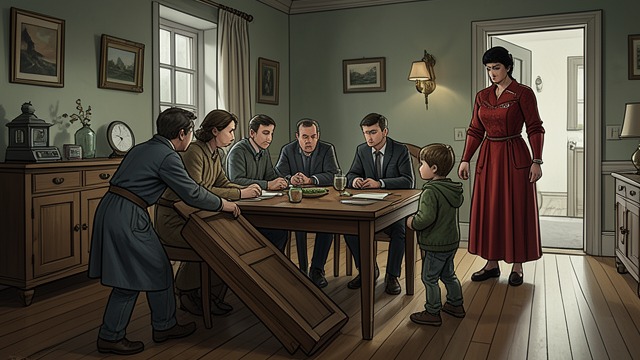
The Mother sells the furniture and prepares to return to France. The failed land project, debt, and the children’s futures make continued residence impossible.
A divided departure
The Narrator leaves both the colonial landscape and The Lover from Cholon. Departure promises education and distance while guaranteeing emotional loss.
History in motion
The family joins the long movement between Europe and Asia that produced colonial identities. Leaving does not resolve belonging; it makes rootlessness permanent.
The Harbor Farewell
The Harbor Farewell
Towed from land
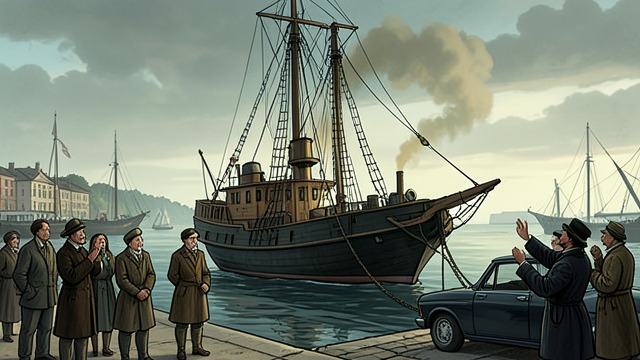
The ship gives three long blasts while tugs pull it toward the river. The sound makes strangers weep as well as the people who are parting.
The black car
The Narrator sees The Lover from Cholon waiting near the port. Their final visual connection repeats the ferry image but reverses its movement.
Land disappearing
As the harbor and coast fade, the affair enters the realm of recollection. Geography performs the separation that family and law had already imposed.
The Ocean Passage
The Ocean Passage
A floating society
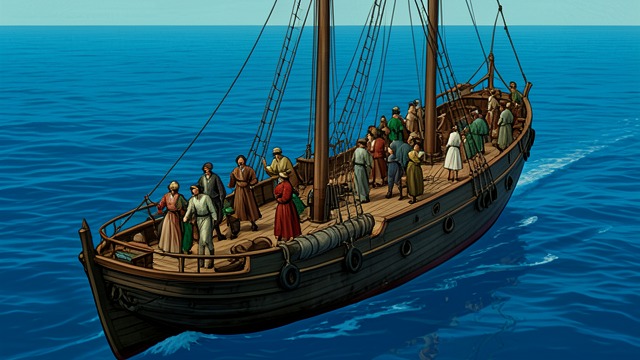
The ship contains cafés, bars, libraries, romances, marriages, deaths, and temporary communities. Its passengers form bonds made possible by slow travel.
Distance made physical
The sea gives separation a natural duration. Unlike modern travel, the voyage forces passengers to inhabit uncertainty and expectation.
A mobile identity
The Narrator crosses the China Sea, Red Sea, Indian Ocean, and Suez Canal toward France. The journey creates an identity defined by transit rather than arrival.
The Seventeen-Year-Old

The Seventeen-Year-Old
A sudden disappearance
A young passenger leaves the bar and throws himself into the sea. The ship stops too late to recover the body.
A mirrored impulse
The Narrator hears the story and later experiences music as a summons toward suicide. Another youth’s death gives form to her own unspoken attraction to annihilation.
The empty search
The ship resumes at dawn, leaving only the vacant sea. The abandonment of the search becomes an image of how modern life continues after catastrophe.
Music over the Sea
Music over the Sea
The Chopin waltz
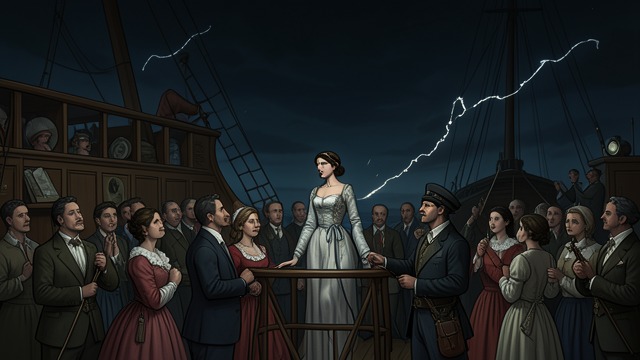
A sudden Chopin waltz spreads through the dark ship. The music recalls the emotions that ordinary conversation had kept inaccessible.
Love recognized late
The Narrator wonders whether she loved The Lover from Cholon more than she knew. Distance and music uncover what desire had buried in daily repetition.
The dead brother nearby
She also imagines Paulo on deck with a woman. Memory fuses erotic awakening, family loss, and the calm immensity of the ocean.
About a year and a half after the ferry meeting
The day the ship leaves the Saigon River
The twenty-four-day voyage from Indochina to France
During the ocean voyage to France
A later night during the same ocean voyage
