
The Mother’s Impossible Hope
The LoverThis flow traces The Mother’s attempts to rescue the family through education, land, migration, and renewed enterprise.
increasing Bearing strength in each event
 decreasing
Bearing strength in each eventdecreasingEducational Blueprint
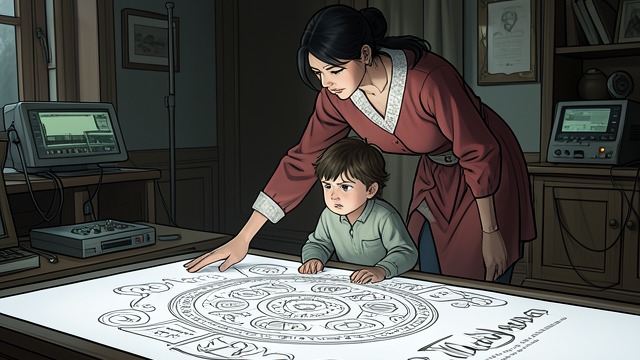
Educational Blueprint
A mother’s program
The Mother demands a secondary education and a mathematics degree for The Narrator. Education is imagined as a practical escape from colonial poverty.
Repeated repairs
She arranges bookkeeping courses and technical training for her sons, restarting whenever a posting changes. The plans are fragile but reveal relentless commitment.
Hope under compulsion
The children experience these ambitions as pressure because The Mother cannot afford uncertainty. Her hope becomes another form of family discipline.
The Land Scheme
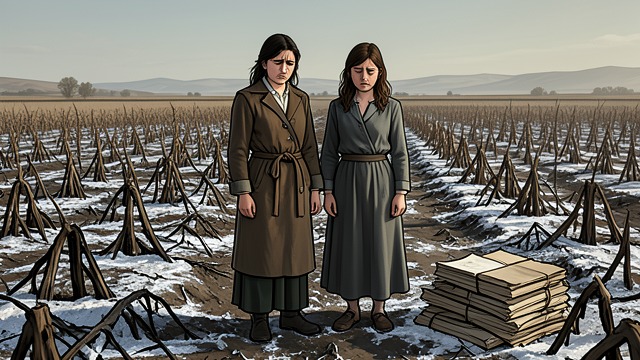
The Land Scheme
Investment in rescue
The Mother buys land by the dike in Cambodia, expecting cultivation to create a future for the children. The purchase is both economic gamble and maternal prophecy.
Environmental defeat
Salt and flooding destroy the fields, while legal disputes consume money and energy. The wilderness proves stronger than ownership documents.
The family’s verdict
The failed scheme confirms that every official channel is unreliable. The children learn to associate their mother’s hopes with catastrophe as well as courage.
The School in Saigon

The School in Saigon
A last institutional refuge
The Mother keeps The Narrator in a boarding school so she can attend the French high school. The arrangement separates the girl from home while preserving educational opportunity.
Freedom by negotiation
When the girl repeatedly stays out, The Mother persuades the school to treat her like a hotel guest. Her freedom is granted because she is both white and the family’s final hope.
A compromised success
The school protects the daughter only conditionally. Colonial privilege offers mobility while exposing her to moral judgment and racial policing.
The Nouvelle School
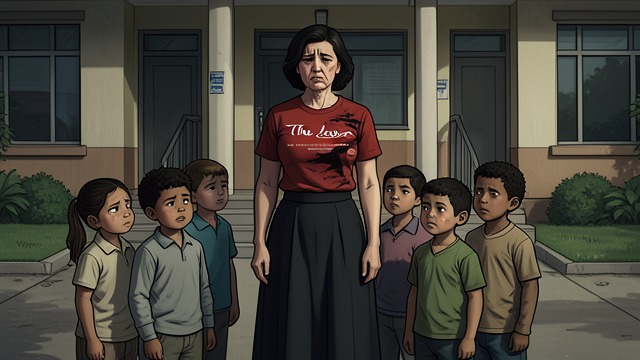
The Nouvelle School
Enterprise after collapse
The Mother later founds Nouvelle Ecole Française in Saigon. The enterprise earns enough to support The Narrator’s studies and The Elder Brother’s needs.
Persistence without learning
The new school resembles her earlier schemes: practical, strenuous, and directed toward children who cannot repay her. Success does not cure the underlying family disorder.
Maternal contradiction
The Mother’s achievement demonstrates real capacity, yet it also perpetuates dependence on The Elder Brother. Rescue remains inseparable from self-destruction.
The Chateau Failure

The Chateau Failure
A final investment
The Mother buys a property near the Loire for The Elder Brother and installs electric incubators. The project combines maternal fantasy with reckless expenditure.
Six hundred deaths
A mistake with infrared rays prevents the chicks from eating, and all of them die. The stench turns the grand room into a material emblem of failed care.
The end of hope
The chateau becomes a monument to The Mother’s inability to abandon the son who destroys her. Her persistence is admirable, but it cannot produce deliverance.
The Narrator’s early school years
Several years before the ferry encounter
After the family’s repeated moves in Indochina
After the family returns to France and later in The Mother’s life
After The Mother’s return to France
