Writing as escape and self-creation
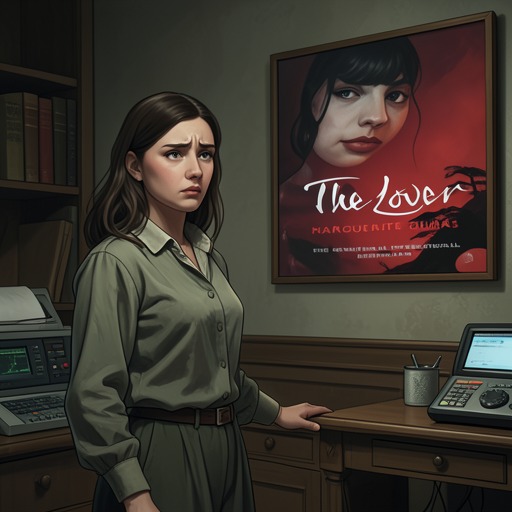
The LoverWriting as escape and self-creation names the Narrator’s gradual transformation of writing from a forbidden childish wish into the organizing necessity of her life. It offers escape from the family, colonial violence, and the unstable identities produced by displacement, but it is not a simple flight from experience. By writing, she returns to buried events, makes a self that has no secure social center, and gives artistic form to love, shame, death, and historical estrangement. The vocation therefore joins two apparently opposite movements: leaving the world that has wounded her and constructing a world in which that wound can be seen.
The Vocation to Write
At fifteen and a half, the Narrator already recognizes writing as the future beyond the immediate present. Her physical appearance is described as thin, undersized, and still partly childish, while her clothing is awkward and potentially laughable; yet the decisive fact is that everything seems to be present in her eyes before experience has fully arrived. She tells her mother that she wants to write books and novels. Her mother rejects the desire as unworthy, unreal work, nonsense, and later as a childish idea, insisting that the Narrator first obtain a mathematics degree. The opposition establishes writing as an act of self-definition against maternal authority: the family assigns value to practical respectability, while the Narrator identifies her deepest future with an activity the family cannot recognize as labor.
The Narrator’s determination is not presented as a passing ambition. She wants nothing else in the world but writing, and she understands herself as still belonging to the family even while imagining a life beyond it. The family is the only place in which she lives, yet its aridity, harshness, and malignancy become the very setting in which she becomes certain that she will later be a writer. Writing thus begins inside the structure it will eventually help her escape. The contradiction matters: the family does not nurture the vocation, but its pressure supplies the negative space against which the Narrator can distinguish an artistic self.
Writing Against a Missing Life
The mature Narrator refuses the idea that her life possesses a continuous, centered story. She says that the story of her life does not exist, that it has no center and no path, and that large spaces merely invite the false impression that someone once occupied them. This denial of continuity does not mean that nothing happened. It means that the available forms of biography cannot adequately contain what happened. Her youth must be approached through illuminated fragments and concealed stretches, through facts, feelings, and events that were buried rather than arranged into a stable sequence.
The crossing of the river has already provided one partial account, but the later act of writing turns toward what that earlier version left hidden. The movement is both different and the same: a return to known material that exposes its unspoken remainder. Writing becomes a method of belated recognition, in which the past is not simply recalled but reopened. Its fragmented structure records the difficulty of witnessing family experience, colonial history, and private desire without pretending that they form a clean narrative line.
The Narrator also treats writing with severe skepticism. If writing does not bring all things and all contraries together through an inexpressible essence, she considers it no more than advertisement. At the same time, she admits that there are no longer obvious barriers protecting writing from vanity or emptiness, and that writing seems to have lost a place in which it can hide, be written, or be read. These doubts do not cancel the vocation. They define its risk. Writing must approach vanity and void without disguising them, and it must produce an experience of total conjunction rather than merely circulate information or self-display.
Desire, Otherness, and Artistic Material
The Narrator’s literary self-creation is inseparable from her encounter with the Lover from Cholon. The relationship joins people displaced by imperial history: the girl is a generation removed from France, while the Chinese man is generations away from China, and neither fully belongs in Vietnam. Their erotic connection becomes a primitive means of making roots in a world shaped by migration, colonial hierarchy, and cultural dislocation. The Narrator’s writing does not stand outside that encounter as neutral observation. The beloved becomes material through which she can understand the foreigner, the alien, and the otherness that her own life continually confronts.
The relationship also reveals the ethical and aesthetic danger of turning love into literature. The Narrator recognizes the possibility that she loves the Chinese man in order to have something to write, or that the story exists because she loved him. The act of writing preserves the encounter while also transforming it into an artistic object. This does not reduce the relationship to exploitation; rather, it shows how desire and composition become entangled. The Lover from Cholon is both a person remembered through sorrow and the figure through whom the Narrator creates a language for colonial racial transgression, forbidden intimacy, and the unstable borders between cultures.
The same outward movement appears in the wider literary world surrounding the Narrator. Marie-Claude Carpenter’s Paris apartment gathers strangers for brief meals, conversations about the war, and encounters that seem to have no cause or consequence. The Narrator studies Marie-Claude Carpenter without understanding who she is, why she is there, or where her literary guests come from. This scene presents writing and literary culture as another uncertain social space: a room full of books, war talk, and unnamed connections, yet emptied of stable belonging. The artistic world is not automatically liberating, but it provides a form of movement beyond the family’s closed violence.
Writing After Separation and Death
After leaving the Lover from Cholon, the Narrator does not go near another man for two years. She interprets this apparent fidelity not as devotion to him but as fidelity to herself. The interval converts separation into inward formation. Desire is no longer only an experience shared with another body; it becomes part of the solitary identity from which writing will proceed. The distance between the earlier affair and the later writer allows the remembered relationship to become both wound and structure.
The decisive turn toward writing occurs in a night of emotional exhaustion. The Narrator can no longer bear the thought of the Lover from Cholon or of Hélène Lagonelle, whose apparent happiness seems to come from outside herself. She recognizes a vague desire to die and, in the same movement, a desire to be alone. Solitude is not presented as comfort. She realizes that she has not been alone since leaving childhood and the family of the hunter, so the wish for aloneness marks a radical break with inherited relations. Beyond that present moment, she sees writing in the form of a great desert stretching before her life. The image makes writing both desolate and spacious: an escape into emptiness that can become a chosen field of creation.
Death intensifies rather than resolves this vocation. When the telegram from Saigon announces the death of the Narrator’s younger brother, the message itself becomes uncertain in memory; she cannot remember whether it said that he was dead or that he had been recalled to God. The uncertainty opens into overwhelming pain, linked to an earlier stillborn child but distinguished from it by the new desire to kill herself. Her brother’s death is experienced as a cosmic mistake because immortality had been hidden in his living body and went unnoticed. Once the body is dead, the world continues without the visitation it had contained. Writing becomes the form capable of holding this contradiction: the dead are absent, yet the act of narrating can expose the magnitude of what the living failed to see.
Self-Creation and Enduring Form
The Narrator’s claim that she will write is therefore not merely vocational. It is a survival strategy, a method of escape, and a replacement for the missing center of biography. She does not discover an intact self beneath family history; she composes one through the act of returning to what had been avoided. The girl who wishes to write against her mother’s judgment becomes the woman who can approach family members, the Lover from Cholon, Hélène Lagonelle, and the dead through language even when direct knowledge is incomplete.
The later telephone call from Paris confirms the lasting power of this transformation. Years after war, marriages, children, and divorces, the Lover from Cholon phones the Narrator and recognizes her through the voice. He knows that she has begun writing books, having heard the news through her mother, and he tells her that he still loves her and will love her until death. The call does not restore the relationship or undo their separation. Instead, it joins the writer’s present to the past without collapsing the distance between them. Her writing has made the former affair transmissible across time, while his voice returns the lost intimacy in another medium.
The concept’s deepest significance lies in this double action. Writing allows the Narrator to leave Vietnam, the family, and the immediate arrangements of colonial life, but it also brings those places and relations back as material that can be seen, heard, and interpreted. Through writing, the rootless self becomes capable of making a place for itself; through the same act, private desire becomes linked to war, migration, race, class, and death. Escape is therefore not disappearance. It is the creation of a form strong enough to carry what the Narrator could not otherwise survive or understand.