
Law, Race, and the Death of Ah Sook
The LuminariesThis thread traces how Ah Sook’s pursuit of Carver collides with colonial prejudice and a legal system that protects some lives more readily than others.
increasing Bearing strength in each event
 decreasing
Bearing strength in each eventdecreasingA Father Is Executed

A Father Is Executed
Sook Chun-Yuen is accused
Imperial investigators find opium in the Sook family warehouse, and Sook Chun-Yuen is executed without trial. His son Ah Sook cannot tell whether he was framed.
A later betrayal takes shape
Carver manages the family business and recruits Ah Sook. The boy’s trust makes the eventual discovery of smuggling more devastating.
An Assault and a Trial

An Assault and a Trial
Violence at the White Horse
Ah Sook is beaten by Jeremy Shepard and left injured. Margaret secretly nurses him and gives him opium for pain.
Prejudice shapes the accusation
When Jeremy dies, Ah Sook is blamed partly because he is Chinese and cannot defend himself in English. Margaret’s testimony secures his acquittal.
A Long Pursuit of Carver

A Long Pursuit of Carver
Ah Sook follows the trail
He searches for Carver after learning that the former convict has returned to New Zealand. His own opium dependence complicates the revenge he imagines as duty.
The quarry is finally near
A séance reveals that Carver is in Hokitika. Ah Sook buys a pistol and prepares to act, despite warnings from Quee.
A Misidentified Arrest
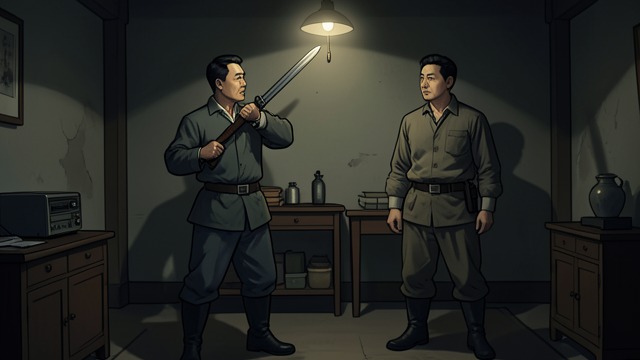
A Misidentified Arrest
The wrong man is attacked
Men searching for Ah Sook assault Quee Long because they cannot distinguish the two Chinese men. Mannering stops them but offers no deeper remedy.
Suspicion narrows to Ah Sook
Shepard’s warrant and public warnings leave Ah Sook little safe ground. His choice to hide at Margaret’s home puts her at risk.
The Killing Is Called Lawful

The Killing Is Called Lawful
Shepard fires first
Shepard finds Ah Sook outside the Crown, kneeling with his revolver. He shoots, preventing the planned attack on Carver but also preventing arrest and trial.
Justice remains unequal
The gaoler’s account determines the official narrative. Devlin doubts the moral certainty of the act, while Ah Sook’s past receives no public hearing.
1839
June to July 1854
After Carver’s release, 1864–1866
20 March 1866
Night of 20 March 1866
