
Luck, Wealth, and the Price of Fortune
The LuminariesThis thread follows the goldfields’ promise of luck and shows how fortunes become accidents, burdens, and contested moral claims.
increasing Bearing strength in each event
 decreasing
Bearing strength in each eventdecreasingA Goldfield Promises Reinvention
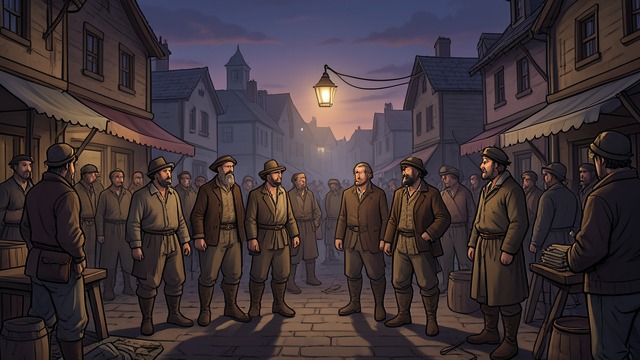
A Goldfield Promises Reinvention
Every person may begin again
Hokitika attracts people who believe work and chance can transform their lives. The field temporarily unsettles inherited rank.
The promise is not equality
Capital, race, gender, and contracts still determine who can turn luck into lasting security. Reinvention remains unevenly available.
Wells Becomes Wealthy

Wells Becomes Wealthy
A fortune changes his prospects
Crosbie’s Dunstan strike gives him the means to leave prospecting and attempt a timber business. He believes wealth can purchase a new life.
Secrecy makes fortune fragile
Because the gold is privately transported and hidden, its ownership cannot later be easily established. Wealth brings exposure as well as freedom.
Staines Is Called Lucky
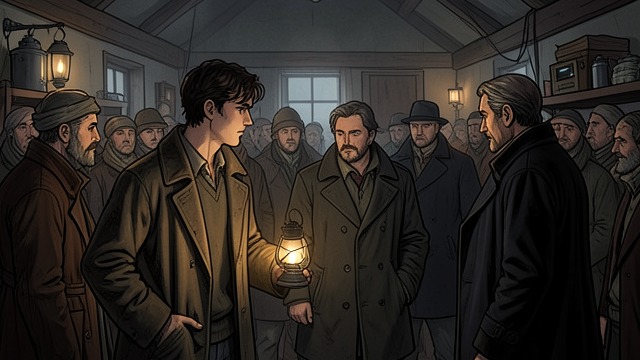
Staines Is Called Lucky
A young prospector attracts envy
Staines is widely admired for wealth acquired quickly. Others interpret his success as luck, virtue, or an affront to older men.
Fortune becomes a character judgment
Mannering and Frost project their own ideas onto Staines. His disappearance invites speculation that luck must eventually carry a hidden cost.
A Hidden Bonanza Becomes a Burden

A Hidden Bonanza Becomes a Burden
Staines returns to the gold
Wounded and confused, he speaks of a fortune buried near Wells’s cottage. His wealth has not secured his safety or his memory.
Others inherit obligations
The gold creates debt, legal exposure, and competing claims. Its value is measured not just by weight but by the harms required to obtain it.
Fortune Is Reallocated

Fortune Is Reallocated
The court assigns costs
Staines accepts responsibility for taking Quee’s gold and agrees to support Anna’s claims. Legal expenses consume part of the fortune.
Luck ends in obligation
The gold does not simply reward a lucky finder. It becomes a means of restitution, yet cannot restore lost time or trust.
During the West Coast Gold Rush
March 1864
January 1866
20 March 1866
27 April 1866
