
The Cost of Speaking and Staying Silent
The LuminariesThis thread follows the choices to confess, conceal, or mislead, and the different consequences those choices impose.
increasing Bearing strength in each event
 decreasing
Bearing strength in each eventdecreasingCrosbie Writes into Silence
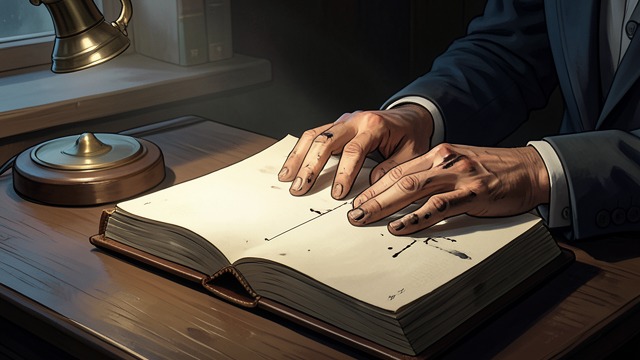
Crosbie Writes into Silence
Letters keep a relationship alive
Crosbie writes repeatedly to Lauderback, sharing his hopes, marriage, and changing fortunes. He receives no answer but continues addressing him as a brother.
Silence has more than one meaning
Lauderback’s silence may express shame or refusal, yet his preservation of the letters complicates any easy judgment.
Carver Conceals His Identity

Carver Conceals His Identity
An alias offers protection
Carver uses Wells’s papers to secure a ship and search for the missing crate. He benefits from the gap between a name and the person who uses it.
Others inherit the confusion
The false identity becomes a legal problem after Wells dies. Without reliable records, truth must be reconstructed through memory and handwriting.
Devlin Keeps the Deed

Devlin Keeps the Deed
A clergyman delays disclosure
Devlin hides the deed in his Bible, telling himself that Anna is too fragile to hear of a possible fortune. His reasons remain partly unexamined.
Concealment shapes the case
His delay protects Anna from immediate pressure but also leaves her uninformed and vulnerable. Silence can be protective and self-serving at once.
Anna Lies to the Court

Anna Lies to the Court
A forged name is defended
Anna adds Staines’s signature, then tells Fellowes she received the deed anonymously. She lies to secure access to the money she believes was promised.
Necessity does not erase risk
Her deception may help her survive, but it exposes her to prosecution. The story refuses to make either truth or secrecy morally simple.
Moody Chooses What Not to Reveal

Moody Chooses What Not to Reveal
Evidence is held back
Moody discovers Wells’s letters but does not publish them. At trial, the Crown group also omits the gowns and secret meeting.
Selective truth becomes responsibility
Each silence protects someone while limiting public understanding. The novel asks whether disclosure serves justice or merely creates another injury.
1852–1865
May to June 1865
January to March 1866
20 March 1866
February to April 1866
