
The Sound of the Stars and the Sea
The LuminariesThis thread follows the novel’s recurring movement between celestial order, maritime danger, and the human desire to find a pattern.
increasing Bearing strength in each event
 decreasing
Bearing strength in each eventdecreasingA Corrected Sky
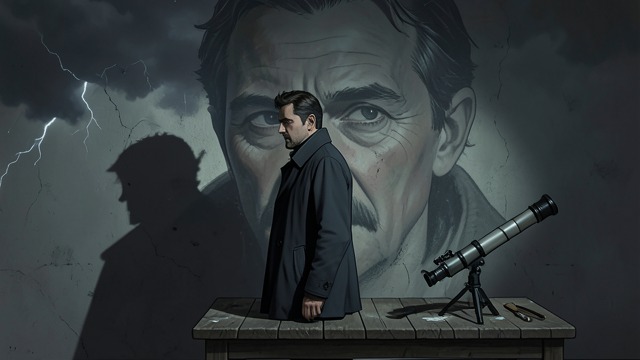
A Corrected Sky
The book insists on astronomical time
Its note to the reader emphasizes precession and the difference between astronomical and popular zodiac dates. The sky is presented as measurable but often misunderstood.
Belief becomes a mirror
Astrology is both a structure for the narrative and a subject of doubt. Characters use celestial language to interpret what they cannot control.
Moody Searches for the Pole
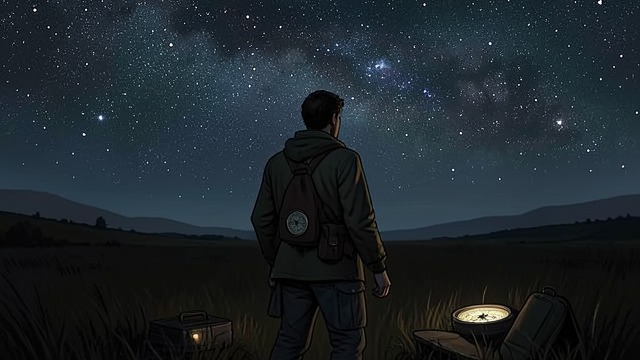
Moody Searches for the Pole
The southern sky disorients him
After reaching Dunedin, Moody looks for familiar stars and finds the patterns inverted. He cannot remember how to locate the pole in the Southern sky.
A missing centre becomes a metaphor
The unfamiliar heavens mirror his loss of certainty. His journey begins under a sky that refuses to confirm the old order.
The Bar Disrupts Navigation
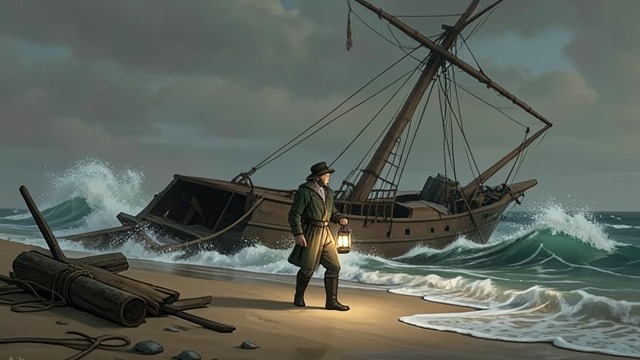
The Bar Disrupts Navigation
Godspeed loses its way
The storm erases lights and drives the barque onto shifting sand. Mariners cannot control the moving bar through skill alone.
Human plans meet material limits
The wreck interrupts Carver’s plans and Moody’s inquiry. Navigation becomes an emblem of the unstable relation between intention and consequence.
A Month Without a Moon
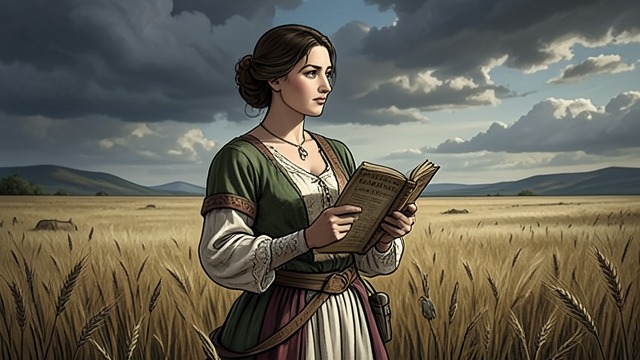
A Month Without a Moon
Lydia predicts a rare sky
She tells Gascoigne that February will contain no full moon, drawing authority from an almanac and her confidence in interpretation.
Prediction affects expectation
The forecast contributes to the mystique of the Wayfarer’s Fortune. It makes the audience watch the heavens for confirmation of a human story.
The Zodiac Turns Toward a Beginning
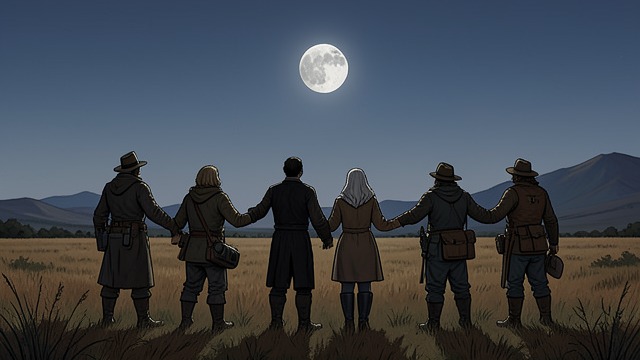
The Zodiac Turns Toward a Beginning
Pisces completes a cycle
The narrative describes selfhood as something formed at the end of a zodiacal sequence, while warning that it can become a prison built from within.
A new moon leaves room
The closing conjunction does not resolve every mystery. It offers a fresh cycle in which characters may choose new paths.
Opening note to the reader
14 January 1866
Night of 27 January 1866
February 1866, forecast in January
Final pages, at the new moon
