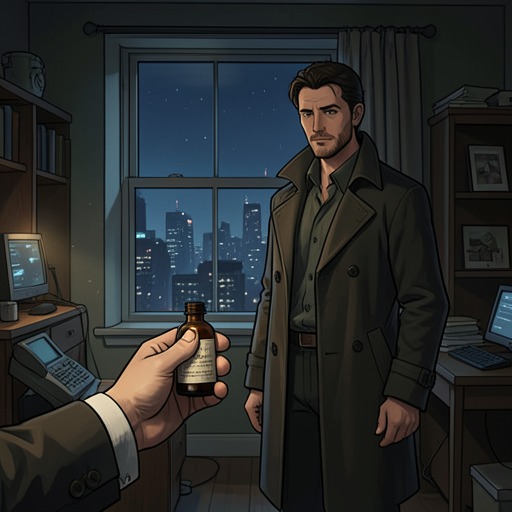
Anna Wetherell’s sobriety
The LuminariesAnna Wetherell’s sobriety is a significant change in a life previously organized around frequent opium use: after a period away from Kaniere, she tells Ah Sook she has stopped, and he sees a marked difference in her. The change separates her from a shared routine and gives new weight to questions surrounding her January overdose. Her later confinement and physician-directed laudanum taper, however, distinguish stopping opium from being free of all opiate medication.
Dependence and the January Overdose
Before this change, Anna took opium nearly every day and was accustomed to its effects. On January 14, she suffered an overdose severe enough to leave her unconscious for more than twelve hours. Joseph Pritchard, a chemist who supplied opium to the West Coast dens, doubted that such a prolonged loss of consciousness could have happened accidentally to so experienced a user. He considered whether someone had given her the drug against her will or altered it to harm her; he also considered that she might be concealing the purpose of the overdose. These remained suspicions, not established explanations.
Anna told Pritchard that she had not intended to kill herself, and he believed her account. He understood her as someone whose life was difficult but who still had pleasures and was not, in his view, inclined to violence against herself. Yet her familiarity with opium made the episode difficult for him to explain as an ordinary accident. The physician’s confirmation that she had taken a great deal of the drug, together with the duration of her unconsciousness, left Pritchard weighing the possibility of outside intervention against the possibility that Anna was withholding information. Her later sobriety therefore follows an event whose cause remains uncertain in the evidence, rather than resolving that uncertainty.
Withdrawal from Kaniere
Anna did not return to the opium den at Kaniere after the afternoon of January 14. Sook Yongsheng had given her a half-ounce of fresh resin that day; at her customary rate of use it would ordinarily have lasted no more than two weeks. More than a month passed without her returning to share a pipe with Ah Sook or replenish her supply. Her absence was a practical sign of change before it became a declaration: the familiar visits and the route back to the den had ceased.
Ah Sook missed those visits and waited for her each afternoon, unable to explain her disappearance. He suspected that Joseph Pritchard had helped cause the overdose, but the possibility that Anna had stopped using opium altogether troubled him more. His own long struggle with the drug made her apparent recovery difficult for him to believe. In this way, Anna’s sobriety unsettles not only her own routine but also the bond formed through their repeated afternoons together.
A Visible Break with the Past
When Ah Sook eventually visits Anna, she appears in a severe black dress and seems markedly changed. Her face and eyes look brighter and more alert; the dreamlike quality he associates with her former state is gone. She is also thinner, with her wrists and cheeks appearing more pronounced. The contrast registers sobriety through observable changes rather than through an account of a treatment process. Ah Sook recognizes that she has stopped, but his recognition brings bitterness as well as surprise: she has escaped a dependence that has held him for more than a decade.
Anna tells him she has not smoked for three weeks and that she is no longer taking opium. She also makes clear that she will not return to Kaniere or resume their visits. When Ah Sook asks why, she says she cannot explain it there. He wonders whether money or the demands of her debt to Dick Mannering have prevented her from obtaining the drug, but Anna rejects that explanation. Her stated reason is not financial. The refusal closes off the old arrangement without giving Ah Sook a fuller account of what has changed in her life.
Sobriety, Treatment, and Its Limits
The novel later places Anna’s recovery in a different setting: after the autumnal equinox, she and Emery Staines remain incarcerated in the Police Camp gaol. Anna’s bail is set at eight pounds, a sum she cannot pay; unlike an earlier point in her life, she has no gold sewn into her clothing to offer as surety and no employer able to pay on her behalf. Her sobriety thus unfolds amid legal confinement and financial vulnerability, not in a setting of secure independence.
During this period, Dr. Gillies visits nearly every day and prescribes Anna a decreasing dose of laudanum to wean her gradually from addiction. This treatment matters to the meaning of her earlier claim that she has stopped: it establishes a break from smoking opium, but not immediate abstinence from every opiate. The prescribed taper acknowledges continuing dependence as a medical condition requiring management. Her recovery is therefore presented as a change in practice and appearance, followed by supervised reduction of another opiate, rather than as a single, uncomplicated moment of cure.
Anna’s sobriety also alters the relationships through which the story has shown her drug use. It ends her visits to Ah Sook and Kaniere, while leaving the cause of her January overdose unresolved. The contrast between her self-declared cessation and later medical taper preserves a distinction between resolve and recovery: Anna has stopped returning to the pipe, but treatment and the circumstances surrounding her dependence remain part of her story.