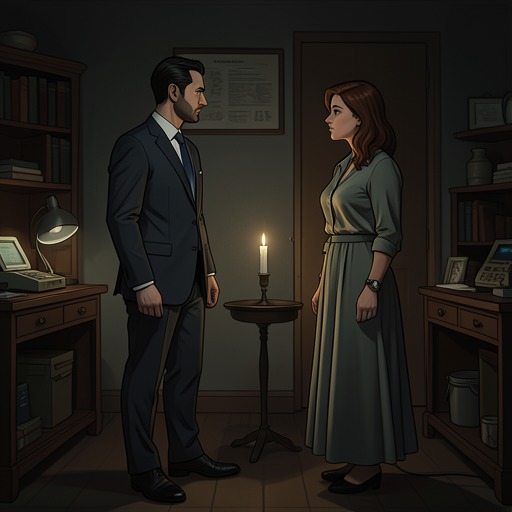
Anna’s orange silk gown
The LuminariesAnna’s orange silk gown is the final hiding place for part of the fortune concealed in five dresses made by Lydia Wells. Ah Quee stripped the other four gowns of their gold, but Anna never wore the orange one in Kaniere, leaving its weighted seams untouched. When Anna discovered the gold after waking in gaol, the dress became a means of escape from debt and a test of how much she could know about the objects she wore.
Salvage and hidden contents
Anna bought the gown among five dresses recovered from the wreck of the Titania. The salvage seller described the trunk as unclaimed and its paperwork as unreadable: salt water had rendered the bill of lading illegible, the log did not identify the item, and no female passengers had been aboard when the ship grounded. The dresses themselves were heavy, old-fashioned garments; two were speckled with black mould. The gown’s weight and uncertain provenance were clues to a history Anna had not been told.
That history began with a shipping crate Francis Carver used to blackmail Alistair Lauderback. Inside was a trunk containing about four thousand pounds in pure gold, meticulously sewn into the linings of five dresses by Lydia Wells, who was then posing as Carver’s wife. After the crate went missing, Carver sailed to Hokitika to look for it and advertised a reward under the name Crosbie Francis Wells. The orange gown was one piece of a fortune whose owners, identities, and route had all become obscured.
The gold left in the seams
Anna wore the dresses in rotation, but did not take the orange gown when she visited Ah Quee’s hut in Kaniere Chinatown. Often nearly senseless with opium there, she slept while Ah Quee used needle and thread to remove gold from the other four gowns. He retorted the dust into squares and stamped them with the Aurora name, intending the earnings to be banked against the claim owned by Emery Staines. The work took months. The orange dress’s absence from these visits preserved the gold still sewn into it.
Ah Quee and Edgar Clinch each mistook the dresses’ hidden wealth for evidence that Dick Mannering was using Anna to smuggle raw ore and evade duty. Ah Quee, who had already been cheated by Mannering, decided to turn the apparent scheme to his advantage. His extraction of the gold left the orange gown as the exception: the final portion was neither removed in Kaniere nor entered into the deceptive Aurora accounting.
Discovery and changing use
Anna discovered the remaining metal about two weeks before Walter Moody reconstructed the chain of events. She woke in gaol after an overdose with no memory of the twelve hours before her arrest, and supposed the gold had only recently been planted on her. She asked Aubert Gascoigne for help; together they excavated the metal from the orange gown and hid it in a flour sack under his bed. The gown thus became both the source of a hidden asset and an object Anna could no longer safely wear without attracting notice.
When Anna returned to the Gridiron Hotel in a black dress belonging to Gascoigne’s late wife, Clinch noticed that the orange gown had disappeared and renewed his suspicions. He spoke cruelly to Anna and gave her notice to leave, resenting her unpaid debts and suspecting that she possessed hidden wealth. Anna later paid her debt to Clinch with a six-pound loan from Lydia Wells, not with the gold from the gown. She left the hotel for Lydia’s lodging at the Wayfarer’s Fortune, while the recovered gold remained available to cover her much larger debt to Mannering.
The gown’s value continued to shape events after its gold had been removed. When Emery Staines was arranging his affairs before imprisonment, Charlie Frost proposed that Staines assume Anna’s debt to Mannering and charge repayment against his share of the bonanza, so Anna would have money to live on while he was in gaol. Staines agreed. The plan linked the gold recovered from the dress to Anna’s future without requiring her to surrender it directly or present it as ordinary earnings.
Significance
The orange gown’s changing status—from dubious salvage, to a garment worn without recognized meaning, to a concealed store of wealth, and finally to evidence of Anna’s precarious security—shows how value in the novel travels through objects as well as people. Its gold passes from a lost shipping crate into dresses, through Ah Quee’s painstaking removal of four gowns’ contents, and into Anna’s care through the untouched fifth. Each transfer is shaped by concealment, uncertain ownership, and unequal power.
The gown also marks the limits of what Anna can know. Its weight might have suggested its contents, but her opium use and the dress’s unexplained origin leave her unaware until she wakes from an amnesic blackout and finds the gold. The orange silk therefore holds together two opposed conditions: the fortune is physically close to Anna, yet its history remains hidden from her. Once emptied, the dress’s disappearance still provokes Clinch’s suspicion, demonstrating that the garment’s social meaning outlasts the gold sewn into it.