Astrology and the zodiac
The LuminariesAstrology and the zodiac organize the novel’s chapter headings while furnishing an explicit language for its ideas about time, perspective, selfhood, and fate. Planetary configurations and zodiac signs repeatedly label sections, but the pattern is not a simple calendar or a straightforward sequence through the signs. Its deeper function is to frame changing states of knowledge: what is glimpsed or predicted can acquire material form, while human beings remain caught between the force attributed to fate and the consequences of their own decisions.
Chapter headings and recurring signs
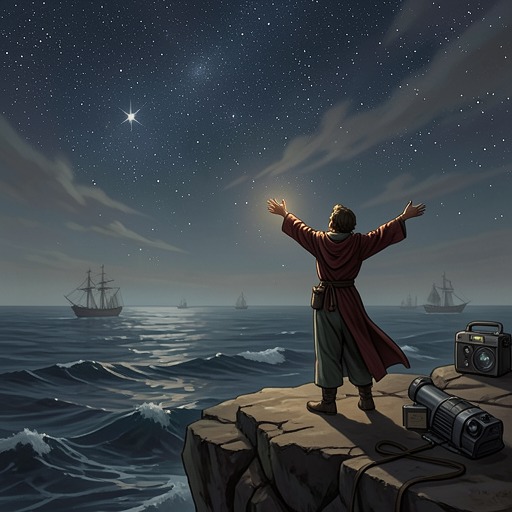
The astrological framework is visible in titles such as A Month Without a Moon, Venus in Aquarius, Mercury in Aquarius, Sun in Pisces, Saturn in Virgo, Jupiter in Capricorn, Moon in Aries, Crescent, and Mars in Aquarius. Each pairs a celestial body or condition with a sign, or, in the case of the moon titles, with a phase or absence. The variety matters: the headings make the sky a recurring register for the story without reducing every section to one identical formula. A month without a moon evokes a measure of time by absence; a crescent moon specifies a visible phase; the planetary titles give other chapters their own combinations.
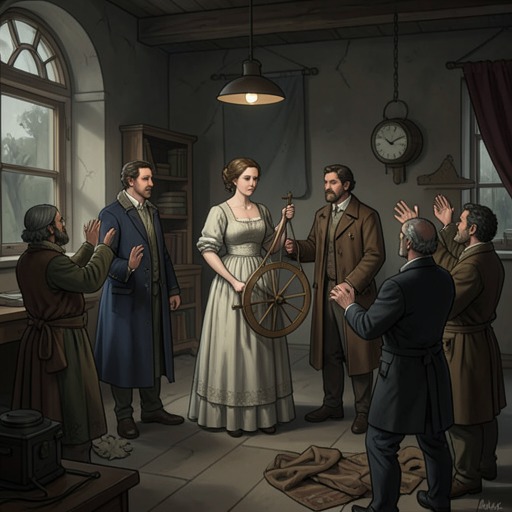
The chapter headings also accompany distinct changes in the action. The public opening of the Wayfarer’s Fortune appears under A Month Without a Moon. Venus in Aquarius frames a séance at which Lydia Wells leads a gathering seeking contact with the dead. Later, Mercury in Aquarius introduces a chapter in which Ah Sook gives Walter Moody a gift. Sun in Pisces precedes a section where the deed of gift takes on new significance, while other headings foreground developments involving George Shepard, Quee Long, Dick Mannering, Aubert Gascoigne, and Te Rau Tauwhare. The titles do not, by themselves, explain each event’s cause; instead, they place episodes within a repeated celestial scheme and invite the reader to notice correspondences between changes in the sky’s vocabulary and changes in human affairs.
A zodiac of individual perspectives
The novel makes its most direct statement about the zodiac’s meaning in a meditation accompanying Sun in Pisces. It describes the earlier signs as stages whose projects are undertaken singly: Aries does not admit a collective point of view, Taurus holds to the subjective, and Gemini has an exclusive code. Cancer, Leo, and Virgo are associated respectively with a search for source, purpose, and design. This account presents the zodiac not only as a set of signs but as a way to think about the limits and development of perspective.
The meditation then describes a second act in which people begin to show themselves through relation and expression: Libra as a notion, Scorpio as a quality, and Sagittarius as a voice. Capricorn brings memory; Aquarius, vision. Pisces, the final and oldest sign in this account, brings a kind of wholeness or selfhood. This is a conceptual progression rather than a claim that every character passes neatly through fixed astrological stages. Its emphasis is on how a self becomes intelligible: first through private perception, then through memory, vision, and an enlarged awareness of the self.
That account also helps explain why revelations matter so much in the surrounding plot. Under Sun in Pisces, what had been glimpsed, envisioned, believed, prophesied, predicted, doubted, or forewarned is said to become manifest. An idea held at a distance may become an actual document, decision, or consequence. The deed of gift is a particularly apt focus for this transition: its significance changes as knowledge about it and its claims come into sharper view. In this sense, the astrological language joins inward expectation to outward evidence without making the passage from one to the other automatic or uncomplicated.
Fate, agency, and self-undoing
The Pisces meditation gives the framework its central paradox. The doubled fish are presented as an image of self-awareness turning back upon itself, an ouroboros of mind in which the will of fate and the fated will cannot be cleanly separated. The self is both subject to forces it does not command and an agent whose choices help produce its end. The related image of a prison built by prisoners, sealed from within, sharpens that contradiction: confinement may be experienced as destiny even when it is made through human action.
This is why astrology in the novel is more than a decorative forecast of future events. The celestial headings establish a language for patterns and recurrence, but the accompanying meditation refuses to settle whether people are simply governed by those patterns. Its attention to self-making places responsibility alongside constraint. Characters may understand themselves through predictions, memories, or partial visions, yet the resulting consequences are still bound up with what they do and what they fail to do. The framework therefore permits both a sense of cosmic order and a reading of self-undoing as something enacted from within.
Vision and the limits of prediction
The transition from Aquarius to Pisces is especially important to the novel’s account of knowledge. Aquarius is associated in the meditation with vision, while Pisces gives what has been envisioned or doubted form and substance. The chapter titles Mercury in Aquarius and Sun in Pisces echo that movement at the level of structure: a mode of seeing is followed by a section whose framing emphasizes manifestation. The pattern is not proof that a prophecy controls events. Rather, it gives the reader a way to consider how a vision, suspicion, or prediction can become consequential once circumstances bring it into the world.
The headings’ recurrence also complicates any assumption that a single astrological label supplies a complete explanation. Aquarius appears with both Venus and Mercury, and later again with Mars; Virgo, Capricorn, and Aries also occur in the cited chapter titles. These combinations resist a one-sign-per-chapter march through the zodiac. The system is repeated but varied, much like the novel’s insistence that perspective is partial and that meaning depends on the relation among events. The sky supplies a framework for reading; it does not remove the need to interpret.
Structural significance
Astrology links the novel’s chapter architecture to its broader concern with whether an ending is imposed or made. The progression described in the Pisces meditation moves from the solitary viewpoints of the first signs toward memory, vision, and a more integrated self, but it ends not in uncomplicated liberation. Wholeness brings the possibility of seeing how one’s own will participates in one’s fate. The final sign’s self-awareness can therefore disclose a trap as readily as it offers completion.
The result is a framework that holds formal order and human uncertainty together. Chapter titles repeatedly locate the action under planets, signs, and lunar conditions; the explanatory meditation gives those labels a developing intellectual shape. Yet the novel does not turn that shape into a simple rulebook. Prediction and realization remain distinct, and a pattern visible in retrospect does not erase the choices that formed it. Astrology thus works both as an organizing device and as a question: whether lives unfold under a celestial design, or whether people, in trying to understand and direct their own lives, help build the conditions of their undoing.