Benjamin Löwenthal
The LuminariesBenjamin Löwenthal, editor of the West Coast Times, is a journalist and a consequential intermediary in Hokitika’s tangled affairs. His newspaper carries notices and political reporting, but his work is governed by a personal standard of fairness: he will not casually publish accusations without giving their targets a chance to respond, and he refuses a request when he judges it to involve an unacceptable breach. At the same time, information he gathers and passes on can alter the course of private disputes, property claims, and investigations. He is not merely a recorder of the town’s events; he is one of the people through whom those events become public knowledge and actionable evidence.
Identity and Background
Löwenthal was born in Hanover, where he grew up as the elder son of a textiles merchant. His father’s ambition was to secure an education for both sons, and he lived to see that aim fulfilled. Soon after the brothers completed their studies, both parents died of influenza. Löwenthal later learned that their deaths had occurred on the same day the Jewish people received formal emancipation from the Hanoverian state. This coincidence joins a personal bereavement to a wider historical change, though the account does not claim that it determined his later choices.
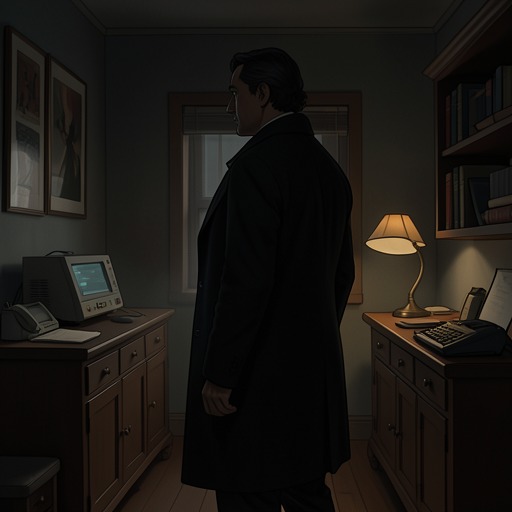
By the time of the main events, Löwenthal is established in Hokitika as a newspaperman. He lives in a small apartment behind the West Coast Times office on Weld Street, close to the workplace where he edits and sets type. His observance of Shabbat is part of his daily life: when Charlie Frost visits him, Löwenthal is at his kitchen table finishing supper as the observance draws to a close. His routine combines domestic practice with the labor of a newspaper office that must prepare its next edition on a deadline.
The Newspaper and Its Standards
Löwenthal treats the newspaper as an institution with real power over people’s standing. He knows that public opinion in Hokitika can judge harshly and that a reputation may be damaged quickly. When an inflammatory letter arrives accusing someone, his practice is to contact the parties before publication. He gives the person likely to be criticized advance warning and invites a reply. This procedure does not make him neutral in every dispute, but it shows that he regards publication as an act carrying obligations, not simply an opportunity to circulate a striking allegation.
That standard also shapes his dealings with Thomas Balfour. Balfour approaches him with a proposal that Löwenthal will not accept, because his moral code does not permit the kind of violation Balfour is asking him to undertake. Rather than indulge the request, Löwenthal changes the subject to a newspaper notice concerning Emery Staines, explaining that other men have already come to his office to ask about it. The exchange establishes both the limits he places on his work and the notice’s growing importance as a point of inquiry.
His care with advertisements is practical as well as ethical. When a scarred man returns after seeing an advertisement in the West Coast Times, he objects that Löwenthal altered the notice without consulting him and insists that his middle name be included. Löwenthal apologizes and prints the notice again. The man has paid for a week of advertising; Löwenthal runs the additional notice and offers another printing without charge. The incident shows him balancing the paper’s control over its columns against the advertiser’s right to have a paid notice presented as intended.
The craft behind this work appears again when Löwenthal notices that a two-inch advertisement will not fit its allotted space because it contains too many words. He explains the typographical problem to Emery Staines, sets the type aside, and decides to return to it with fresh eyes rather than force a hurried correction. This small delay reveals the editor’s attention to the physical constraints of print: even a short notice depends on measured space, accurate wording, and the judgment to pause when the page is not working.
Information, Property, and Public Consequences
Löwenthal’s reporting helps set off the sale of Crosbie Wells’s estate. After Alistair Lauderback arrives in Hokitika following his visit to Wells’s cottage, Löwenthal interviews him for a political special planned for the Monday edition of the West Coast Times. From Lauderback, he learns that Wells is dead. Löwenthal then infers that the dead man’s property will soon be offered for sale and tells Edgar Clinch, who is looking to invest in land. Clinch takes his deposit to the bank, where Charlie Frost facilitates the purchase.
The sequence is consequential without making Löwenthal the purchaser or the person who completes the transaction. He recognizes the likely legal and commercial consequence of Wells’s death, then relays the information to someone positioned to act on it. His intervention turns a private report into a chain of decisions involving Clinch and Frost. The estate’s later importance makes this an early example of how information in the novel travels through local relationships: a conversation for a newspaper story becomes a tip about property, and the tip helps determine who acquires Wells’s land.
Löwenthal is also present when the town’s scattered knowledge is brought together. At the Crown Hotel, Thomas Balfour tells a disorderly, interrupted account to Walter Moody and the assembled men. Löwenthal is among those listening. The narration marks him as hearing parts of the tale for the first time, until Balfour’s pauses prompt him to recall an event from about eight months earlier. Löwenthal steps forward and asks to interject, then recounts his memory in a grave, deliberate manner. His recollection does not straighten every confusion in the room, but it adds another strand to an account whose chronology has to be reconstructed from separate witnesses and partial knowledge.
The meeting also brings into view the vulnerability of shared information. Löwenthal realizes that news of George Shepard’s private investment could only have come from one of the twelve men at the Crown, meaning that someone has broken the group’s vow of silence. Because Thomas Balfour is the only man Löwenthal knows to have an acquaintance with Lauderback, he suspects that Balfour may be responsible. The evidence presents this as Löwenthal’s inference, not as proof. His response is inward admonition rather than public accusation, consistent with the care he usually takes before turning suspicion into print.
Anna Wetherell and Emery Staines
Löwenthal’s principles extend beyond editorial procedure. He finds Anna Wetherell after she has been assaulted and is able to vouch for the condition in which he found her. When Francis Carver comes to the newspaper office, Löwenthal offers condolences, but the encounter becomes confrontational. Carver demands his name and threatens him. Löwenthal does not withdraw his judgment: he says that Anna has been treated wrongly and that her vulnerability makes the conduct more serious. The exchange places the editor’s public-minded code in direct conflict with Carver’s attempt to silence him.
Löwenthal’s account of Anna’s condition reaches Emery Staines through him. After hearing what happened, Staines rides toward the Arahura Valley. Löwenthal’s testimony later matters because he can confirm that he found Anna in the road and can describe her state when he arrived. In this way, the newspaper editor becomes a witness whose knowledge is not only printed or discussed but can support another person’s understanding of what happened.
He is also present during Anna’s medical treatment. The procedure is difficult and deeply distressing; Löwenthal, ordinarily able to withstand upheaval, weeps as he assists Dr. Gillies. When Anna opens her eyes afterward, Löwenthal is standing nearby with a cloth, while Edgar Clinch is also present. These details make his involvement more than that of a reporter passing on information. He has entered the immediate circle of care around Anna, and the emotional effect of the episode is visible in a man otherwise associated with measured language and editorial control.
Narrative Role and Significance
Löwenthal’s story repeatedly tests the distance between witnessing an event and shaping what others learn about it. He reports on Lauderback, infers the likely sale of Wells’s property, and informs Clinch. He handles advertisements whose wording matters to the people who place them. He observes Anna’s condition, challenges Carver, and later provides information that helps Staines respond. None of these acts makes him the sole cause of the larger plot; instead, they show how small acts of communication acquire weight when they pass through a closely connected town.
His position as editor also fits the novel’s fragmented mode of disclosure. At the Crown Hotel, he hears a story assembled through interruptions and recollections, then contributes an earlier episode of his own. He is both a participant in the network of events and a narrator within the gathering, supplying remembered information rather than an all-knowing account. As the characters attempt to put events in order, his memory adds evidence while leaving the broader task of interpretation unresolved.
The newspaper desk, the typeset advertisement, and the editor’s invitation to reply all embody a tension central to Löwenthal’s role: information can expose, injure, or redirect a life, but withholding it can also protect an abuse of power. His conduct is not presented as detached neutrality. He refuses what he considers an improper request, gives warning before publishing inflammatory claims, and speaks up for Anna even when Carver threatens him. The resulting portrait is of a working journalist whose ethics are tested not in abstraction but through the people, property, and reputations that pass across his desk.