Crosbie Wells’s letters to Alistair Lauderback
The LuminariesCrosbie Wells’s letters to Alistair Lauderback turn a hidden family history into material evidence: in a bundle kept out of sight, a dead man’s repeated appeals reveal that the celebrated politician had a half-brother who wrote to him for thirteen years without receiving a reply. Their discovery gives Walter Moody a new way to read the tangled identities, silences, and fortunes surrounding Wells’s death. The letters are not merely a record of what happened to Wells; their survival, concealment, and unanswered words make Lauderback’s silence part of the story.
Discovery and physical form
Moody finds the letters inside an unfamiliar black trunk with iron straps and a domed, barrel-like lid. Its baggage labels, including Southampton and Lyttelton, suggest a history of first-class travel; a label identifies it as the property of Alistair Lauderback. Rather than alerting the maid that he has entered the wrong room, Moody locks the door and searches the chest. After examining its contents, he feels along the lid and discovers a slim package hidden between the cedar and the calico lining. A carefully hemmed slit is camouflaged by the lining’s tartan pattern, concealing the letters in the space beneath it.
There are around fifteen letters, addressed to Lauderback in a plain, unsophisticated hand. Moody notices the knot and bow of the string that binds them before untying the bundle. The postmarks reveal that the letters have been arranged in reverse chronological order, with the latest on top. He rearranges them to read the sequence from its beginning. Their physical hiding place and reversed order make the act of reading a small reconstruction: Moody must uncover not only what Wells wrote, but the chronology that the bundle initially obscures.
The first appeals and the family secret
The earliest letter is dated March 1852 and begins by telling Lauderback that the writer is his brother, although Lauderback does not know him. Wells explains that their father had an illegitimate son, raised under the name Crosbie Wells, a surname taken from his parish priest. He describes his childhood in the Newington whorehouse called the Jewel and his life as a man of limited means. His father eventually wrote to him, acknowledged knowing of his existence, and sent him twenty pounds and his blessing, but declined to identify him in his will for fear of damaging his reputation.
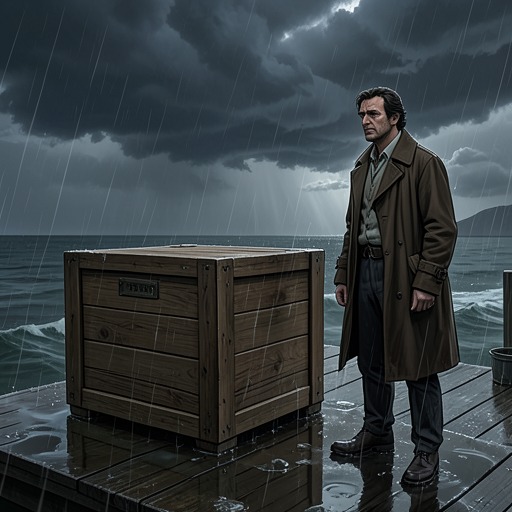
Wells traces how he tried to find the father he had never met. He followed the rented carriage that had brought the letter to Glen House, bought a coat, shaved, and travelled there, but could not bring himself to ring the bell. Seeing news that Alistair Lauderback was sailing for the colonies, Wells mistakenly believed that the politician was his father. He followed him to Dunedin and, at a public address held in the rain on a wharf, realized that Lauderback was instead his brother. Wells did not approach him. Unable to afford passage home, he wrote to ask for help, explaining that he had spent the twenty pounds on the journey and necessities and had sold his coat for far less than it had cost.
A second letter, dated September 1852, returns to the appeal six months later. Wells fears that calling himself Lauderback’s brother may have offended him, and apologizes for the possibility that the truth about their father has caused distress. His circumstances have worsened: he has tried navvy work without success, has suffered chilblains and fever in the cold, and can barely save money. He asks only for the price of a third-class ticket, promising that Lauderback need not hear from him again. The request is modest, but the silence that follows it will span years.
A life rebuilt in the goldfields
After a gap of nearly a decade, a letter dated June 1862 records a changed life. Wells writes as a married man after a brief courtship and describes his wife as someone he is proud to accompany. He has been digging the gullies at Lawrence and has accumulated what he calls a competence, though he has not yet made a major strike. He intends to return to Dunstan to provide for his wife. The letter’s domestic confidence contrasts with the exposed need of the 1852 appeals: Wells has acquired a family and some security, though he continues to address a brother who has never answered.
The June 1865 letter places Wells in West Canterbury, west of the mountains. He describes the region as distinct from Otago, then explains that he has left his former life behind and become estranged from his wife. He admits that he concealed much in his earlier correspondence because he feared Lauderback would think less of him if he knew the truth about the marriage. He does not detail his escape, but says he will no longer prospect: he has had his fortune stolen before and does not want to risk repeating that experience. Instead, he means to enter the timber trade. He also writes of his growing friendship with Te Rau Tauwhare, whose company lifts his spirits after a period of loneliness. The letters thus trace not only Wells’s search for kin, but the successive attempts to make a life after disappointment and loss.
Silence, concealment, and consequence
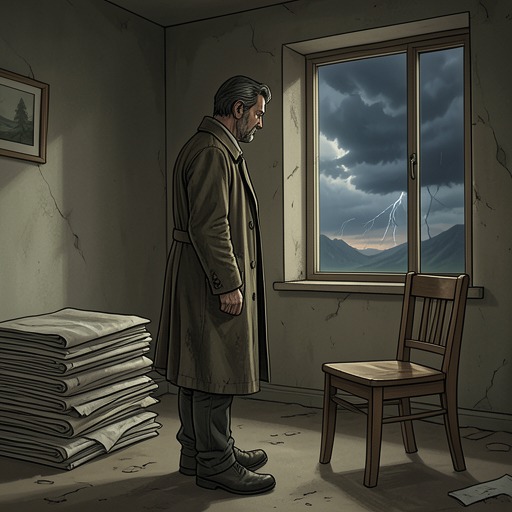
The final letter is dated a little more than two months before the present events and less than a month before Wells’s death. Across the bundle, Wells repeatedly refers to Lauderback’s failure to answer. Moody concludes that the politician never replied to any of the appeals, though he had kept and reread them: the oldest letters are worn from repeated folding and refolding. Lauderback’s silence is therefore not simple ignorance. The letters show that he preserved the words he left unanswered, while later travelling to Wells’s cottage and arriving half an hour too late to see him alive.
Their discovery also changes the meaning of the identities circulating around the missing fortune. Francis Carver had used the name Crosbie Francis Wells and produced a birth certificate when advertising in the West Coast Times for the return of a lost shipping crate. That crate contained about four thousand pounds in gold sewn into five dresses by Lydia Wells, who was then posing as Carver’s wife. The correspondence establishes that the real Crosbie Wells had a history and family connection distinct from the identity Carver used; Moody also learns that Lauderback and Wells were half-brothers. The letters do not resolve every question about the birth certificate or Carver’s choice of alias, but they make the name Wells more than a convenient document in a gold-recovery scheme.
As an object, the bundle carries two kinds of value at once. Its contents are intimate appeals for recognition, passage money, and contact; its concealment makes them clues in a public mystery involving a missing crate, a dead man, and a contested fortune. Wells’s letters travel no farther than Lauderback’s trunk, yet they outlast their writer and alter what Moody understands about both men. Their deepest revelation is the disparity between the relationship Wells sought and the one Lauderback allowed to exist: a brother wrote, waited, and tried again, while the other kept every letter and answered none.