Fortune-telling
The LuminariesFortune-telling enters the story as both a practical occupation and a suggestive idea: Anna Wetherell hopes to earn a living by helping Lydia Wells tell fortunes, while the novel repeatedly makes fortune mean material wealth as well as what may be known about the future. The practice is introduced as something Anna must learn, not as a power or expertise she already possesses; its larger resonance comes from the story’s persistent uncertainty about who knows what, and how fortunes are made, hidden, and recovered.
Practice and Setting
Lydia’s establishment, the Wayfarer’s Fortune, provides the setting for fortune-telling as work. After Lydia takes Anna in, Anna begins learning the Tarot and astral charts with the idea that she might assist Lydia in telling fortunes. The two methods are identified as the tools of the proposed trade, though the evidence does not describe Anna conducting a reading or establish what predictions she or Lydia make.
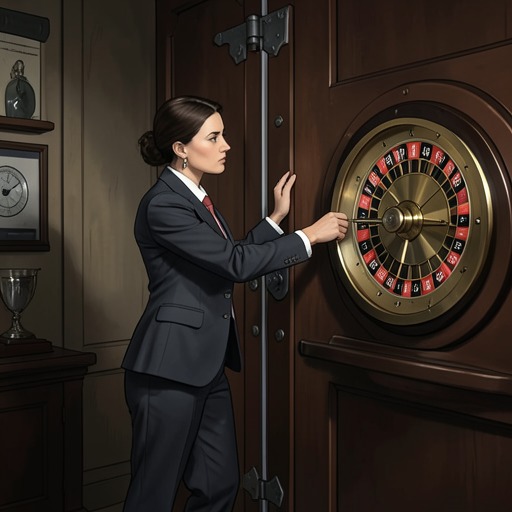
The name of the establishment links the practice to the book’s other meanings of fortune without reducing one to the other. Fortune-telling promises an account of what may lie ahead; material fortune in the surrounding plot is tangible, countable, and disputed. The shared word places the work of divination beside the actual wealth whose concealed movements dominate the characters’ lives.
Anna’s New Livelihood
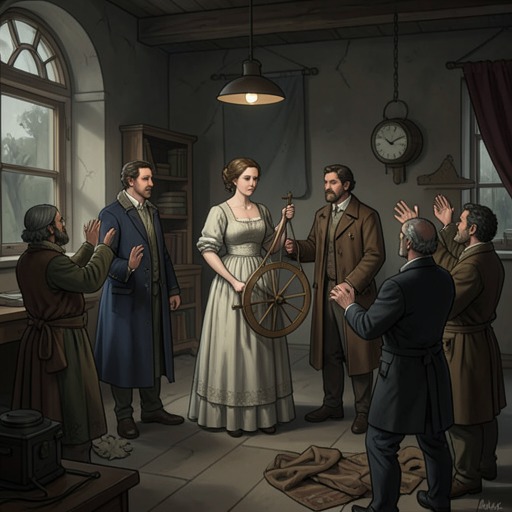
Anna’s move toward fortune-telling follows her departure from her former employment. In court, she explains that Lydia arrived in town and took her in at the Wayfarer’s Fortune, after which Anna began preparing to work as her assistant. Anna had not planned this future when she left her previous employment: she did not know Lydia was coming before she arrived. The opportunity is therefore contingent, created by Lydia’s unexpected arrival and offer of shelter rather than by a prior vocation or a clearly stated belief in divination.
The change carries practical weight. Anna imagines earning a living as an assistant, a different role from the one she had left behind. The account does not claim that this new work immediately makes her independent or resolves the difficulties surrounding her; it shows a possible path toward supporting herself, formed through her renewed association with Lydia.
Fortune as Hidden Wealth
The story gives the word fortune a material counterpart in the gold concealed in dresses. Lydia had sewn roughly four thousand pounds in gold into the linings of five gowns while posing as Francis Carver’s wife. After the shipping crate containing the dresses disappeared, the gowns passed into a chain of mistaken assumptions and concealed transfers. Ah Quee discovered the gold in Anna’s dresses and, believing it connected to Dick Mannering’s fraud, gradually removed it from four gowns, retorted the dust into squares, and stamped them with the name of the Aurora mine.
The last portion remained in Anna’s orange gown. After waking in gaol with a twelve-hour gap in her memory, Anna discovered the gold and, with Aubert Gascoigne’s help, removed it and hid it in a flour sack beneath his bed. This sequence makes fortune something neither foretold nor freely possessed: its location is obscured by clothing, opium, mistaken explanations, and competing claims. Set beside Anna’s prospective work at the Wayfarer’s Fortune, the hidden gold sharpens the book’s distinction between telling a fortune and finding out where one has gone.
Knowledge, Guesswork, and Recounting
The plot surrounding the gowns also shows how readily people misread what they uncover. Edgar Clinch and Ah Quee each concluded that the gold in Anna’s dresses was connected to Mannering’s dealings, although their conclusions and responses differed. Ah Quee acted on his suspicion by removing and reprocessing the gold; Clinch’s earlier suspicion did not lead him to press Anna or Mannering. Their interpretations arise from partial knowledge rather than from any demonstrated act of fortune-telling.
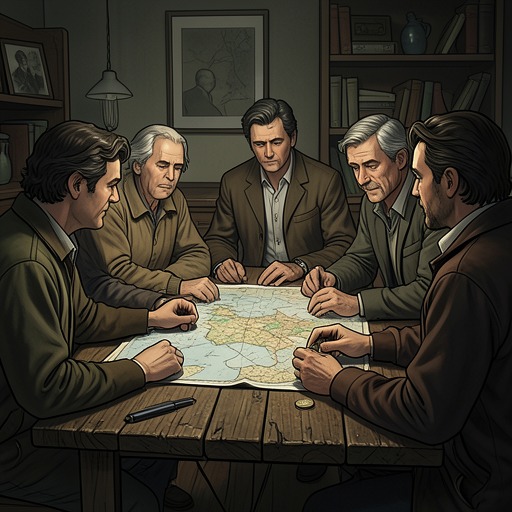
That uncertainty extends to the way the story is pieced together. At a gathering attended by people connected to Crosbie Wells’s death and estate, Thomas Balfour’s account is disjointed and repeatedly interrupted; Walter Moody tries to arrange the recounted events into their actual sequence. The contrast is not presented as a direct contest between investigation and divination, but it underscores a central problem shared by the novel’s many meanings of fortune: appearances and fragments do not by themselves disclose the truth. Fortune-telling supplies Anna with a possible occupation, while the surrounding narrative keeps the larger question of what can be known unsettled.