Hokitika
The LuminariesHokitika is a rapidly expanding settlement on the West Coast, hemmed between the Tasman Sea and the sudden rise of the Alps. Its river and harbor connect inland goldfields to shipping and commerce, while the town’s crowded banks, hotels, offices, and streets make visible the fortunes being made and lost around it. Rain repeatedly transforms that busy settlement into a subdued, difficult place to move through; the Crown Hotel, the Reserve Bank, and the growing waterfront become stages on which its commercial ambitions and private entanglements meet.
Coastal setting and first impressions
Hokitika occupies a narrow corridor of flat land between the coastline and the mountains. From the coast the land appears brown and barren; inland, the river is described as cool, white, and gleaming. At its mouth, the river forms a sheltered lakelet crowded with masts and steamers waiting for clearer weather. Beyond that calm harbor, surf breaks against the sand, while low cloud obscures the mountain flanks and seems to press a grey ceiling over the town’s roofs. The contrast between river, sea, and mountains defines Hokitika as both a port and a precarious settlement at the edge of difficult country.
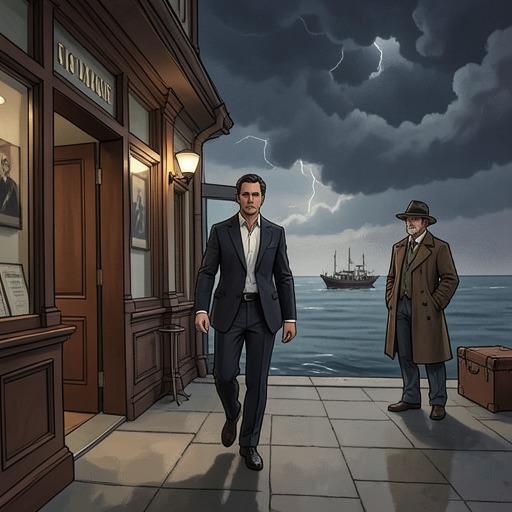
Walter Moody’s first view of the township comes through two weeks of uninterrupted rain. From a distance, the town appears as a shifting smear, partly revealed and then blurred again as mist moves across it. His arrival is physical rather than panoramic: he hurries along the beach past slaughterhouses, latrines, huts, and sagging tents, crosses shin-deep slurry, and makes for the Crown Hotel without taking in the warehouses and offices along Wharf Street. The town’s essential structures are present, but the weather and his urgency make them almost indistinct. Hokitika is introduced not as an orderly prospect but as a settlement that must be entered through mud and rain.
The weather also changes the town’s ordinary rhythm. On a wet day, traffic dwindles to those with urgent business. Men shelter beneath hotel awnings, trying to keep their cigarettes alight; horses stand motionless in the churned road. In another scene, the rain makes even a brief journey consequential: ferrymen between Kaniere and the mouth of the Hokitika River have little custom, and agree to row only after naming a fare that reflects their reluctance to leave their card game. Weather here is more than backdrop. It slows movement between town and hinterland, alters work, and makes the settlement’s exposed position palpable.
A town made by gold and shipping
Hokitika’s growth is tied to the movement of people and capital toward the Coast. In January 1865, after his partner Robert Harnett retired and sold his shares, Thomas Balfour judged the Otago boom past its prime. He left its harbor-front lot, sailed to the Coast, bought bare land near the Hokitika River mouth, pitched a tent, and began building a warehouse. Balfour & Harnett became Balfour Shipping. His individual move from one gold-rush center to another is set alongside the town’s emergence: as Balfour establishes his business, Hokitika begins to rise around him.
The scale and volatility of this economy are clearest on a Saturday. Diggers return to town in large numbers, bringing the population to about four thousand and filling the lodging houses and hotels along Revell Street. The Magistrate’s Court is overrun with petty claims and mining-right disputes; brokers handle pledges; merchants receive orders from prosperous customers and requests for credit from poorer ones. Gibson Quay is busy with construction, new timber frames, doors, and stores appearing in quick succession. The town gathers the whole cycle of the goldfields into one day: some men are advancing, others have already prospered, and still others are falling or resting after loss. The streets and businesses make fortune visible, but not secure.
The Reserve Bank gives that mobile wealth a public measure. On Saturday at noon, diggers bring in gold while the Libra scales rise and fall, ore is recorded, and junior bankers retrieve claim papers, mark tax payments, and collect fees. A gilt-framed chalkboard displays the week’s yield, broken down by district and totalled for the Hokitika region. When gold is banked or bought, the figures are erased and recalculated. The room responds with murmurs of appreciation and, when a total is remarkable, applause. The board turns scattered discoveries into a shared account of the region’s prosperity, making Hokitika’s fortunes appear countable even as individual claims and livelihoods remain uncertain.
Public rooms and private networks
The town’s establishments serve different kinds of gathering. The Crown Hotel’s smoking room brings together twelve men whose clothes range from frock coats and tailcoats to Norfolk jackets, moleskin, cambric, and twill. At first their separate habits—reading newspapers, tending ashes, or playing billiards—make them resemble strangers sharing a railway carriage rather than members of a group. Their quiet is shaped by the rain outside. The apparent lack of connection becomes important when their association with the same January night gives them a shared secret. Three weeks later, they greet one another with the recognition of people who belong to a private fellowship. Their ties arise less from common convictions than from mutual suspicion and the sense that an outside figure is responsible for their troubles.
Hokitika’s public institutions are also places where incomplete information has practical consequences. The proposed prison is associated with Seaview, a high terrace beyond the town and the site of the future Hokitika Gaol. At the same time, the Magistrate’s Court handles claims and legal disputes, while the Reserve Bank records gold and mining papers. These places represent distinct kinds of authority—custody, adjudication, and financial accounting—within a settlement whose rapid growth has made their business increasingly visible. Their presence does not eliminate uncertainty; the town’s most consequential disputes continue to turn on missing evidence, contested claims, and concealed arrangements.
Hotels, offices, and dining rooms likewise form a network through which news and business travel. Thomas Balfour leaves a meal and a period of contemplation at the Deutsches Gasthaus to revisit Alistair Lauderback’s affairs, then heads for the West Coast Times office. When the front is locked and its shutters are drawn, he goes around to the editor Benjamin Löwenthal’s small apartment. Elsewhere, the Wayfarer Hotel advertises itself through a painted figure carrying a traveler’s bundle, while its modest fittings signal thrift rather than a rule excluding women. It asks no questions of its lodgers and promises them nothing. Such places offer shelter, but they also enable people to pass through town without explaining themselves.
A landscape of arrival and uncertainty
Hokitika is repeatedly encountered by newcomers as a place that resists easy orientation. Charlie Frost reaches a fork in the track from the ferry landing, with one route leading toward Lake Kaniere and another toward Hokitika Gorge. Rich claims, including the Aurora goldmine, lie beyond the river’s south bank, but Frost can scarcely point north and finds no sign directing him to Chinatown. The absence of Chinese faces in the crowd does not mean the surrounding goldfield is empty of Chinese residents; it marks the limits of what he can locate from where he stands. The town’s paths connect it to rich country, but those connections are not equally legible to everyone.
Later arrivals perceive the same settlement differently. Anna Wetherell reaches Hokitika by sea, with time aboard the Godspeed to compare its exposed waterfront with Dunedin, which lies enclosed by hills at the end of Otago Harbour. To her, Hokitika’s buildings look grim and forsaken, their appearance made more wretched by the red and yellow bunting strung across waterfront roofs and awnings. Her view contrasts with the Saturday bustle of diggers, shops, claims, and banking: the town’s activity does not necessarily make it seem welcoming. In these varied arrivals, Hokitika is both destination and threshold, a place where people come seeking wealth, shelter, or a new direction, but where rain, unfamiliar routes, and unresolved histories complicate every beginning.