Hokitika harbour bar
The LuminariesThe Hokitika harbour bar is a concealed, tide-shifting sandbar at the entrance to the river mouth that served Hokitika’s port. It made arrival a gamble: ships waited offshore for safer conditions, while wrecks accumulated as a visible warning of what lay beneath the water. The bar also carried economic and legal consequences. In a town where ships transported gold, the danger of wreck and the cost of clearing one could become matters of insurance, disputed ownership, and strategic advantage.
Setting and Physical Danger
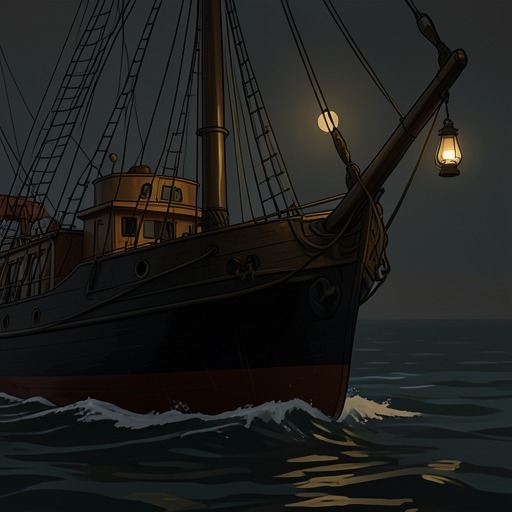
The harbour lay at the crooked mouth of a river, where the port’s calm, mast-filled water gave way to the bar and the open sea. The sand shifted with each tide, concealing the hazard from vessels approaching shore. Thirty-some wrecks had already been scattered along the coast, several of them recent; their broken hulks formed a bleak barricade facing the sea.
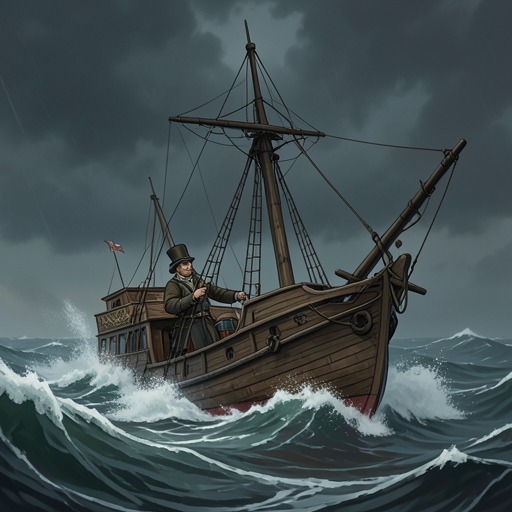
The danger was not limited to large steamers. Balfour described the bar as a risk for any vessel, including a schooner caught on the wrong tide. Ships more than a hundred feet long could be unable to force their way across even at full steam. He recalled three wrecks in a single month, and noted the contrast between ships arriving with little of value aboard and ships departing with gold: the latter offered opportunities for profit amid the danger.
Moody’s Arrival
When Walter Moody reached Hokitika aboard the Godspeed, the captain would not risk bringing the barque into port in the prevailing weather. Instead, the ship anchored offshore, and a six-man lighter carried the passengers across the breakers to land. As the small boat left the ship, it rode the rough water beneath the Godspeed’s rigging; seawater spilled over its gunwales, and Moody helped bail with a leather pail. The lighter was carried over the bar on a breaking wave and into the calmer river mouth.
The crossing left Moody drenched and unsteady. While the other passengers talked cheerfully about surviving the storm and the fortunes awaiting them in the goldfields, he remained shaken by the apparition he had witnessed during the voyage. His arrival therefore establishes the bar both as a practical threshold into Hokitika and as the setting for his unsettled entry into the story.
Shipping, Gold, and Wreck Costs
The bar’s risks shaped the value of ship ownership beyond the immediate question of safe passage. After the Godspeed was wrecked, Carver faced the expense of dealing with the wreck and complained that the costs were coming out of his pocket. Gascoigne pointed him toward protection and indemnity, a shipowners’ mutual fund distinct from ordinary cargo insurance. Lauderback belonged to the Garrity Group, and each of his ships carried nearly a thousand pounds of credit that could be drawn on for liabilities such as wreck removal.
The protection did not simply follow the ship without regard to its history. Carver could seek the funds because the Godspeed’s ownership had changed, but he had to file before the middle of May, when a year would have passed since the sale and Lauderback’s obligation concerning the vessel would cease. Gascoigne had established the details through inquiries at Balfour Shipping, the harbourmaster’s office, newspaper archives, and the Reserve Bank. A dangerous stretch of water thus became entangled with the paperwork governing who would pay for its wrecks.
A Bar That Extends the Plot
The Godspeed’s ownership was itself contested. Carver had obtained the ship from Lauderback through blackmail, and Lauderback later maintained that Carver had signed the contract in another man’s name. Carver, presenting himself as Crosbie Wells’s proxy, sought access to the mutual funds for the wreck’s disposal; Gascoigne judged that Lauderback had no evidence sufficient to disprove the apparent legal claim. The physical hazard and the contractual dispute converge: the bar creates the wreck, while the altered identity and disputed transfer determine who can claim money for clearing it.
The port’s dangers also shaped the movement of cargo. When Godspeed was due to leave Hokitika before first light, crewmen discovered a crate identified for Lauderback and, recalling Carver’s earlier search for a similarly marked crate, placed it aboard. Their decision was made amid uncertainty about the crate’s value and the ship’s imminent departure. Across these episodes, the bar is more than a backdrop to maritime risk: it is the unstable boundary where the town’s gold, ships, and competing claims pass between land and sea.