Hokitika spit
The LuminariesThe Hokitika spit is a coastal margin where the sea’s hazards become visible on land. In the novel it is the place where the Godspeed founders on the bar, then remains in view through weeks of recovery and salvage. Its role extends beyond the wreck itself: the stranded vessel draws observers, workers, and interested parties to the shore, making the spit a meeting point between public maritime business and the unresolved secrets associated with the ship.
Coastal Setting and Approach
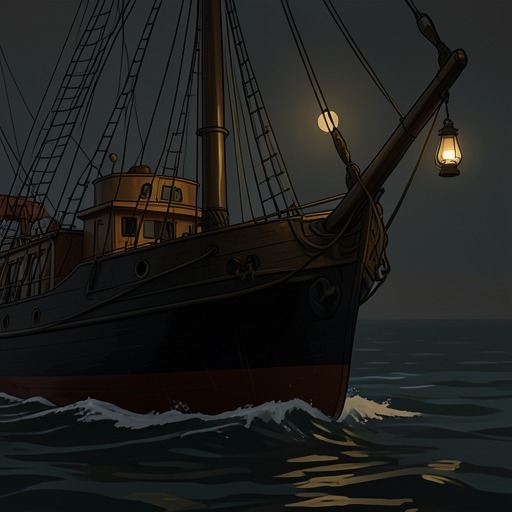
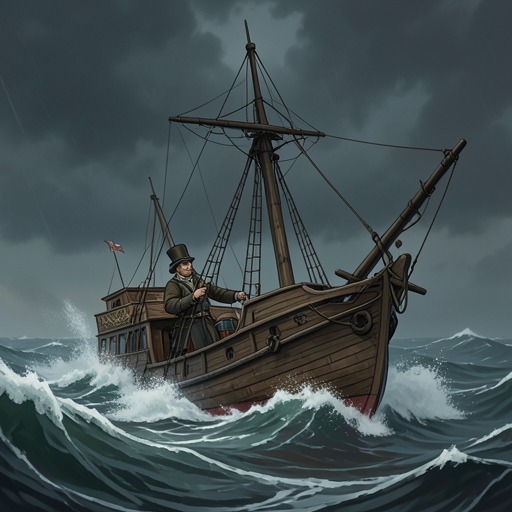
The spit belongs to the coastal setting around Hokitika, where the bar and surf shape the movement of vessels. A report from the shore records the Godspeed’s navigation lights going out amid wind and tide; the ship then runs aground on the bar, its mainmast breaking before surf enters through the hatches and pulls it down. The account makes the spit’s importance practical as well as scenic: the shoreline is not simply a place beside the town, but the boundary at which changing water conditions can determine a ship’s fate.
The narrative also places the coast within a wider approach to Hokitika. At dusk, two men travel down the Kaniere road toward town, still about two miles away, while the ocean can already be heard. Their conversation concerns the Aurora and the claim that it contains no gold, not the spit itself; the passage nevertheless sets the coast within a landscape where news of mining, travel, and the sea converge around Hokitika. It keeps the maritime setting connected to the goldfield economy without making the road scene part of the spit.
The Godspeed’s Wreck
The wreck changes the spit from a navigational edge into the setting for a major public loss. A boy brings word that the Godspeed has foundered on the bar less than ten minutes earlier. The sequence is compressed into the ship’s physical failure: the lights disappear, the mainmast cracks, the vessel rolls again, and the surf reaches the holds. The report concludes that she is wrecked. What had been a working ship is now an object stranded between water and shore, and the immediate news leaves little room to mistake the scale of the event.
The wreck’s significance grows because it is not removed from view. Over the next three weeks, two tugboats move the barque into shallower water. Her hull is then lifted onto rollers and brought flush with the shore. At low tide, a team of Clydesdales and a winch hauls her clear of the surf. By the time Benjamin Löwenthal sees her on the spit, all three masts have broken off at the base, and the vessel is dry upon the shore. These stages give the recovery a public, incremental character: the ship’s movement is measured not in a single rescue but through towing, lifting, and hauling.
Recovery, Work, and Salvage
Once the Godspeed is ashore, the spit becomes a workplace. Men are needed at Gibson Quay to clear the cargo, and Benjamin Löwenthal suggests that Te Rau Tauwhare could take a job there. He presents the work as an opportunity for wages and as a way to keep an observer near the ship. The cargo matters not only as property to be unloaded but also because of Thomas Balfour’s missing shipping crate and the unusual sight Walter Moody believed he had seen below deck. Tauwhare declines. He has privately pledged not to transact with Francis Carver again, so the offer of honest work cannot separate the task from Carver’s involvement.
The planned fate of the vessel underscores the economic transformation underway. After the cargo and fittings are removed, the Godspeed is to be dismantled and sold piece by piece for salvage and repair. The wreck is therefore converted from a ship into recoverable materials, with the shore serving as the temporary site of that conversion. The recovery operation draws labor and commercial attention, while the ship’s broken condition makes the distinction between a functioning vessel and salvage increasingly plain.
People Drawn to the Shore
Francis Carver, who is lodging at the Palace Hotel, manages the arrangements for hauling the Godspeed ashore. He submits a cargo inventory to the Harbourmaster, meets delegates from Hokitika’s shipping firms to settle their accounts, and rows out to the wreck with shipwrights and salvage vendors. His conduct is notably open: Thomas Balfour is among those whose reports indicate that Carver has not tried to conceal the recovery. That public activity complicates suspicion about what might be aboard. If Carver were concealing a murdered man on the foundered vessel, the visibility of the operation would appear an unlikely way to do it; the evidence does not, however, resolve every question about the cargo or Moody’s sighting.
Aubert Gascoigne also repeatedly visits the spit, watching the ship’s progress over the three weeks of recovery. He comes there to examine the damage and, on one Sunday afternoon, remains for hours beside a beacon. He makes a small castle from flattened pebbles and sand before noticing Carver nearby. Gascoigne has previously heard Anna Wetherell’s account of Carver’s role in the death of her unborn child, yet he approaches him in a spirit of outward civility. Their conversation turns to the salvage costs. Carver explains that he is responsible for the operation’s expenses and complains of the cost of keeping workers, horses, tugboats, rollers, and equipment involved. The spit thus brings personal antagonism into contact with the practical business of recovering a wreck.
Narrative Significance
The Hokitika spit gathers together the consequences of the Godspeed’s loss: damaged property, organized labor, commercial accounting, and suspicion about what the ship carried. The vessel is visible to the town’s observers, yet visibility does not make its history transparent. Carver can conduct the recovery openly while questions persist about the shipping crate and Moody’s experience below deck. In this way, the spit functions as a threshold between exposure and concealment: the wreck is brought fully onto land, but the meanings attached to it remain unsettled.
Its changing use also gives the site a clear narrative progression. First the bar is where the Godspeed is lost; then the shore becomes the route by which she is dragged out of the surf; finally the spit is where her cargo is to be cleared and her remaining structure broken up for salvage. The repeated stages turn the wreck into a process rather than a finished incident. By keeping the ship in view during that process, the narrative lets the material aftermath of the disaster continue to generate new encounters and questions.