Lauderback’s missing shipping crate
The LuminariesLauderback’s missing shipping crate is a lost consignment whose significance grows as the characters try to account for it. Initially a shipping agent’s professional failure, it becomes entangled with the contract for the Godspeed, the possibility of another scheme by Francis Carver, and Thomas Balfour’s decision to conceal the loss from Alistair Lauderback. The crate never simply disappears from the story: its absence makes an ordinary object newly conspicuous, exposing the uncertain traffic of property, evidence, and trust in Hokitika.
Shipment and disappearance
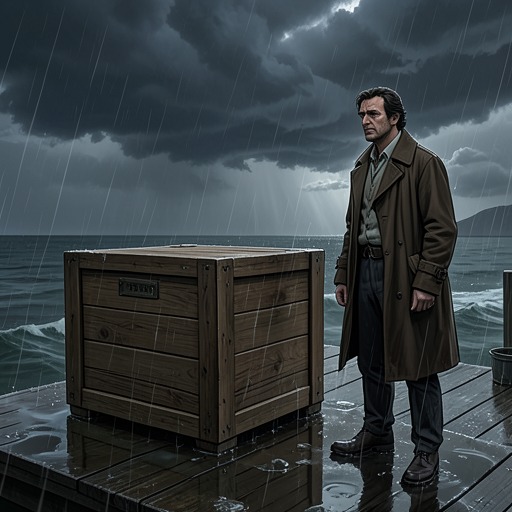
The crate containing Lauderback’s trunk reached Hokitika on the morning of January 12, two days before Lauderback himself. Balfour saw the shipment cleared and instructed that it be moved from the quay into his warehouse. As far as he knew, those instructions were carried out. Yet the crate vanished, without an established explanation for how or when it went missing.
Balfour’s response is immediate and practical. Horrified by the loss, he walks up and down the quay, makes inquiries at every door, and questions stevedores, porters, mariners, and customs officers. None of these searches produces a lead; the crate remains gone. The breadth of his efforts establishes that this is not an oversight he has chosen to ignore. He has tried to recover the shipment, but cannot account for it—and knows that its owner will soon ask for it.
The timing intensifies the problem. Lauderback has spent a fortnight making introductions at camps and settlements along the Coast and has only just been released from that preliminary tour. He has stayed fewer than two nights in the upper-floor rooms of the Palace Hotel. Believing the Virtue is still travelling from Dunedin, he has not yet asked after his shipment. Balfour, meanwhile, knows that the expectation of an arriving ship cannot last indefinitely. The delay gives him time, but also leaves him alone with the knowledge that the crate is missing.
What the trunk contains
When Lauderback begins considering how to challenge Carver’s claim, he is confident he can act at once: the contract he needs is packed in his trunk, inside the missing crate. The document is a copy of the contract under which the Godspeed was sold. Its importance is therefore legal as well as personal. Lauderback wants his copy notarised, while Carver is likely to have destroyed his own if it would prove a lie. The loss removes the document from Lauderback’s reach just when he intends to use it as evidence.
The crate’s contents also connect it to a second trunk and a separate thread of suspicion. Balfour recalls Lauderback’s account of a trunk packed with women’s dresses that had crossed the Tasman every month for a year. He suspects a correlation between that recurring shipment and the trunk among Lauderback’s effects, which held the contract. Since he has never before misplaced or had a shipping crate stolen, he begins to wonder whether this disappearance is not an ordinary mishap. Carver had blackmailed Lauderback before, and Balfour considers the possibility that Carver has stolen the crate too. This remains Balfour’s theory, not a confirmed explanation of the loss.
Balfour’s lie
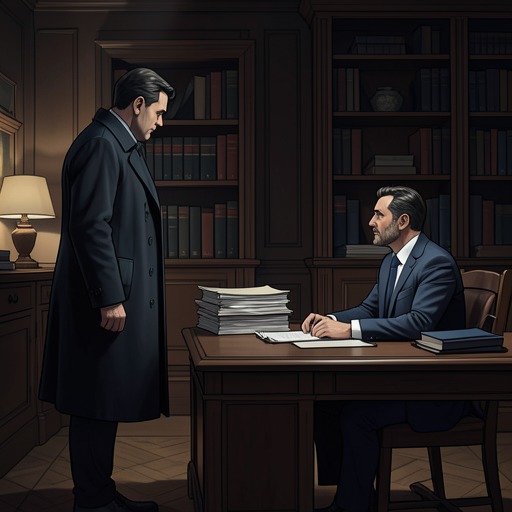
Lauderback does not initially know that the crate is missing. When he asks whether the Virtue has arrived, Balfour has a moment in which he recognizes that he should have confessed as soon as they were alone. He tells himself the disappearance may have been nobody’s fault: perhaps a paperwork blunder has sent the crate astray, and perhaps it will turn up battered but intact. He imagines that an honest admission, made calmly, might be understood. But when Lauderback asks again whether the ship has been through, Balfour answers no.
That answer is false. The Virtue has already reached Hokitika, carrying the missing crate among its cargo. The narration makes the lie feel physical: the room seems to constrict around it. Lauderback, unaware of Balfour’s predicament, takes the answer in good humour. He jokes at the thought of having beaten his own clipper ship on horseback and hopes nothing has gone wrong at sea. The contrast sharpens the moment: to Lauderback the delay is an amusing surprise, while Balfour knows the ship has arrived and the trunk is unaccounted for.
A cargo that joins separate threads
The Virtue’s arrival supplies a firmer outline of the crate’s passage without resolving its disappearance. Operated and leased by Balfour Shipping, the vessel carried ordinary freight including timber, iron, fasteners, paint, dry goods, livestock, and calico, as well as Lauderback’s crate. Cowell Devlin also arrived aboard it. The crate thus belongs to a shipment with a specific route and carrier, but its presence on the ship does not reveal what happened after it reached the quay or warehouse.
Its contents make that unexplained absence consequential. The contract connects Lauderback’s effort to challenge Carver with a missing piece of documentary proof; Balfour’s speculation connects the loss to the repeated transport of the dresses; and the crate’s disappearance turns an apparent logistics failure into a possible act of interference. Yet the evidence preserves uncertainty: Balfour searches without success and suspects Carver, but no confirmed culprit or recovery is established here. The crate’s narrative force lies in this gap between known custody and unknown fate, a gap that makes each character’s account of the shipment—and each decision about what to disclose—matter.