Opium imperialism
The LuminariesOpium imperialism joins the novel’s history of British expansion in China to the everyday trade and dependence surrounding opium in New Zealand. Through Quee Long, the drug becomes more than a substance: it signifies a remembered assault on his country and father, while its presence in the goldfields exposes the reach of commercial systems he resents yet cannot escape.
Conquest and family memory
Quee Long’s father, Quee Zuang, served as a city watchman in Kwangchow, supervising the city gates and porters’ rotations. When British forces stormed the city in 1841, its defenses were overwhelmed and Quee Zuang was captured with hundreds of others. He was released on the condition that Kwangchow open its port to trade. The novel places this episode within the trade wars and presents it as one part of repeated British seizures of the city: Kwangchow would be captured four times over the following two decades.
The defeats became a personal inheritance for Quee Long. He felt shame not only at his city’s repeated surrender but at the humiliation borne by his father, who died soon after the second war and had faced a British rifle three times. Quee Long later found himself in New Zealand, digging for gold while surrendering most of his earnings to a British-owned company whose governing ranks were closed to him. His work therefore placed him inside the economic order his father had tried to resist. The resulting estrangement—from his labor, his father’s wishes, and his country’s history—makes colonial power legible as a condition of daily life, not only as a past military event.
Opium as a symbol and a refusal
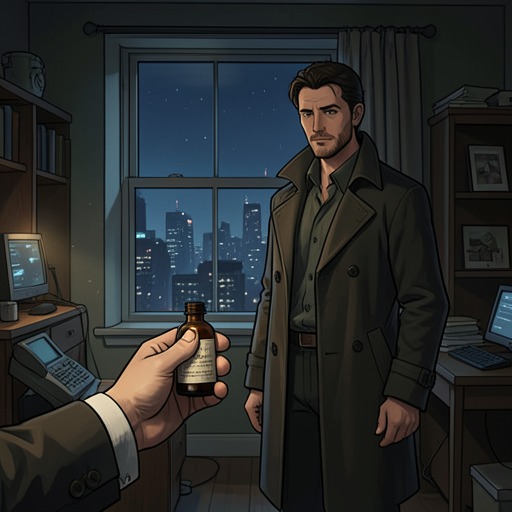
For Quee Long, opium embodies what he regards as Western barbarism and contempt for Chinese life. He treats the drug as the dark counterpart of Western expansion and as a warning that historical injury must not be forgotten. He refuses to use opium and will not allow it in his presence or among those he loves. When passing the den at Kaniere, he turns his head and spits on the ground.
That rule has a revealing limit in his relationship with Anna Wetherell. She sometimes visits him after smoking at the den, but he does not see the implements of her addiction; he tells himself that he would knock the drug from her hand if she produced it. The exception does not erase his declared opposition. Instead, it shows the strain between a firm political principle and his attachment to a person whose dependence he encounters indirectly. His refusal is at once an act of loyalty to his father and a boundary he finds easier to maintain in principle than to enforce in this relationship.
The drug in the goldfields
The novel also traces opium through a local supply network. Joseph Pritchard considers himself an expert on overdose and the sole supplier of opium to the West Coast dens south of the Grey River. After Anna nearly dies, he believes she did not intend to kill herself and suspects either that she was made to take the drug or that the resin was altered to harm her. He tries to recover the remaining lump for examination, but Ah Sook refuses, furious with him. Pritchard’s suspicion remains unproved: his account presents competing possibilities, not a confirmed explanation of what happened.
Anna’s habitual use makes the collapse especially troubling to Pritchard. She takes opium nearly every day and knows its effects, yet has never before remained unconscious for more than twelve hours. He doubts that this can be explained as an ordinary accident, even as he considers whether she may be concealing something. The episode makes dependence a matter of bodily risk and uncertain testimony, while the routes of supply connect that intimate crisis to a wider commercial presence.
Dependence beyond a single history
Opium’s consequences are not confined to Quee Long’s political and cultural rejection of it. Anna’s absence from the Kaniere den for more than a month leads Ah Sook to suspect that she has stopped using opium, though he cannot explain her disappearance and finds the possibility hard to accept. Later, after Anna and Emery Staines are imprisoned, Dr. Gillies prescribes both a gradually reduced laudanum dose: Anna’s treatment is intended to wean her from dependence, while Staines is also recovering from a shoulder wound. At his trial, Staines says that opium’s effects kept him away from Hokitika for over two months and that he believes he spent much of that time in the Kaniere den.
These distinct experiences keep the novel from treating opium as only a symbol of colonial injury or only an individual failing. For Quee Long it carries the memory of conquest; in the goldfields it is supplied, used, suspected in an overdose, and administered as treatment. His refusal preserves a connection to his father’s resistance, while the other characters’ dependence shows how the drug’s reach crosses the boundaries of that resistance.