Poutini Ngāi Tahu
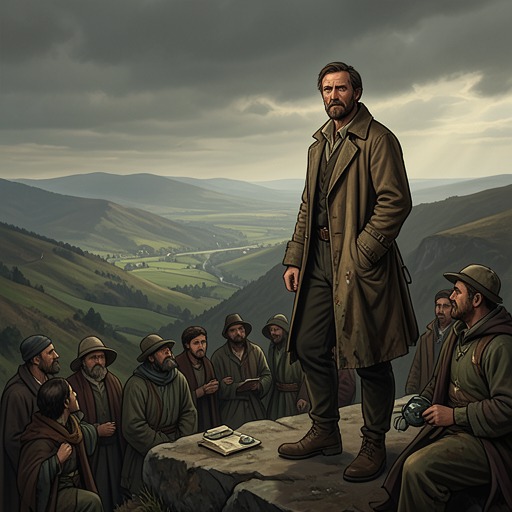
The LuminariesPoutini Ngāi Tahu is the Indigenous people whose dispossession shapes the novel’s West Coast setting and its conflicts over land, wealth, and belonging. Their territory is described as once extending across the western coast of the South Island; after its purchase by the British Crown, their remaining lands were drastically restricted. The contrast between that legal transaction and Te Rau Tauwhare’s enduring relationship to the Arahura River country makes the people’s history more than background: it exposes the gap between ownership recognized by colonial law and a living connection to land.
Territory and the Crown purchase
Poutini Ngāi Tahu had once commanded a vast stretch of the West Coast, from the southern fjords to the far north. Six years before the events being recounted, the British Crown purchased that tract for three hundred pounds, reserving for the people the Arahura River, sections of its banks, and a small parcel at Mawhera, at the mouth of the Grey River. The transaction had seemed unfair to them at the time; six years later, its character as theft was unmistakable to them.
The novel sets the purchase price against the rapid commercial transformation of the Coast. Thousands of diggers arrived seeking gold, each paying a pound for a prospector’s licence and ten shillings per acre for land. Those payments alone represented substantial revenue, before accounting for the gold in the rivers and sands, whose total value had not yet been calculated. The disparity is pointed: a single payment of three hundred pounds had transferred an immense territory whose subsequent mineral wealth was beyond measure.
Land beside the Arahura
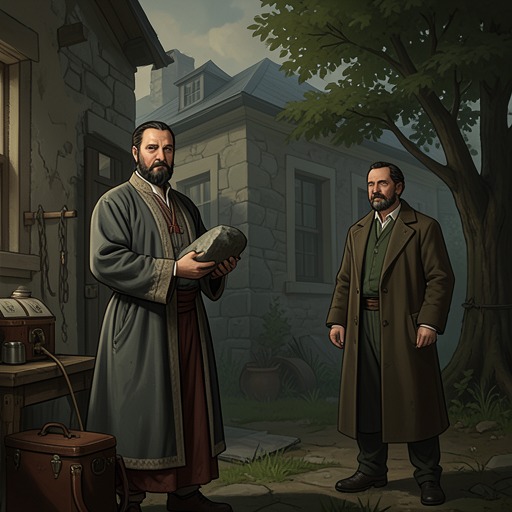
The Arahura River is both a reserve left to Poutini Ngāi Tahu and a place of particular importance to Te Rau Tauwhare, who regularly travelled its valley in search of greenstone. He could identify valuable stones by their exterior and carry them back to Mawhera unbroken, for ceremonial blessing and splitting. His expertise rests on close knowledge of the riverbed and its materials, a form of attention distinct from the gold-seeker’s calculation of land as a claim or source of profit.
The difference becomes concrete in the hundred acres that Crosbie Wells bought at the eastern end of the Arahura Valley for fifty pounds. The property adjoined land to which Poutini Ngāi Tahu had been confined. Wells built a cottage overlooking the river, cleared a garden, and began constructing a timber mill. Te Rau Tauwhare’s acquaintance with him began after the sound of Wells’s axe carried through the valley; their visits became frequent, and Wells’s interest in Indigenous life and lore helped make the cottage a place of sustained exchange as well as settler occupation.
After Wells’s death, the land passed through another settler transaction: Edgar Clinch purchased the acreage, although Te Rau Tauwhare understood that Clinch had not previously spent time in the valley and had not walked the boundaries after buying it. Clinch had the cottage’s saleable effects removed by proxy, but had done nothing to settle, cultivate, or otherwise inhabit the property. To Te Rau Tauwhare, this exposed the hollowness of ownership detached from use, labor, and care. Land, in his understanding, was not simply another currency; it was something to live upon and love.
Te Rau Tauwhare and customary belonging
Te Rau Tauwhare’s perspective gives the people’s relationship to territory personal as well as collective force. He could picture the length of the Coast from north to south, and regarded the Arahura River as its central landmark. Wells’s cottage, placed in the valley between mountains and ocean, served as a corresponding point in his mental map. Yet he could not claim the cottage or its surrounding acres, nor could his hapu or iwi, despite the valley’s importance to him and its proximity to the lands retained by Poutini Ngāi Tahu.
His understanding of belonging also appears in his response to Wells’s death. When he found his friend’s body being taken away for preparation and burial, he insisted that Wells should not be left alone before interment. He explained that the spirit had not fully departed and that the body required watching, prayer, and song. The gaoler dismissed this observance as heathen and repeatedly drove Te Rau Tauwhare away; when he threatened him with a pistol, Te Rau Tauwhare remained at a distance and kept vigil from outside the boundary. The scene places customary obligations to the dead against the authority of the gaol, showing how colonial institutions could deny not only Indigenous claims to land but also the legitimacy of Indigenous rites.
Narrative significance
Poutini Ngāi Tahu appears through a history of territorial reduction and through Te Rau Tauwhare’s specific acts of knowledge, friendship, and protest. The novel places Crown purchase, licences, acreage, and gold valuations beside practices of greenstone gathering, ceremonial care, and sustained attachment to the Arahura. Those contrasts make the language of lawful purchase insufficient to settle the question of rightful belonging.
The Arahura property also links dispossession to the novel’s wider circulation of wealth. Wells’s land, cottage, and hidden fortune become subjects of settler ownership and financial calculation, while Te Rau Tauwhare sees the valley as part of a place his people ought to have commanded. The result is not a portrait of Poutini Ngāi Tahu as a collective institution with a fully described political structure; rather, the novel makes their constrained presence legible through the territory lost, the land retained, and the continuing authority of a relationship to place that purchase and title cannot erase.