Self-making and reinvention on the goldfields
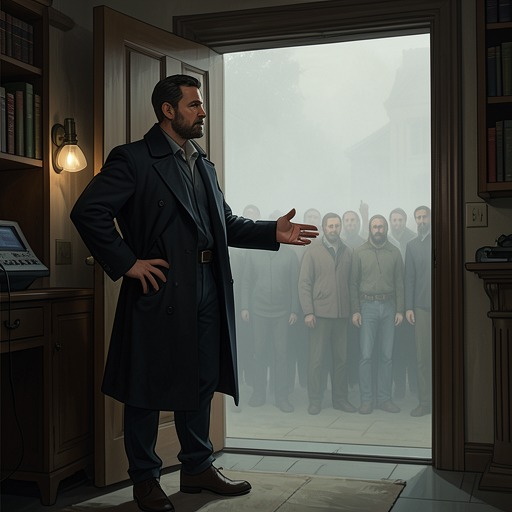
The LuminariesSelf-making and reinvention on the goldfields is a defining promise of frontier life: inherited identities and fortunes seem open to revision through work, ambition, and movement. But the novel presents reinvention as morally unstable. It can mean Walter Moody’s effort to begin again after family betrayal, Thomas Balfour’s entrepreneurial ascent, or the calculated use of false identities and concealed wealth. The goldfields offer new possibilities, but they do not erase the past or grant everyone equal power to reshape it.
A frontier that unsettles inherited position
Moody arrives in New Zealand with a limited picture of the diggings, shaped by accounts of California and by an assumption that the colony is a rough, lesser reflection of Britain. His education at Cambridge, and his time at Trinity and the Inner Temple, have taught him to understand social systems from above. On the goldfields, however, origins and fortunes do not align reliably: a grocer’s child may prosper while a lawyer’s prospects dry up. The resulting social mixture unsettles the distinctions Moody has learned to expect, even as his formal politeness and reserve continue to disclose his upbringing.
That unsettled order attracts Balfour. He has encountered many men like Moody during sixteen years on the fields and is drawn to the untested ambition of a newcomer who has entered a pursuit he barely understands. Balfour sees possibility where Moody sees disorientation. To him, the goldfields are a place where men are not simply made once and for all; they are continually making themselves. That optimism captures the appeal of frontier reinvention, though it also reflects Balfour’s preference for open futures over painful histories.
Balfour’s material reinvention
Balfour’s own life gives substance to this frontier ideal. His father worked in a saddlery in Kent, and Balfour might have followed him into the trade, but a fire destroyed the stable and ended that prospect when Balfour was eleven. He later treated the old world of hides, tools, and tanning vats as a point of comparison with newer industries rather than as a source of nostalgia. For him, progress meant moving toward the places where wealth was being made: ore, coal, steel, and gold.
He began as an apprentice in glassmaking, founded a glassworks, and sold it for a share in a coal mine. That venture expanded into a network of shaft mines, which he sold to London investors. At thirty, he set out for the Californian goldfields. The digger’s life itself soon lost its appeal, but the fields’ continuing rush of hope did not. With his first gold dust he bought bank shares, then built three hotels in four years. When California dried up, he sold his interests and moved on to Victoria, and from there to New Zealand. His repeated movement between industries and goldfields makes reinvention a material practice: capital is converted, sold, and carried onward to the next opportunity.
Moody’s break with family history
Moody’s attempt to remake himself begins not in triumph but in grief. In Dunedin, he discovered that his father had become extraordinarily rich and had married again while still legally bound to another wife. More painfully, Moody learned that his brother Frederick had helped arrange his abandonment and had travelled south as his father’s partner. Moody left before seeing Frederick, escaped his father’s attempt to detain him, and chose to travel to the diggings rather than return directly to London or continue toward a legal career.
He tells Balfour that he is ashamed of his family and intends to make himself anew. Balfour responds with sympathy, treating the choice as a characteristic goldfields revolution: a chance to make a self rather than merely inherit one. Yet their exchange also reveals a limit in Balfour’s understanding. He is indulgent toward other people’s possible futures, but impatient with their closed and painful pasts. Moody’s family history is not simply discarded by his departure; his later regret over leaving without hearing Frederick’s account shows that reinvention cannot by itself settle what happened or what remains unknown.
False identities and portable wealth
The novel also shows self-making in a more compromised form, when a new identity is used to manipulate others. Francis Carver, formerly a convict, obtained the Godspeed from Alistair Lauderback through fraud and later advertised for a missing crate under the name Crosbie Francis Wells. He used a birth certificate to support that identity, although why he possessed the document remained uncertain. The name made it possible to present himself differently in a public search for a fortune, while leaving the history behind the disguise unresolved.
The crate contained a trunk holding about four thousand pounds in gold sewn into five dresses. Lydia Wells had made the garments while posing as Carver’s wife. Their conversion of a fortune into clothing made wealth portable and difficult to recognize: the gold travelled as part of a wardrobe rather than as an openly declared hoard. When the crate disappeared, its changing associations—with Carver’s assumed name, Lydia’s sewing, and the missing gold—made identity and property questions inseparable.
Other people misread the gold that later appeared in Anna Wetherell’s dresses. Edgar Clinch suspected that Dick Mannering was using her to smuggle raw ore. Ah Quee, who had previously been cheated by Mannering, reached a similar conclusion and began secretly removing the gold from the dresses. He retorted the dust into squares and stamped them with the name Aurora so the proceeds would be credited to his claim, then held by Emery Staines. The hidden fortune thus passed through clothing, a worker’s hands, and a mine’s accounting system, acquiring new practical meanings without changing its uncertain ownership.
Land, law, and the limits of reinvention
The frontier’s promise of a new beginning is sharply qualified by the land on which settlers pursue it. Six years before the events described, the Crown purchased extensive Poutini Ngāi Tahu territory for three hundred pounds, leaving the iwi only specified reserves, including the Arahura River and parts of its banks. Thousands of prospectors subsequently bought licenses and land, while the value of the gold in the rivers and sands remained beyond calculation. For Te Rau Tauwhare, the transaction was not a neutral opening of wilderness to enterprise but a dispossession that had become unmistakable with time.
Crosbie Wells paid the Crown fifty pounds for one hundred acres in the Arahura Valley and built a cottage, cleared a garden, and began a timber mill. After Wells’s death, Edgar Clinch bought the property and had its contents cleared. Tauwhare objected that Clinch had acquired land for profit without living on it, working it, or even walking its boundary. In Tauwhare’s understanding, land was not simply another kind of currency; its value lay in use, attachment, and care. His objection marks the boundary of the goldfields’ self-making ideal: settlers may treat land and identity as assets to acquire and revise, but that freedom is built upon an unequal distribution of whose prior claims count.
Across these strands, reinvention is neither a clean escape nor a guarantee of justice. Balfour’s career gives it the glow of enterprise; Moody’s departure gives it the urgency of a personal break; Carver’s alias shows how it can become deception. The gold concealed in dresses and the ownership disputes over the Arahura Valley further reveal that fortunes and identities travel through material and legal systems shaped by power. The frontier permits people to begin again, but the novel insists that the past remains present in family secrets, documents, property, and contested land.