Virtue
The LuminariesVirtue is a clipper ship owned by Alistair Lauderback and leased to Thomas Balfour’s shipping business. Its commercial voyages connect the two men, while its arrival in Hokitika with a vanished trunk helps bring the concealed history of Godspeed, a fortune in gold, and competing identities into the novel’s web of evidence. Though distinct from Godspeed, Virtue becomes entangled in the legal and financial consequences of that ship’s transfer and wreck.
Ownership and Charter
Lauderback owned four vessels: the clippers Virtue and Corona Australis, the schooner Lady of the Ballroom, and the barque Godspeed. He sought to lease two ships to an established shipping firm, rather than continue chartering them himself, because he wanted the security of reasonable insurance. Balfour & Harnett needed a clipper of the size and capabilities Lauderback described. Balfour agreed to find a master for Virtue, insure it at a fair premium, and lease it on a yearly term; the smaller Godspeed did not suit the firm’s requirements.
The arrangement became the basis of a limited but admiring friendship. For the next two years, Virtue sailed without incident between Dunedin and Melbourne. The carefully drafted insurance clause was not consulted again during that period. When Balfour moved to the West Coast and established Balfour Shipping in Hokitika, the ship remained a practical connection between Lauderback’s business interests and Balfour’s growing presence there.
Voyages and the Hokitika Delivery
Lauderback later enlisted Balfour’s help with his campaign for the Westland seat in Parliament. He asked Balfour to arrange his Hokitika lodgings and to forward a trunk of personal effects, including law books and papers. Balfour arranged for the trunk to be collected at Port Chalmers after it had been sent down from Lyttelton, then carried to Hokitika on Virtue’s next circuit to the Coast. Lauderback himself planned to travel overland across the mountains, presenting himself as a saddle-sore man of the West rather than a politician arriving in comfort by ship.
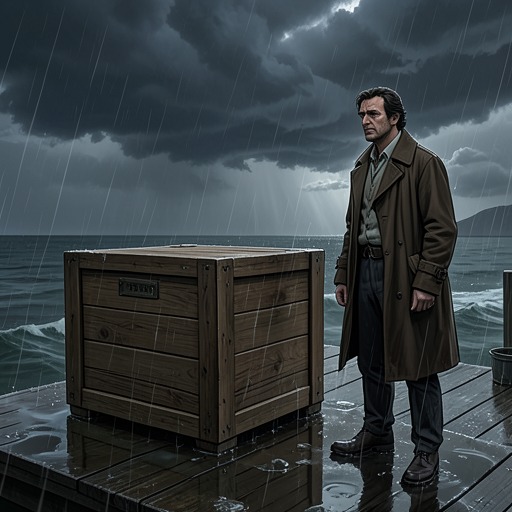
Virtue reached Hokitika two days before Lauderback. Among its passengers and freight were Cowell Devlin, timber, iron, fasteners, paint, dry goods, livestock, calico, and a shipping crate that had gone missing. The crate contained Lauderback’s trunk, and the trunk held a copy of the contract by which Godspeed had been sold. Thus Virtue’s ordinary freight service placed a crucial document in the town, even as the missing shipment obscured its arrival and destination.
The Trunk and the Hidden Evidence
The trunk’s contents connect Virtue’s voyage to the identity fraud surrounding Godspeed. Walter Moody later found an unfamiliar black, iron-strapped trunk in his room, marked as Alistair Lauderback’s and carrying travel labels from Southampton and Lyttelton. Inside, he examined the bill of sale for Godspeed. He then discovered a concealed slit beneath the tartan-patterned calico lining and removed a bundle of about fifteen letters addressed to Lauderback. Hidden in the trunk, the correspondence offered Moody a further line of inquiry into the relationships and identities behind the ship’s sale.
The trunk’s cargo was bound up with a larger chain of deception. Francis Carver had taken Godspeed from Lauderback and later sought the return of a lost crate containing about four thousand pounds in gold, sewn into five dresses. He advertised for the crate under the name Crosbie Francis Wells, using a birth certificate to support that identity. The gold-laden dresses had been prepared by Lydia Wells, who was posing as Carver’s wife. Virtue is not the ship that Carver acquired or that later wrecked; its role is to carry the trunk and crate associated with Lauderback’s lost property and the documentary clues to Godspeed’s transfer.
Insurance and the Wreck of Godspeed
Virtue also belongs to the wider network of Lauderback’s ship ownership and insurance. When Carver faced the expense of disposing of Godspeed’s wreck, Aubert Gascoigne suggested that Lauderback might have had protection and indemnity cover. Gascoigne’s inquiries established that Lauderback’s vessels were covered through the Garrity Group, a shipowners’ mutual association, with nearly a thousand pounds in credit for each ship. Carver could legally seek funds toward removing the wreck from the Hokitika spit, provided he filed before the protection period expired in mid-May.
Lauderback objected that Carver had obtained Godspeed through forgery, but Gascoigne observed that Carver appeared to be acting as the dead Crosbie Wells’s proxy and that Lauderback had no evidence to disprove the claim. Virtue’s own earlier charter had included an insurance provision that Balfour never needed to invoke; later, the insurance arrangements attached to Lauderback’s fleet helped determine who could claim money for the wreck of a different vessel. The contrast makes the clipper part of a story in which ships are at once working property, links in a trading system, and points of leverage in disputes over ownership and liability.