Wells Cottage
The LuminariesWells Cottage is Crosbie Wells’s isolated home in the Arahura Valley, a one-room dwelling whose plain construction conceals the scale of its owner’s history. It is at once a place of work and refuge, the scene of Wells’s death, and the point from which documents and hidden gold reshape the claims of people who barely knew him. The cottage’s changing meaning reflects a larger conflict: the law can transfer the land and its contents, while Te Rau Tauwhare understands the valley through enduring relationships to place, use, and memory.
Setting and construction
The cottage stood three or four miles upriver from the mouth of the Arahura River, on a hundred-acre property some twenty feet above the riverbank. Its timber-box walls and sloping sheet-iron roof made a simple structure, but Wells had installed a glass window on the north side. A cleared plot surrounded the house, and its elevated position left it plainly visible from Christchurch Road. The dwelling was both remote and exposed: set apart in the valley, yet visible from the road that passed nearby.
Wells had bought the acreage for fifty pounds and intended to develop its timber. The property was thick with totara, prized for its fine grain and resistance to salt and weather. He built the one-room cottage, cleared ground for a garden, and began work on a timber mill. Thomas Balfour later recalled that Wells was building a sawmill and had arranged shipping equipment through him; Wells and a Māori companion were partners in the mill. The cottage therefore belonged to a working enterprise, not simply to the solitary life that its later appearance seemed to record.
A relationship to the valley
The cottage stood beside land that had become a source of deep grievance for Te Rau Tauwhare. His people, Poutini Ngāi Tahu, had once commanded the western coast of the South Island. Six years before the events surrounding Wells’s death, the Crown purchased an extensive tract for three hundred pounds, leaving the iwi only the Arahura River, portions of its banks, and a small parcel at Mawhera. What had initially seemed an unfair bargain had come to look like theft as diggers arrived, bought licences, and extracted wealth from the region.
Wells had paid the Crown, rather than Poutini Ngāi Tahu, for his hundred acres. The cottage thus occupied a place that Tauwhare regarded as central to his own understanding of the valley, even though neither he nor his iwi could claim it under the colonial system of ownership. Tauwhare first encountered Wells after hearing his axe ring through the valley. Their acquaintance became frequent: Wells was an eager pupil of Māori life and lore, and Tauwhare made a tradition of visiting him. After Wells’s death, the cottage remained emotionally significant to Tauwhare, who returned to it despite its transfer to Edgar Clinch.
Tauwhare’s objection to that transfer was not simply a dispute over who held a legal title. He thought Clinch had bought the property for profit without intending to live on it, cultivate it, or work its timber. Clinch stripped the cottage of saleable effects through others, rather than tending the land himself. To Tauwhare, this treated land as currency; the valley was something to be lived upon and loved, not converted into a hollow dividend. The cottage makes that difference in understanding concrete: it is simultaneously a property on a deed and a home embedded in relationships that legal ownership does not erase.
Death and the paper in the stove
Crosbie Wells died alone in the cottage. When Alistair Lauderback and his party stopped there at night, they found him slumped at the kitchen table, a nearly empty spirits bottle beside him and the kettle still boiling. The account later published in the West Coast Times said that the visitors used the stove to prepare tea and damper before continuing their journey. Wells’s fresh death turned the ordinary interior into an unexpected threshold between a private life and public attention.
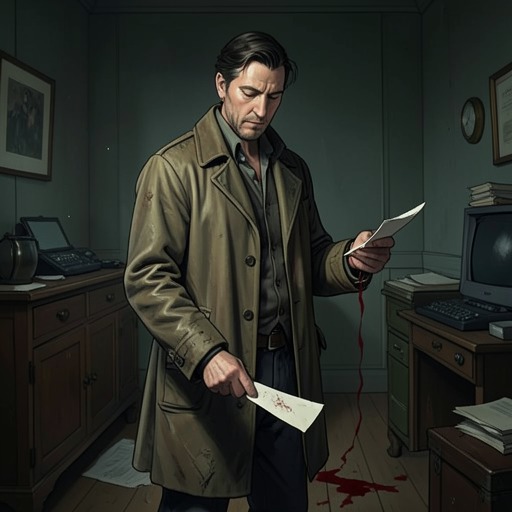
When Cowell Devlin and a physician returned to collect Wells’s body, the room seemed marked by long neglect. Dust furred its surfaces; the bolster was stained, the pillow mouldy, and a dry side of bacon hung from a rafter. Empty demijohns stood around the perimeter, and the bottle on the table was empty. As Devlin searched the ash drawer for fuel, he found a paper that Wells had apparently tried to burn. The document recorded a proposed gift of two thousand pounds from Emery Staines to Anna Wetherell, witnessed by Wells, on 11 October 1865. Wells’s name was signed, but Staines’s was not, so the deed was invalid. Devlin recognized Anna’s name from her recent admission to the gaol-house after an opium crisis, then folded the document and hid it against his skin rather than disclose it.
The cottage thus held a trace of a connection that its owner’s solitary reputation obscured. The incomplete deed linked Wells to Staines and Anna, and its concealment made the document part of the property’s continuing chain of secrets. The room that appeared to contain only the remnants of a hermit’s life also preserved evidence of a proposed transfer of wealth and of Devlin’s decision to keep that evidence from others.
Hidden wealth and disputed possession
The discovery of gold in the cottage radically altered how Wells’s life could be understood. After Clinch commissioned Harald Nilssen to clear the dead man’s home and dispose of his effects, Nilssen found gold concealed in numerous hiding places throughout the single room. Once purified by the bank, the ore was valued at a little over four thousand pounds. A ten-percent commission, death taxes, fees, and other expenses reduced the sum, which was then held in escrow at the Reserve Bank.
This was not the whole fortune associated with the story. Wells’s gold was connected to a wider chain of concealed wealth involving the Aurora mine, gold sewn into dresses, and a lost shipping crate. The cottage’s hidden hoard nevertheless changed Wells from an obscure dead man into the center of an inheritance contest. Clinch had purchased the property and expected to benefit from its sale, but Lydia Wells arrived from Dunedin and appealed to revoke the sale, claiming that Wells’s property and effects legally belonged to her as his widow. Anna, meanwhile, had found the remaining gold in her orange dress and, with Aubert Gascoigne’s help, hidden it in a flour sack. The cottage’s fortune was therefore only one part of a dispersed inheritance whose ownership could not be settled by discovering where the gold had been kept.
A house that keeps changing meaning
The cottage’s role shifts with each return to its rooms. To Lauderback’s party, it is an unexpected stop beside a newly dead hermit. To Devlin, it is a neglected interior containing a document he chooses to conceal. To Tauwhare, it is both the home of a friend and a stark reminder that land belonging to his people can be sold under a system that excludes their claim. To Clinch and Nilssen, it is a property to be cleared; to Lydia, it is part of an estate she seeks to reclaim; and to the reader, it becomes a storehouse of evidence that repeatedly unsettles assumptions about Wells’s poverty, isolation, and insignificance.
That transformation gives the cottage its narrative force. Its simple window, stove, table, and ash drawer are not merely details of a hermit’s dwelling: they are the places through which the story’s legal and personal entanglements become tangible. The hidden deed and the concealed gold make domestic space a record of relationships and intentions that were never fully visible while Wells lived. Yet the cottage cannot resolve the competing claims around it. It preserves traces of the past, while title, inheritance, and the meaning of belonging remain contested beyond its walls.