West Coast Times
The LuminariesThe West Coast Times is Hokitika’s first daily newspaper, founded in May 1865 and edited by Benjamin Löwenthal. It begins as a tiny local gazette and grows rapidly with the town, becoming more than a source of information: its advertisements, missing-person notices, political letters, and reports help shape what Hokitika knows, what it argues over, and whose reputation can survive public scrutiny. In a settlement where private dealings repeatedly become public disputes, the newspaper is both a record of events and one of the means by which those events acquire consequences.
Founding and Growth
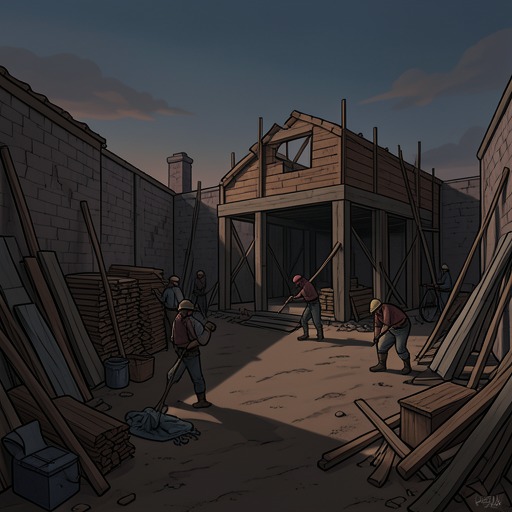
Löwenthal recalls that the paper’s first print run comprised just twenty copies: one for each of Hokitika’s eighteen hotels, one for the newly appointed magistrate, and one for the editor himself. Within a month, after the purchase of a steam-powered press, the run had reached two hundred. By January 1866, it was nearing a thousand copies per edition, produced by a staff of two. Löwenthal preserved the first edition behind glass in his front office as evidence of the paper’s claim to have been Hokitika’s first daily gazette. The contrast between that keepsake and the much larger current circulation marks the speed at which a provisional gold-town has acquired a public life.
The newspaper’s reach is reflected in the breadth of its contents. When Walter Moody reads a sixpenny copy, he finds shipping notices, lodging and food advertisements, political speeches, and a column listing missing prospectors. The same issue advertises a performer who also offers discreet help with childbirth, alongside notices seeking barmaids. To Moody, the paper reads less like a romantic account of a goldfield than like a parish gazette: its ordinary notices make the town legible through work, commerce, elections, and absence. The daily weather column likewise treats Hokitika’s persistent rain as an ordinary condition of local life, rather than an exceptional event.
Notices, People, and Missing Information
The missing-person column gives the paper a recurring role in the search for Emery Staines. Charlie Frost tells Moody that notices seeking Staines have appeared every day that week, evidence that his disappearance has become public business rather than a private worry. The newspaper’s repeated publication of the appeal cannot itself establish where Staines is, but it keeps the question in circulation and gives anyone with relevant knowledge a route to respond.
The paper also offers a channel for inquiries whose significance is not immediately apparent. In June 1865, a scarred man entered the office and asked Löwenthal to advertise a missing shipping crate containing articles of great personal value. He offered twenty pounds for its return, or fifty pounds if it came back unopened, but gave no description of its contents. When asked for a name, he supplied a birth certificate instead; Löwenthal copied the identity Crosbie Francis Wells from the document. The notice thus places a name and a reward into public circulation while withholding the information that would explain the crate’s importance. Later, the crate is understood to have contained a trunk holding about four thousand pounds in gold, sewn into the linings of five dresses by Lydia Wells, who was then posing as Francis Carver’s wife. The disparity between the restrained wording of the appeal and the fortune concealed inside the trunk makes the newspaper notice an early trace of a much larger deception.
Not every piece of information reaches the paper. Francis Carver’s Godspeed departed its mooring at night on a Sunday, after the shipping news had already appeared in Saturday’s edition. Because the ship was not scheduled to leave that day, its departure was omitted from the customhouse log and consequently from the newspaper. The gap made the vessel’s departure appear, in the records available to the town, not to have happened at all. The episode shows how the paper’s account of the port depended on other records and on the timing of information supplied to it; an omission could therefore conceal a consequential act without requiring an explicit false report.
Political Debate and Editorial Practice
The West Coast Times gives political life a visible setting. In late 1865 it reports that Alistair Lauderback intends to seek the Westland seat in Parliament. When he reaches Hokitika, however, the election scarcely commands local attention: the death of the hermit Crosbie Wells and the fate of the woman found on the road occupy the town instead. The paper gives only brief notice to Lauderback’s mountain passage, while devoting two columns to the dead man. Its choices of space register the mismatch between a candidate’s ambitions and the subjects that have seized public attention.
Letters to the editor later turn the paper into a forum for a dispute over the Hokitika gaol-house at Seaview. One letter demands that George Shepard publish the names of those appointed to the construction work, provide a statement of contracts, and disclose the sums voted, advanced, and still required. The demands make the newspaper a venue for asking how public works are funded and administered. When Lauderback’s accusation against Shepard and Shepard’s reply are due to appear, Harald Nilssen says that Lauderback’s letter will attack the warden’s character and that Shepard’s response is to be printed directly beneath it. The page becomes a staged confrontation in which readers can encounter accusation and answer together.
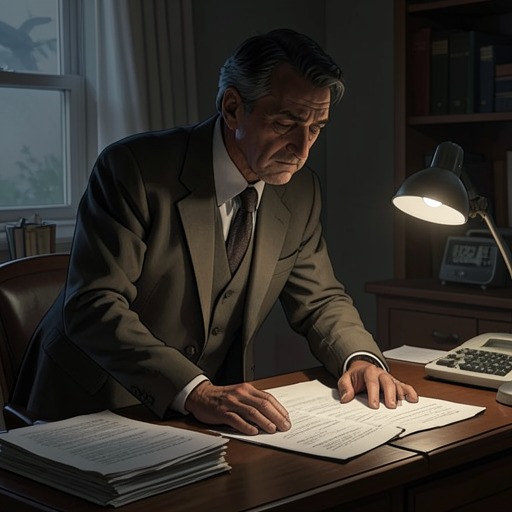
Löwenthal’s editorial practice gives that exchange a procedural dimension. When an inflammatory accusation arrives, he contacts the people concerned before the paper goes to press and invites the person about to be attacked to write a reply. He regards this warning as fair treatment in a community where public opinion can adjudicate severely and a reputation can be ruined overnight. The procedure does not prevent conflict or guarantee that every account is complete; it makes the newspaper an active intermediary, setting terms for how accusations enter public view.
Scandal, Advertisement, and Public Record
The newspaper’s prominence extends from political controversy to private scandal. After George Shepard’s letter about Lydia Wells, discussion of her claim to Crosbie Wells’s inheritance is altered by revelations about her relationship with Lauderback. Lauderback answers publicly, admitting that he concealed the affair from voters and accepting responsibility for the consequences. The confession further weakens Lydia’s position in the inheritance dispute. Here the paper does not merely report a reputational change after the fact: its printed exchange becomes the means through which the matter is acknowledged and its political and legal repercussions sharpened.
It also advertises the opening of the Wayfarer’s Fortune, Lydia’s new establishment, and promotes her first séance as a public occasion. The notice is visually emphatic: two columns in bold eighteen-point type, bordered in black, announce the widow’s enterprise and invite prospective patrons to an evening of drinks and speculation before the séance. The advertisement packages a private claim to mediumship as a public event, drawing the town into Lydia’s attempt to establish a new identity and livelihood.
When the séance fails to communicate with Emery Staines, Lydia later addresses the public through an open letter in the paper. She presents the failure as unprecedented and interprets it as evidence that the afterlife could not produce Staines because he was not dead. Her conclusion is self-serving in its confidence, but its publication gives readers a specific claim to judge: the séance has failed, and Lydia turns that failure into an argument that Staines may yet return. The newspaper thus carries not only information about disputed events but also the competing interpretations through which people try to control their meaning.
A Record That Also Shapes Events
The West Coast Times repeatedly links separate parts of Hokitika’s social network. It publishes the daily appeal for Staines, carries news about the missing crate, prints political accusations and replies, and later reports that gold found on Crosbie Wells’s estate had already been smelted by Quee Long. Its pages connect people who may never meet directly, making notices and disclosures available to bankers, merchants, officials, prospectors, and the wider public. That circulation does not make the paper omniscient: crucial facts remain hidden, and its record can be incomplete. But its growth from twenty copies to nearly a thousand gives those partial accounts an increasingly broad audience.
The paper’s narrative importance lies in this double function. It records a town while participating in the circulation of the claims, evidence, and reputations that govern it. A missing ship can vanish from the printed record because of the timing of its departure; a seemingly modest crate notice can preserve the name attached to a concealed fortune; a printed reply can turn private conduct into political damage. In Hokitika, the newspaper’s pages are not a neutral window onto events. They are one of the places where events become public, contested, and consequential.