“I intended only lilies”
The Magician's Elephant“I intended only lilies” is the magician’s recurring explanation for the magic that brought an elephant crashing through the Bliffendorf Opera House and crippled Madam Bettine LaVaughn. At first, the sentence sounds like a defense built around what he meant to do; by the time he gives a fuller account, it also acknowledges the reckless desire that led him to do more than he intended, the harm that followed, and his attempt to undo it. Its repeated wording does not settle the truth so much as expose the distance between intention and consequence.
The phrase and its two intentions
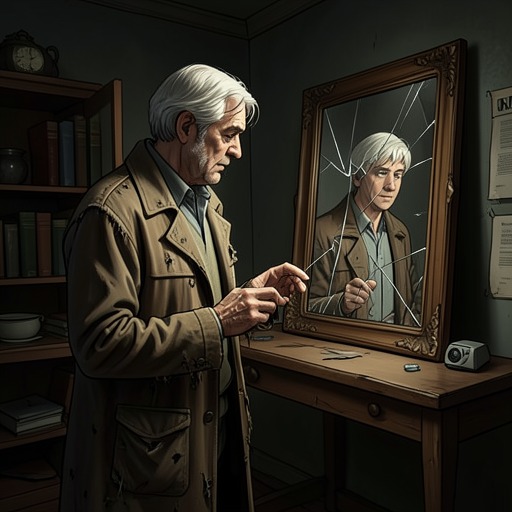
The magician did intend to conjure lilies. Yet the account makes clear that this is not the whole story: when he later says, “I intended only lilies,” the narration immediately qualifies his statement as not strictly true. On the stage of the Bliffendorf Opera House, he was performing for an audience that expected little from him and was waiting for a virtuoso violinist. Confronted with the thought that he had wasted his life, he performed the sleight of hand that would produce lilies while also speaking a powerful spell entrusted to him long ago by his magic teacher. He knew that using it was ill-advised in the circumstances, but wanted to perform something spectacular.
The phrase therefore preserves a real part of the magician’s intention without accounting for the whole of it. He had intended lilies, but he had also wanted to perform true magic. The distinction matters: his initial purpose was not to injure Madam Bettine LaVaughn, yet the desire to astonish drove him to invoke a greater magic than the flowers required. The short sentence isolates the harmless result he first imagined; the fuller circumstances reveal the ambition that made the disaster possible.
A defense repeated in prison
After the elephant appeared, authorities demanded that the magician send her away. He spoke the spell and its words backwards, as magic required, but nothing happened. The elephant remained, and her presence became evidence of the magician’s powers. He was imprisoned, and from his small, dark cell he looked through a high window at a sky usually thick with clouds, sometimes watching a bright star appear. To that star he repeated his explanation: “I intended only lilies.”
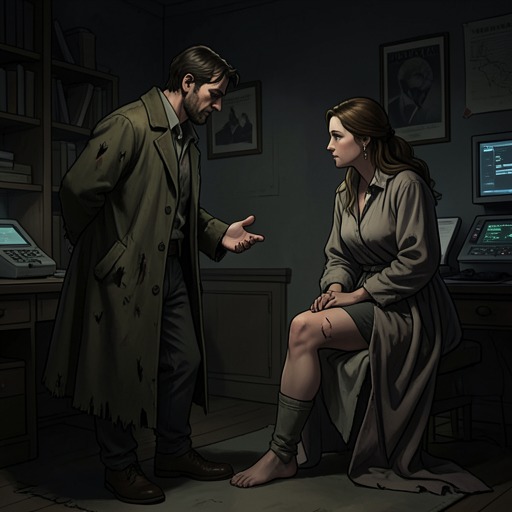
The words recur in his encounters with Madam Bettine LaVaughn. She visits him in prison with a blanket over her useless legs and her manservant, Hans Ickman, behind her. She tells the magician that an elephant crippled her; he replies that he intended only lilies, repeating the claim day after day. The exchange is described as urgent despite its sameness. Its repetition makes the sentence less a resolution than a refrain: the magician persists in naming his original intention, while Madam Bettine LaVaughn’s injury remains the consequence that the explanation cannot undo.
For Hans Ickman, the repeated words become part of a scene that stirs an older memory. Listening to the same exchange, he remembers a dog leaping above a river, and the joy of a small, unnecessary twist in midair. The memory turns toward loss: the dog and her name are gone, and Hans cannot say where his brothers are. The magician’s refrain thus sounds within a passage about what disappears and what cannot be recovered; it does not restore what the accident has taken from Madam Bettine LaVaughn.
The phrase in other people’s hearing
The sentence reaches Peter Augustus Duchene in the prison, where Leo Matienne holds a lantern aloft. The magician shouts that he intended only lilies, pleading that he meant a bouquet. Peter sees his long, wild beard, ragged fingernails, mould-covered cloak, and bright eyes that appear desperate, pleading, and angry. The sight makes Peter’s heart sink: the man does not look capable of the enormous magic required to send the elephant home. Here, the familiar explanation offers Peter no assurance. The magician’s words describe an intention, but his appearance and the failed attempt to reverse the spell raise the question of whether he can repair its consequences.
The novel also places the phrase beside a public dispute over responsibility. The chief of police cannot find guidance in the handbook for a beast that appeared from nowhere, destroyed an opera-house roof, and crippled a noblewoman. One policeman proposes treating the elephant as a criminal. Leo Matienne challenges that reasoning: if a magician threw a rock at a window, he argues, the rock would not be guilty of breaking it; the elephant did not choose to crash through the roof. The comparison separates the agent who causes an event from the object or creature through which its effects occur. Against that debate, the magician’s repeated appeal to what he intended likewise distinguishes purpose from outcome—but it cannot make the resulting injury disappear.
From refrain to admission
When the magician finally speaks to Madam Bettine LaVaughn in the elephant’s presence, he begins with the familiar claim. At Hans Ickman’s urging, the magician and Madam Bettine LaVaughn are asked to speak from their hearts. The magician then enlarges the sentence into an account of what happened: he intended lilies, but, caught in a desperate desire to do something extraordinary, called down a greater magic and inadvertently caused profound harm. He says he will try to undo what he has done.
Madam Bettine LaVaughn asks whether she will walk again. The magician says that he does not think so, asks her forgiveness, and hopes she will forgive him. This exchange gives the phrase its clearest meaning yet. The magician does not deny his intention to conjure lilies, but neither does he leave that intention standing as a complete defense. He identifies the desire that exceeded it, names the harm, and accepts that an attempt at repair may not restore what was lost. Across its repetitions, “I intended only lilies” moves from an explanation of what the magician meant to do toward an admission of the consequences of what he actually did.