Adele’s orphanhood
The Magician's ElephantAdele’s orphanhood is the result of a double loss followed by separation: her father dies on a battlefield, her mother dies after giving birth, and Adele is taken away from her newborn brother, Peter Augustus Duchene. She grows up in the Orphanage of the Sisters of Perpetual Light, where the absence of her family is not the whole of her story. Her questions about her beginnings, her dreams of the elephant, and her decision to run toward a figure she does not yet know all give her an active part in the movement from childhood isolation toward reunion.
Birth and Separation
Adele is only a few hours old when she arrives at the orphanage. Sister Marie later recalls that she was so small she seemed like a mote of dust. Her birth follows the news that her father has died in battle: when her mother hears it, labor begins, and Adele is born before her mother dies. Before her death, Adele’s mother has asked Peter to watch over the baby. The promise gives Peter an enduring responsibility, but not the power to carry it out: the midwife takes Adele away, while Vilna Lutz takes Peter with him to train as a soldier.
Adele’s orphanhood is therefore not simply a childhood without parents. It is also the condition of being cut off from a living brother who has been told, or has come to believe, that she is gone. The separation leaves Peter with an unfulfilled promise and Adele with no knowledge of the brother who made it. The story’s later reunion must bridge both the physical distance between them and the false understanding that has formed around her fate.
Life at the Orphanage
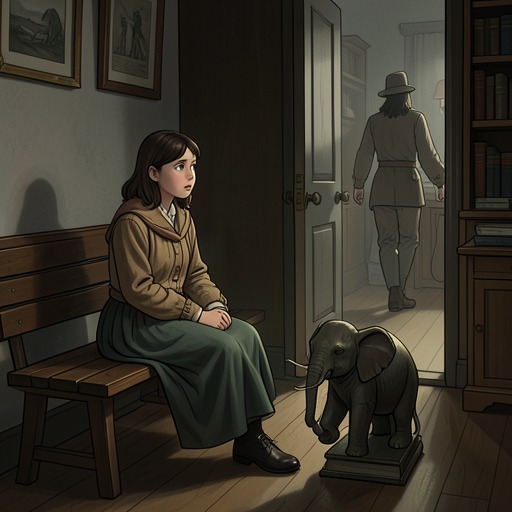
Adele sleeps in the last of a row of small iron beds in an austere, draughty dormitory on the top floor of the orphanage. The building stands less than five streets from the Apartments Polonaise, but its closeness to the wider city does not mean that Adele has access to the family from whom she was separated. Her early life is described through the institutional setting and through the care of Sister Marie, the Sister of the Door, who admits unwanted children and is the only person allowed to open and close the orphanage’s front door.
Adele eventually asks Sister Marie what she was like when she first arrived, and whether Sister Marie was glad she came. Adele already knows the answer to the latter question, but asks anyway. The exchange makes her interest in her own beginning more than a request for information: she seeks reassurance about the welcome she received in place of the parents she cannot remember. Sister Marie recounts that before Adele’s arrival she sat alone, and the world seemed dark; then the baby was placed in her arms. The orphanage is a place of separation, but this memory also establishes that Adele’s earliest care began with an individual act of welcome.
The Elephant as a Link
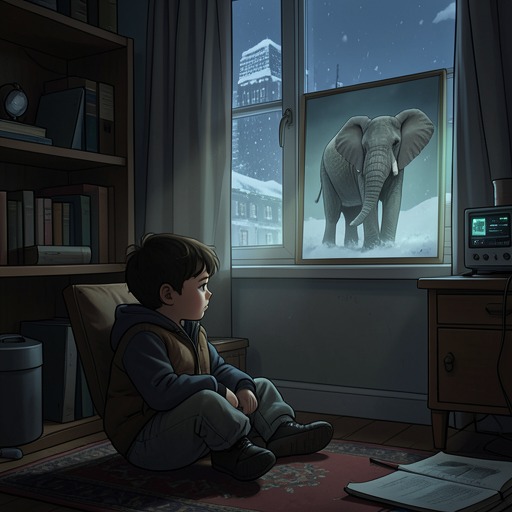
Soon after the elephant crashes through the roof of the opera house, Adele begins dreaming about her. The elephant appears in the dreams at the orphanage’s front door, where Sister Marie answers the knock. In the dream, the elephant says she has come to collect the little person called Adele. The image joins Adele’s isolated life to events unfolding elsewhere in Baltese, though the dream does not itself tell her how she is related to the boy seeking his sister.
The elephant’s arrival has already unsettled the city’s ordinary ways of understanding responsibility. The chief of police cannot find guidance in the handbook for a beast that appeared from nowhere, destroyed the opera-house roof, and injured a noblewoman. One policeman proposes treating the elephant as a criminal; Leo Matienne objects that she did not choose to fall through the roof. The Countess Quintet then takes possession of her: because no doorway at the countess’s home is large enough, a dozen craftsmen knock down a wall and install a decorated door within a day. The elephant is brought there under cover of night, and the door is locked behind her. Against this background of confinement and imposed custody, Adele’s dream of an elephant coming to the orphanage imagines a crossing in the opposite direction: someone comes to claim her.
From Dream to Recognition
Peter’s search gives that imagined connection a practical consequence. Ten years old and training to be a soldier, he spends his single florit to ask a fortune-teller for the truth, despite fearing that Vilna Lutz will ask where the money went. He says he wants the truth and resolves not to lie about his choice. When he later tells Vilna that the fortune-teller said his sister lives and that an elephant will lead him to her, he rejects Vilna’s account and trust. He also declares that he will stop being a soldier and go to the elephant before searching for his sister. Adele’s orphanhood is thus bound to Peter’s choice to abandon the role prepared for him and act on the promise made to their mother.
When the group finally approaches the orphanage through falling snow, Adele hears Iddo’s dog barking and looks out from the dormitory window. She sees the elephant following a boy, accompanied by a policeman, a person pushing a woman in a wheelchair, a bent man, a beggar, and the black dog. The snow resembles the snow in her dream, but Adele does not dismiss what she sees as another dream. She leaves her bed, runs barefoot down the dark stairs, passes the sleeping Sister Marie, and throws open the orphanage door, calling out that she is there. Her action turns the dream’s summons into a choice she makes for herself.
Reunion and the Unfinished Past
Peter picks Adele up because it is snowing, she is cold, and her feet are bare. His gesture fulfils, at least in that moment, the promise he made to their mother long ago that he would always take care of her. He says her name twice, but Adele asks who he is. Their meeting is therefore a reunion in circumstance before it is a recovery of shared memory: Peter recognizes the sister he has sought, while Adele has no established recollection of him.
The ending does not erase the years of separation or make Adele’s early life known to her all at once. Instead, it brings her out of the orphanage and into the care of the brother whose promise survived their childhood apart. Her orphanhood has shaped where she sleeps, who answers her questions, and what she can know about her family; it also gives force to her final movement through the door. She is not merely collected, as the elephant’s dream-language suggests. She sees, decides, and runs toward the possibility of belonging.