The magician’s imprisonment
The Magician's ElephantThe magician’s imprisonment is the immediate consequence of the elephant’s spectacular arrival: summoned through a spell, she crashes through the roof of the opera house and lands on Bettine LaVaughn, crushing her legs. At Bettine’s behest, the magician is imprisoned. His confinement turns a public catastrophe into a private reckoning, while the uncertain legal status of the elephant and the question of how to undo the magic keep his cell connected to the city beyond it.
Cause and legal ambiguity
The imprisonment follows an accident the magician caused through magic, but the elephant herself becomes the object of the authorities’ uncertainty. Baltese’s chief of police believes firmly in the letter of the law and repeatedly consults the police handbook, only to find no guidance for a beast who has appeared from nowhere, wrecked an opera-house roof, and crippled a noblewoman. Reluctant to decide alone, he asks his subordinates what should be done with her. One suggestion is to wait and see whether she disappears; another is to classify her as a criminal and punish her.
Leo Matienne challenges that proposed treatment by separating the elephant’s causal role from her intention. He asks whether a rock should be blamed for breaking a window if a magician throws it, then argues that the elephant did not choose to come crashing through the roof. His intervention does not free her: she is imprisoned too, chained by the left ankle to an iron rod in a stable. The episode establishes a striking imbalance in the distribution of responsibility. The magician is jailed at Bettine’s request, while the elephant is confined despite having neither chosen nor understood her arrival.
The city’s uncertainty leaves room for power and private interest to shape what happens next. The Countess Quintet has a dozen craftsmen make a new, enormous door in her home, and the chief of police escorts the elephant there under cover of night. The countess pays enough to cover the opera-house roof many times over, supports Bettine’s prosecution of the magician, and becomes the elephant’s owner. The magician’s incarceration thus unfolds alongside a separate transfer of the elephant from police custody into private possession, a change that matters when he later names her as essential to undoing the spell.
The cell and its narrow view
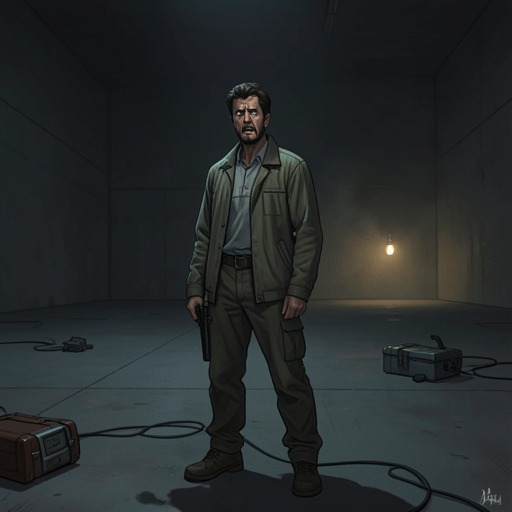
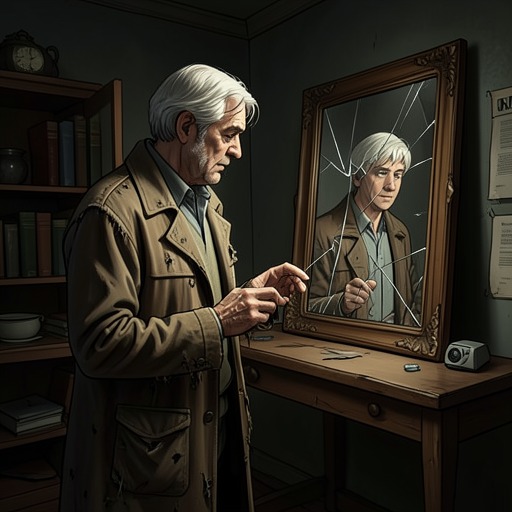
The magician’s cell is small and dark, but it has one high window. At night he lies on his cloak atop a straw mattress and looks through it into the darkness. Clouds usually obscure the sky; on occasion, if he watches long enough, they part grudgingly to reveal a single exceedingly bright star. The restricted view gives the cell a recurring image of distance and uncertain possibility: the magician cannot leave, and even the sky appears only in brief openings.
In that confinement he tells the star that he had intended only lilies, describing his intention as a bouquet. The narration immediately qualifies this as not, strictly speaking, the truth. The moment makes the cell a place not only of punishment but also of partial confession: the magician’s own account of what happened cannot be accepted at face value, even as he is left alone with the consequences of his act. The bright object in the sky is identified as Venus, which shone particularly brightly that year.
Guilt, loneliness, and the need for witnesses
The accident returns to the magician repeatedly. Whenever he closes his eyes, he sees the elephant crashing through the opera-house ceiling and landing on Bettine; the image denies him rest and keeps his extraordinary act of conjuration tied to the injury it caused. His isolation sharpens that burden. He longs to see any human face, even Bettine’s accusatory or pleading one, and imagines showing her the star at his window. His thoughts join the beauty of the bright sky to the darkness around him without resolving the harm that brought him there.
That combination of remorse and longing prepares the change in his confinement. On the night visitors come, the magician is awake when the prison’s outer door clangs open and footsteps sound along the corridor. He rises and puts on his cloak. Later, after the cathedral clock has tolled midnight, the outer door opens again; footsteps and the jangle of keys approach his cell. The policeman holds up the keys and tells him that people are waiting outside. The arrival is not just a change in the cell’s immediate routine: it brings the magician back into contact with others and gives his confinement a possible purpose beyond endurance.
Conditions for undoing the spell
Peter asks the magician to help, and the magician agrees to try, but sets out two necessary conditions. The elephant must be present because he cannot make her disappear without her being there; Bettine must also be brought to him. The demand links the three people bound together by the opera-house accident: the conjurer, the elephant he summoned, and the woman who was injured. The magician does not present the undoing as a simple reversal that he can perform alone. His ability depends on the presence of those affected by the original act.
When Peter says this seems impossible, the magician answers by explaining that magic begins, continues, and ends in impossibility. His statement frames the task as an attempt whose difficulty is inherent, not as a guarantee of success. In practical terms, the elephant’s transfer to the Countess Quintet makes the request difficult: she belongs to the countess, whose influence had helped determine her fate. The evidence establishes the magician’s requirements and the obstacle of the elephant’s ownership, rather than detailing every step by which she and Bettine are brought to him.
Opening the cell
The magician’s release comes through a deliberate act of access. Leo Matienne inserts a key into the lock, turns it, and pushes open the cell door, telling the magician that everyone is waiting. The policeman has announced the waiting group; Leo performs the opening. The movement from the high window to the open doorway gives the imprisonment a concrete ending: the magician is no longer separated from the people who have come to seek his help.
The scene makes release a beginning rather than a verdict on the original accident. The magician calls the moment merciful, then recognizes that the magic must now be undone. The narration observes that making something disappear is as magical as making it appear, and perhaps more so, because undoing is almost always harder than doing. His imprisonment has held him apart while the consequences gathered around him; its end returns him to those consequences and places the difficult work of reversal before him.