Digory's country house
The Magician's NephewDigory's country house is the country home that completes the Kirke family's return to health and prosperity, and the place where the story's objects carry Narnian magic into the future. The apple tree grown from the fruit Digory planted in its garden eventually falls in a storm; its timber becomes the wardrobe that begins later passages between Narnia and the human world.
The House as a New Home
After news arrives from Digory's father in India that an inheritance has made him rich, the family can leave London for the great country house Digory has heard about but never seen. It is described as a large estate with suits of armour, stables, kennels, a river, a park, hot-houses, vineries, woods, and mountains behind it. The move marks a decisive change in the family's fortunes: the sickroom and its anxieties give way to a home offering space, comfort, and a shared future.
The improvement follows the recovery of Digory's mother. Within about a week of the apple's effect becoming apparent, she is getting better; after a fortnight she can sit in the garden. A month later the house has changed with her health: Aunt Letty opens the windows, draws back the frowsy curtains, brings in flowers and better food, and has the old piano tuned. Digory's mother sings again and plays games with Digory and Polly. The house is thus presented not just as a grand inheritance, but as a domestic setting renewed by care and recovery.
The Apple Tree in the Garden
The apple Digory planted in the back garden grows into a fine tree, linking this English estate to the tree in Narnia from which the fruit came. In English soil, far from Aslan's voice and Narnia's young air, it does not produce fruit capable of reviving a dying woman. Its apples are nevertheless unusually beautiful and good for health, though they are not fully magical. The difference in what the tree can yield makes its setting consequential: the inherited magic persists, but does not operate in the same way in every world.
The connection is carried within the tree itself. Its sap seems never to forget its Narnian counterpart; sometimes the English tree moves when no wind is blowing. The narration offers a possible explanation rather than a certainty: perhaps the tree quivers when the Narnian tree is swaying in a strong south-western gale. The country garden therefore holds a living trace of another world's weather and history, even when that connection is not directly visible.
From Storm-Felled Tree to Wardrobe
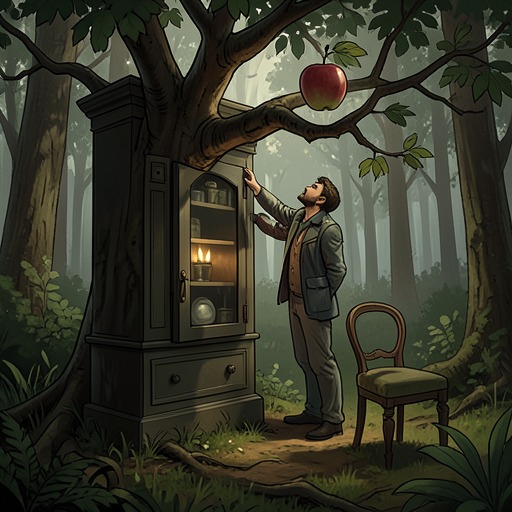
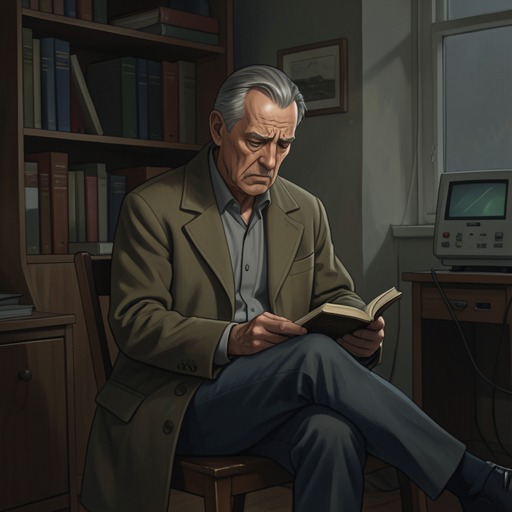
When Digory is middle-aged, a great storm across southern England blows the tree down. By then he is a famous learned man, a professor and a great traveller, and the Ketterleys' old house belongs to him. Unable to bear the thought of the tree being chopped up for firewood, he has some of its timber made into a wardrobe and places it in his country house. The tree's passage from Narnian fruit to English growth, then from storm-felled wood to household furniture, gives the wardrobe a material history rooted in both worlds.
Digory himself never discovers the wardrobe's magical properties; someone else does. The house consequently becomes the starting point for later journeys between Narnia and the human world, though those adventures belong to other books. Its significance reaches beyond the family's settled life: an object made to preserve a fallen tree becomes an unrecognized threshold between worlds.
Family Life and Lasting Connections
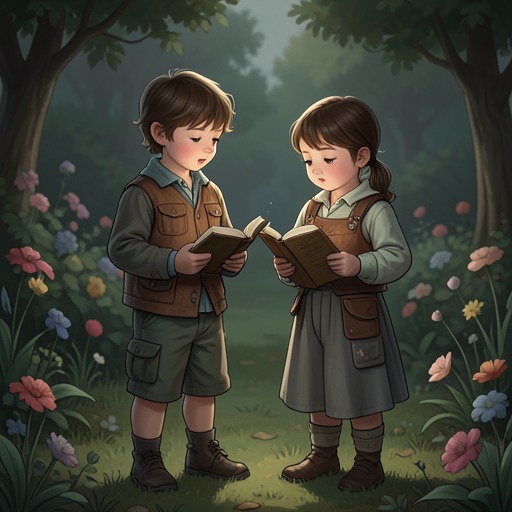
The country house also sustains the friendship between Digory and Polly. They remain great friends, and Polly comes to stay during nearly every holiday. At the estate she learns to ride and swim, as well as to milk, bake, and climb. These ordinary activities contrast with their earlier journeys through other worlds, showing the friendship continuing in the everyday life that the house makes possible.
Digory's family brings Uncle Andrew to live with them when they move to the country. Digory's father explains that the arrangement will keep the old man out of mischief and prevent poor Letty from having to manage him constantly. Uncle Andrew never tries magic again. In old age he becomes less selfish and a nicer man, though he still entertains visitors in the billiard room with stories of the foreign royal lady he once drove around London. The house is therefore also the setting for his retirement and changed conduct, while his recollections preserve a comic remnant of his former adventures.