Mabel Kirke's recovery
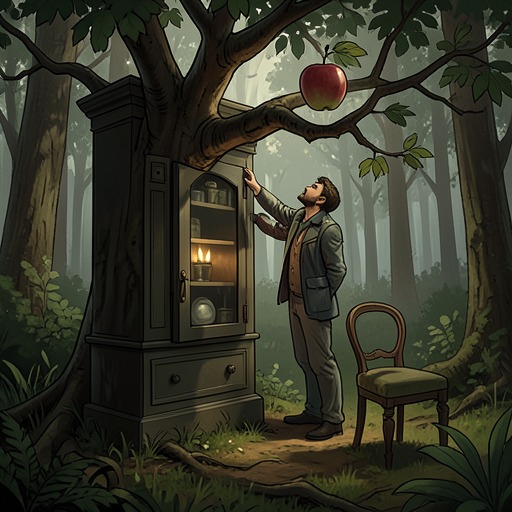
The Magician's NephewMabel Kirke’s recovery is the human consequence of Digory’s journey to Narnia: the apple he brings back gives his gravely ill mother relief and sets her on a steady return to health. Its healing power changes not only her condition but the atmosphere and prospects of the Kirke household, while the apple’s core takes root in the garden and connects private restoration to Narnia’s protection.
The Apple and the First Night
Digory peels the apple and cuts it into pieces for his mother. She is uncertain whether she should eat it, but says she almost feels able to; after finishing it, she smiles and sinks into a real, natural, gentle sleep. This is precisely the kind of rest she most wanted, without the drugs she had been taking. Digory notices that her face seems a little different, kisses her softly, and leaves the room carrying the core. He is not yet sure that she will recover: the ordinary, unmagical things around him make hope difficult, though the memory of Aslan keeps it alive.
Recovery at Home
The next morning, Digory listens from the bannisters as the Doctor tells Aunt Letty that the case is the most extraordinary of his medical career and is like a miracle. He cautions against giving the boy false hopes, but his opinion is cut off before Digory can hear it. The improvement soon becomes unmistakable. About a week after the apple, Mabel is getting better; roughly a fortnight later, she can sit outside in the garden.
A month after the change begins, the whole house feels different. Aunt Letty does the things Mabel likes, the windows are opened and the frowsy curtains drawn back, and new flowers and better food brighten the rooms. The old piano is tuned, and Mabel takes up singing again. She also plays games with Digory and Polly, prompting Aunt Letty to tease her for being the biggest baby of the three. Recovery is thus shown not simply as the end of illness but as a return to shared activity, music, comfort, and play.
The Core and a New Future
On the evening after giving Mabel the fruit, Digory buries its core in the back garden. When he and Polly return, something has already risen above the ground; they bury the magic rings in a circle around it. The novel does not treat the healing and the planting as separate outcomes: the apple’s fruit restores Mabel, while its seed begins a new growth in the Kirke garden.
After about six weeks of this happier life, a letter from Digory’s father in India brings further change. The death of Great-Uncle Kirk leaves Digory’s father rich, and he plans to retire and come home for good. The family will live in the country house Digory has heard about all his life. Mabel’s recovery therefore precedes a broader renewal of family life and home, though the immediate evidence of her healing remains the measured sequence from sleep, to sitting in the garden, to singing and playing again.
The Contrast Behind the Healing
The recovery is set against two sharply different landscapes encountered in Digory’s journey. Charn is a lifeless city beneath an old, weary sun, its vanished river reduced to a ditch of grey dust. Narnia begins as bare earth, rock, and water beneath a young sun, then comes alive through Aslan’s song: grass spreads, trees grow, and animals rise from the ground. The apple’s healing effect belongs to this life-giving world, and its seed carries that restorative force into the ordinary garden where Mabel is recovering.
That power also has a protective dimension. When the Tree grown from the apple appears in Narnia, Aslan tells the Narnians to guard it as their shield: its scent means joy, life, and health to them, but death, horror, and despair to the Witch, who will not approach within a hundred miles while it flourishes. Mabel’s recovery is the intimate counterpart to that larger protection. The same fruit that brings her gentle sleep and renewed life comes from a tree whose presence safeguards Narnia.