Mother of Diego
The Magician's NephewMabel, referred to in the story as Digory Kirke’s mother and Mrs. Kirke, is the gravely ill woman whose possible death gives her son’s adventures their most personal urgency. Largely absent from the action, she is nevertheless a decisive presence: Digory’s hope of restoring her health transforms his knowledge of other worlds from a marvel into a possible means of rescue, while Aslan’s recognition of her suffering places that private grief beside the future of Narnia.
Identity and Circumstances
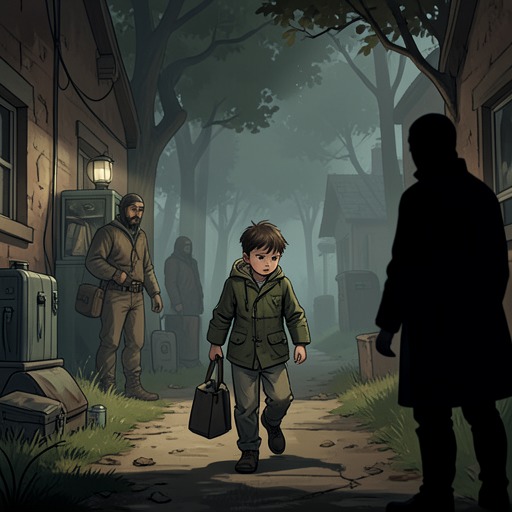
Digory explains to Polly Plummer that his father is away in India and that he has come to live with an aunt and uncle because they are looking after his mother. His halting account of her illness breaks off as he struggles to say that she is going to die. The disclosure gives the boy’s earlier distress a concrete cause: he is grieving not simply for the country home and familiar life he has lost, but for a mother whose survival is in doubt.
The passage introduces Mabel through the limits of what Digory can bear to say. His face changes as he tries to hold back tears; Polly, realizing that she did not know, apologizes. The scene establishes both the seriousness of the illness and its emotional force without making Mabel herself a speaking or acting character. Her condition is known through the worry it creates in the people around her, especially her son.
A Presence in the London House
At the London house, Mabel is being cared for by her sister, Aunt Letty. After Aunt Letty is injured in the commotion caused by Jadis, she sends the housemaid, Sarah, to the police station and says that she will take Mrs. Kirke’s lunch upstairs herself. The brief detail situates Mabel’s care within the household’s ordinary routine even as the Witch’s arrival threatens to make the house unsafe. Digory, meanwhile, is alarmed that Mabel must not see Jadis and that the Witch might continue her rampage through London.
The ordinary business of lunch stands in sharp contrast to the danger gathering around the house. Mabel is kept apart from the disturbance, and the narrative does not describe her witnessing it. Yet Digory’s concern for her shapes how he assesses the crisis: the Witch must be sent away, not only because she threatens the wider world, but because the ill woman upstairs must be protected from her.
The Hope of a Cure
While Digory waits and watches for Jadis, a visitor brings grapes for Mabel. From the open dining-room door, Digory overhears Aunt Letty say that the fruit might do her good, but that it would take fruit from a land of youth to help her now; nothing in this world will do much. The conversation gives a name to the apparent limits of ordinary remedies. Its importance lies less in any medical certainty than in what Digory, who has already visited another world, can now imagine.
He recognizes that Aunt Letty’s phrase about a land of youth may point to a real place rather than an idle figure of speech. If other worlds exist, there may be fruit in one of them capable of curing his mother. The thought catches hold of him despite his fear of being disappointed. He remembers the magic Rings and reasons that the pools in the wood may lead to different worlds, which he could search. For a moment, the prospect of finding a cure eclipses his watch for Jadis: the imagined sequence is simple and overwhelming—find the fruit, and have his mother well again.
Digory’s Appeal to Aslan
Later, when Aslan asks whether Digory is ready to undertake the task of obtaining the seed for a protective tree in Narnia, Digory considers bargaining: he might offer to help if Aslan would promise to help his mother. He understands that Aslan is not someone to be dealt with in that way, and answers that he is ready. But the answer does not dissolve his grief. He thinks of his mother and of the hopes that seem to be dying, then asks Aslan whether he can give him something that will cure her.
As Digory looks up, he sees tears in Aslan’s eyes. The sight surprises him; the Lion’s grief appears, for an instant, greater than his own. Aslan tells him that only the two of them in Narnia yet know this grief, and acknowledges its weight, but also explains the larger responsibility at stake: the Witch Digory brought into the world will return to Narnia, and a tree grown from the seed he must fetch can protect the land from her for many years. The exchange does not promise that Mabel will recover. Instead, it joins Digory’s private plea to a task whose consequences reach beyond his family.
Narrative Significance
Mabel’s illness supplies the emotional cause for Digory’s search and its central temptation. The idea that another world might contain a cure arises from his overhearing a conversation about fruit, then gathers force because the Rings offer a way to pursue that possibility. His desire is neither abstract curiosity nor ambition: he wants his mother back. That motive makes the prospect of a cure powerful while also sharpening the moral pressure of the choices he faces.
Her importance also shapes the story’s encounter between grief and duty. Aslan does not dismiss Digory’s appeal or treat his sorrow as trivial; his tears confirm that the suffering is shared and understood. At the same time, he does not make Digory’s service to Narnia a bargain for a cure. Mabel remains mostly beyond the reader’s view, but the consequences of her illness reach from a child’s faltering confession to the great purpose of protecting a newly created land.