Talking Beasts
The Magician's NephewThe Talking Beasts are animals whom Aslan awakens into speech and thought at the creation of Narnia, making them participants in its new community rather than merely creatures within its landscape. Their transformation is marked by a choice: Aslan touches selected pairs, calls them to life as speaking beings, and gives them the land while warning them to treat the Dumb Beasts gently. The animals’ first exchanges reveal a society learning what speech makes possible—recognition, laughter, memory, and responsibility.
Awakening and Selection
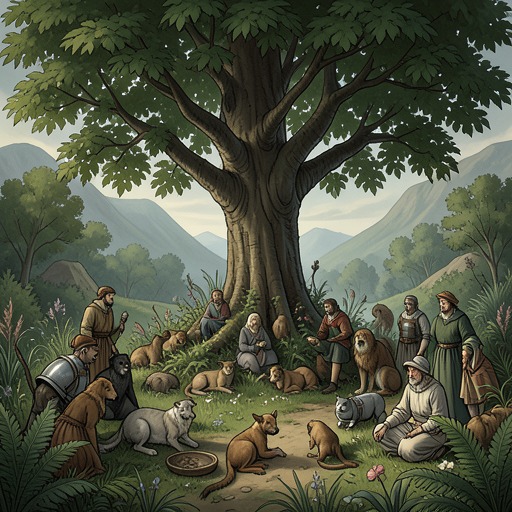
As Narnia takes shape, animals rise from the earth in a scene of abundant physical life: dogs bark as they emerge, frogs head for the river, birds pour from the trees, and bees turn to the flowers. The old cab-horse, who has entered the new world with the travelers, joins them with a changed bearing, picking up his feet and holding his head erect. The animals are not initially frightened by Aslan. He moves among them and touches two at a time—pairs of beavers, pairs of leopards, and a stag and a deer—while passing over other creatures altogether. Those he selects leave their kinds and gather in a circle around him; the rest wander away.
The gathering grows completely still. Aslan breathes upon the chosen animals, and the narrator describes physical changes: smaller creatures grow larger, the very largest grow somewhat smaller, and many sit upright with their heads tilted as if trying to understand. A flash comes from the sky or from Aslan, and his command calls Narnia to wake, love, think, and speak. The awakening joins bodily change to new capacities and a new world: the animals are not simply made audible but addressed as beings capable of response.
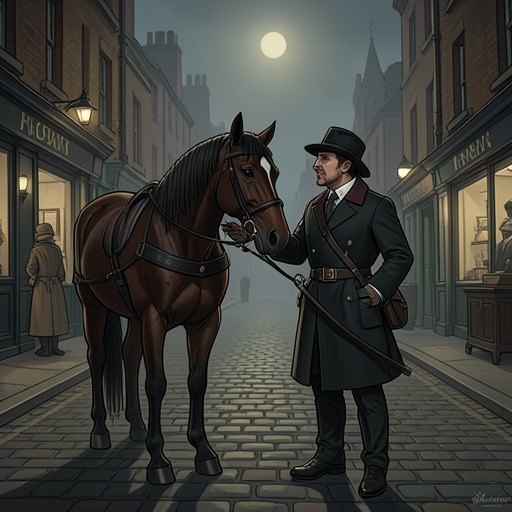
Woodland gods, goddesses, Fauns, Satyrs, Dwarfs, the river god, and his Naiad daughters also answer Aslan. Amid this chorus, the horse speaks in an uncertain, snorting voice, admitting that the new creatures do not yet know much. The Cabby recognizes his former horse as Strawberry, while Polly is glad that Strawberry has been chosen as a Talking Beast. The moment makes the change intimate as well as cosmic: a familiar working animal has crossed into a new kind of life, though its understanding of that life is still incomplete.
Language, Memory, and Humor
Aslan gives the Talking Beasts Narnia’s woods, fruits, and rivers, as well as the stars and himself. He distinguishes them from the Dumb Beasts he has not chosen, who remain theirs to cherish but must not be treated as an invitation to return to their former condition. Speech is therefore both a gift and a boundary. The Talking Beasts are entrusted with care for other animals, and their new status carries the risk that they may lose it if they go back to the ways from which they were raised.
The first communal reply is an avowal of awakening: the creatures say that they hear and obey, and that they love, think, speak, and know. Their confidence is immediately qualified by Strawberry’s admission that they do not yet know much. In speaking to the Cabby, Strawberry can only gradually recover the earlier relationship. At first it has a muddled feeling that it lived somewhere else, or was something else, before Aslan woke the animals; the past seems like a dream. Then recollection begins to sharpen. Strawberry remembers the Cabby tying a black cart behind him and striking him to make him run, a detail that brings their former life of labor into the animals’ new conversation.
Speech also creates room for play. When a jackdaw blurts out its confidence that there is no danger, after everyone else has already finished answering Aslan, its words land in an awkward silence. The bird hides its head beneath its wing, and the other animals laugh in their own strange voices. Aslan tells them that, now they are no longer dumb and witless, they need not always be grave: jokes, like justice, come with speech. The jackdaw then regains its courage and asks whether it has made the first joke and whether it will always be remembered for it. Their first laughter is not a decorative extra to their new intelligence; it is one of the ways the community discovers what language can do.
Care and Misunderstanding
The animals’ new capacity does not instantly make them understand human bodies and habits. They do not recognize that Polly, Digory, and the Cabby belong to the same kind, because they take clothing to be as much a part of those visitors as fur and feathers are of animals. Uncle Andrew, much taller and thinner than the Cabby and dressed in black with a white waistcoat and wild grey hair, is especially difficult for them to classify. His attempt to reassure a Bulldog comes through to the beasts only as a vague sizzling noise: they cannot understand his words, just as he cannot understand theirs. He faints, and a Warthog mistakes him for a tree, having never seen anyone faint or fall before.
The misrecognition turns into an episode of improvised care. The beasts water Uncle Andrew, and when he comes to his senses, he is buried to his thighs in earth and surrounded by animals. His screams convince them that he is alive; when he tries to escape, an Elephant restrains him with its trunk. They make a cage around him so that he can be kept safe until Aslan decides what should be done. The animals try to feed their strange captive with thistles, nuts, worms, and, in the Bear’s well-meant offering, a wild bees’ nest. The honeycomb strikes Uncle Andrew in the face, and he falls onto the thistles. Their kindness is real, but it is expressed through an incomplete understanding of what a human can eat and endure.
The animals become fond of their captive and hope Aslan will let them keep him. Some begin to suspect that at least a portion of his noises carries meaning, and they name him Brandy after a sound he makes often. The episode places the Talking Beasts’ first social judgments alongside their first mistakes: they can observe, infer, and care, but their knowledge of the unfamiliar human remains fragmentary. Uncle Andrew’s inability to communicate with them also reverses the ordinary human assumption that animals are simply silent. In Narnia, it is the newly speaking animals who try to interpret the human who cannot make himself understood.
Inheritance and Significance
The Talking Beasts’ creation establishes their independent standing in Narnia. They receive the land from Aslan, and their relationship to its other animals is explicitly framed as stewardship rather than unrestricted use: the Dumb Beasts are to be treated gently and cherished. Their future is tied to preserving the distinction Aslan has bestowed, so speech is not merely an instrument for dealing with humans. It is a form of life with obligations among the creatures themselves.
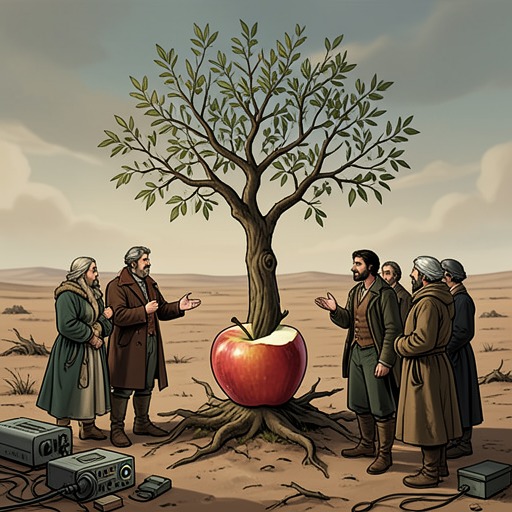
That community is also given a continuing task. After the coronation of Narnia’s first rulers, a tree bearing silver apples appears. Aslan tells the Narnians to make guarding it their first care, because the Witch has fled north and will not come within a hundred miles while the Tree flourishes. Its fragrance means joy, life, and health to the Narnians, but death, horror, and despair to her. The episode connects the new-speaking society to the protection of the land: its members are witnesses to the Tree’s arrival and are charged with guarding the shield on which Narnia’s safety depends.
The animals’ awakening thus changes the story’s terms of attention. Earlier, a guinea-pig could be treated by a human experimenter as material for a failed trial; the animals’ response to human conduct now comes from voices and judgments of their own. Strawberry’s recovered memories register the history of work from the animal’s side, while the attempt to care for Uncle Andrew shows that the new speakers can make choices and form attachments even when their understanding is mistaken. Their first words, their first joke, and their first duty together make Narnia a world whose animals are not only alive within creation but present as speaking participants in it.