The Duties of Narnia’s Kings
The Magician's NephewThe Duties of Narnia’s Kings are the conditions Aslan sets for Narnia’s first rulers: they must govern and protect its inhabitants, recognize the freedom of the Talking Beasts, and rule with fairness, mercy, and courage. The charge makes kingship a form of accountable service. Its standard sharply opposes the claim that exceptional rulers may exempt themselves from ordinary moral rules, a claim made by both Andrew Ketterley and Jadis.
Appointment and Scope
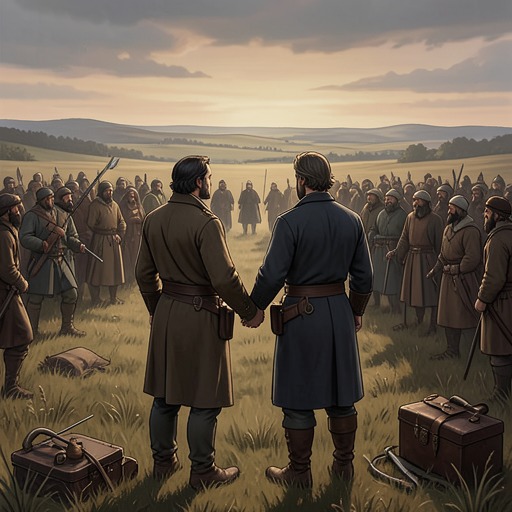
Aslan announces the appointment directly to Frank and Nellie, declaring them Narnia’s first King and Queen. The charge is not confined to one task or one group: they are to rule and name the creatures, do justice among them, and protect them when enemies arise. Aslan makes the coming danger explicit by warning that an evil Witch is in the world. Royal power thus begins with a duty to the whole community and with a clear obligation to defend it.
The responsibilities are presented to the Cabby as practical tests of fitness, not as a demand for education or courtly polish. When he doubts that he is suited to kingship because he has had little education, Aslan asks whether he can use a spade and plough and raise food from the earth. The Cabby says he can do that kind of work, drawing on his upbringing. The exchange grounds the new monarchy in familiar labor and provision rather than status alone.
Justice and the Freedom of Subjects
The central political distinction in the charge is between free subjects and property. Aslan asks whether Frank can rule the creatures kindly and fairly, remembering that they are not slaves like the dumb beasts of the world he came from, but Talking Beasts and free subjects. Frank says he understands and will try to do right by them. The instruction makes their speech and freedom essential to how they are to be governed: kingship is not permission to treat other lives as instruments.
That principle is extended to the relations within the kingdom. Aslan asks Frank not to favor some of his own children over others, or favor some creatures over others, and not to allow anyone to hold another down or treat them harshly. Frank answers that he cannot abide such conduct and would punish it if he caught it. The duty therefore includes restraining abuses among subjects as well as exercising justice from the throne. It also reaches forward across generations: Aslan asks whether Frank will bring up his children and grandchildren to govern by the same standard, and Frank promises to do his best.
Protection and Courage
Protection is both a standing obligation and a test of action when danger becomes conflict. After warning that enemies will arise, Aslan asks whether Frank would be first in a charge and last in a retreat if war came. Frank does not pretend to a proven military record; he admits that he cannot know exactly how he would fare, having fought only with his fists, but hopes he would do his part. The uncertainty matters: the standard is not a boast of invulnerability, but a willingness to accept danger on behalf of the land and its people.
Aslan accepts Frank’s answers as sufficient. He tells him that he will have done all that a king should do, and promises a coronation. The statement gathers the separate duties into a coherent measure of rule: practical provision, fair treatment, protection from harm, and courage in a crisis. The king’s authority is validated by the responsibilities he accepts, not by a claim to be beyond ordinary accountability.
Coronation and Political Meaning
At the coronation, Aslan places crowns on Frank and Nellie and names them King and Queen of Narnia, father and mother of future kings in Narnia, the Isles, and Archenland. His formal blessing commands them to be just, merciful, and brave. The ceremony confirms that the earlier conversation was not merely advice to one prospective ruler: these qualities define the character of the new royal line and its public charge.
The rule’s ethical meaning becomes clearer beside the contrary theories voiced elsewhere. Andrew Ketterley excuses breaking a promise by claiming that profound students and great thinkers are freed from rules meant for ordinary people; he calls their exemption a high and lonely destiny. Jadis similarly defends the destruction of her people by insisting that a queen’s subjects exist to do her will and that reasons of State free a great queen from rules binding common people. Aslan’s instructions invert that logic. Narnian rank does not release a sovereign from obligation; it binds the sovereign more firmly to justice, care, and the defense of others.
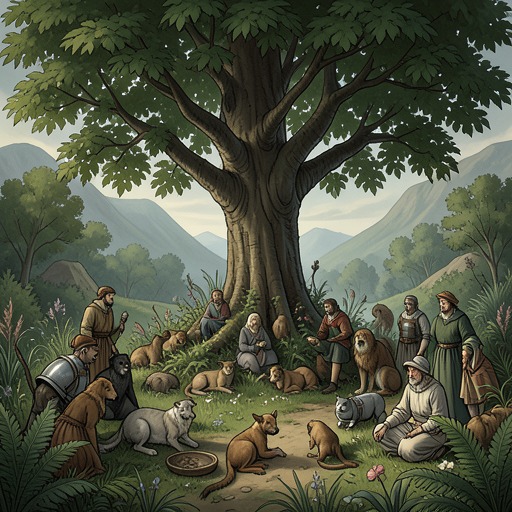
The charge is also expressed through recognition of animal agency. Strawberry, once a working horse in another world, awakens as a Talking Beast and recalls a muddled sense of having been something else before Aslan woke the animals. Aslan gives the newly awakened creatures Narnia, its woods, fruits, and rivers, and himself, while instructing them to cherish the Dumb Beasts and not return to their ways. The crown’s duties belong within this larger founding order: the Talking Beasts are participants in the kingdom, not mute possessions, and their protection and freedom are part of what just rule must preserve.