The proper-use rule of the Tree’s fruit
The Magician's NephewThe proper-use rule of the Tree’s fruit makes the fruit’s power inseparable from the manner and purpose of its use. Its gifts are not illusions: the fruit can heal, confer unending life, and protect Narnia. But those outcomes are not morally interchangeable. A stolen apple may deliver exactly what its taker desires while making that desire a source of suffering; the same fruit, received in obedience and given for another’s good, can instead bring joy.
The Rule at the Garden Gate
The rule is first made visible at the eastern gates of the walled garden. Their inscription sets two conditions against one another: entry is by the gold gates or not at all, and the fruit is to be taken for others, not for oneself. Theft or climbing the wall promises a heart’s desire, but pairs that reward with despair. The warning does not say that wrongful use will fail. It warns that success itself may become the punishment.
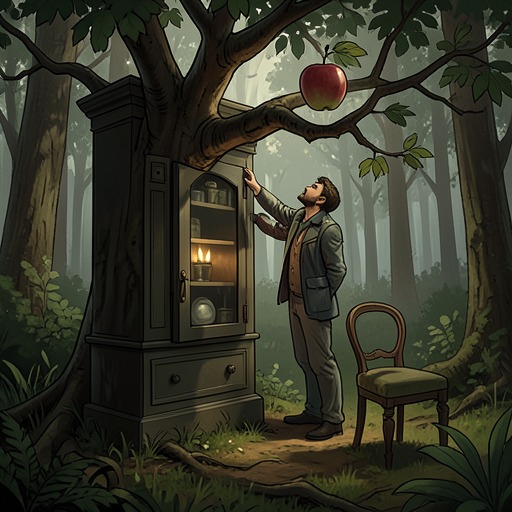
Digory Kirke reads the instruction as a practical obligation. He understands that he must carry the apple back untasted for Aslan, and enters through the gates, which swing open silently when he lays a hand on them. Inside the quiet garden, the silver apples shine with their own light. He picks one and places it in the breast pocket of his Norfolk jacket, though he cannot help looking at it and smelling it first. The scene makes the rule concrete: the fruit is desirable, but Digory’s errand requires restraint and a purpose beyond his own appetite.
The Fruit’s Power and Its Cost
Jadis identifies the fruit as the apple of youth and the apple of life. Having tasted one herself, she says she already feels its effects and believes she will never grow old or die. She urges Digory to eat the garden’s fruit with her, offering him everlasting life and the prospect of ruling either Narnia or his own world. Her offer exploits the gap between getting what one wants and understanding what that desire will entail.
Aslan later explains that Jadis has indeed obtained what the fruit can give: unwearied strength and endless days. Yet her wrongful eating has made the other fruit a horror to her, and her long life with an evil heart is already becoming an endless misery. The rule therefore governs more than whether the fruit works. It works according to its nature, but an unauthorized eater does not thereby receive a happy or fitting outcome. The gift can endure while the pleasure that seemed to justify taking it disappears.
Wrongful Use and Its Counterfactuals
Aslan applies the same principle to Digory’s two temptations. If Digory had stolen an apple and planted it to protect Narnia without being commanded, the tree would still have protected the land. But it would have made Narnia another strong and cruel empire like Charn, rather than the kindly country Aslan intends. Protection, considered only as a result, would have been achieved; the means would have corrupted the character of the protected world.
The fruit could also have healed Digory’s mother if he had stolen an apple to take home to her. Aslan does not deny the healing. Instead, he reveals its cost: the day would have come when both mother and son looked back and judged it better that she had died of her illness. Digory’s love makes the temptation especially powerful, but love cannot make a stolen gift harmless. The rule separates a good immediate outcome from the full consequence of obtaining it wrongly.
Rightful Giving and the Rule’s Meaning
Digory admits to Aslan that he nearly ate an apple himself. Aslan confirms that the fruit would have worked for him too, but not happily, because it does not work happily for those who pluck it at their own will. The judgment clarifies that correct use is not merely a matter of choosing a beneficial destination after taking the fruit: authorization and purpose belong to the rule’s operation. Even an apparently generous act, such as protecting Narnia, could produce a cruel result if undertaken by an unbidden thief.
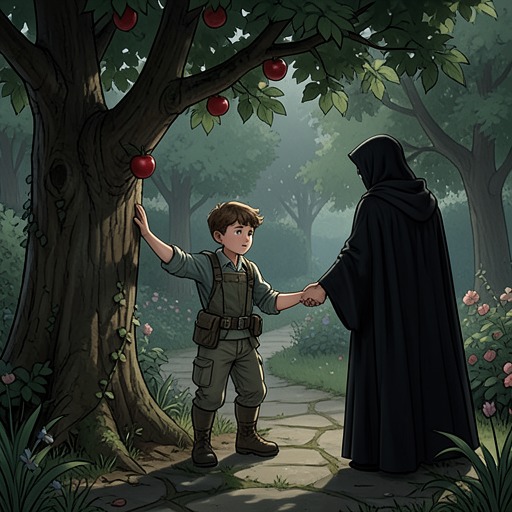
The ending establishes a contrasting outcome. Aslan tells Digory that the apple he now gives him will heal his mother and bring joy, though it will not give endless life in Digory’s world. Digory goes to the Tree, takes the apple, and returns to Aslan; the King and Queen and the creatures cheer him. His earlier hope of saving his mother had been surrendered after Aslan explained the consequences of theft. The commanded gift reverses that despair without making the fruit’s power casual or unlimited. The governing distinction is between possessing what one longs for and receiving it in the way that allows it to remain a blessing.