Years before the main story
Adele’s Birth and Separation
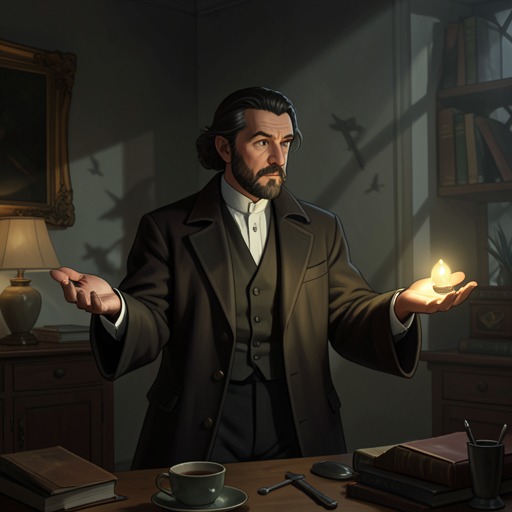
After [Peter Augustus Duchene](entity:character-recall-character-peter-augustus-duch-914d7ed3e905)’s father died on a battlefield, his mother went into labor and gave birth to [Adele](entity:character-recall-character-adele-1a3585b237e6). Before dying, she asked Peter to remember his sister’s name and promised him that they belonged to one another and that he must care for her.
The midwife took the newborn away, judging her too small to place in the hands of a child. [Vilna Lutz](entity:character-recall-character-vilna-lutz-fa0eff6d6566), who had come to report Peter’s father’s death, became Peter’s guardian; he later concealed what had become of Adele, leaving Peter to believe that she had been stillborn.
Years before the main story
The River-Leaping Dog
As a boy in a mountain town, [Hans Ickman](entity:character-recall-character-hans-ickman-e91e5fd81123) watched a small white dog leap across a river too wide for people to cross. In midair, the dog added a playful twist, making the impossible jump look effortless.
Hans eventually forgot the dog’s name and the memory faded. It would return to him much later, when the elephant’s arrival stirred his recollection of lost marvels and of the brevity of life.
Years before the main story
Iddo Loses His Sight
[Iddo](entity:character-recall-character-iddo-0327b6c9c933) once carried messages across battlefields for Her Majesty’s army. Near Modegnel, a cannon blast hurled him through the air; when he landed, he was permanently blind.
Even after losing his sight, Iddo’s sleeping dreams returned him to his old work, running with a message he desperately wanted to deliver. His longing to serve again would find an unexpected outlet on the night the elephant and the others set out through the snow.
Late summer before the elephant’s winter
Bartok’s Fall
While carving a gargoyle high on [Baltese Cathedral](entity:location-recall-location-baltese-f437a4582520), [Bartok Whynn](entity:character-recall-character-bartok-whynn-712477c4dffa) lost his footing and fell. As he hurtled toward the ground, he realized that life was funny and laughed aloud, astonishing the people below.
His back was broken, but he survived and healed in a crooked way. Afterward he laughed constantly and could no longer work as a stonecutter, a change that eventually brought him to a job tending to the elephant.
The day before the elephant arrives
Peter’s Question
At [Baltese Market Square](entity:location-recall-location-baltese-8f73b7859a2d), ten-year-old [Peter Augustus Duchene](entity:character-recall-character-peter-augustus-duch-914d7ed3e905) spent the florit entrusted to him by [Vilna Lutz](entity:character-recall-character-vilna-lutz-fa0eff6d6566) on a fortune-teller’s promised answer. He admitted to himself that the purchase was dishonorable, but his need to know the truth about his family outweighed his fear of punishment.
The fortune-teller first told him that his parents were dead, a fact he already knew. When Peter asked about his sister, she said [Adele](entity:character-recall-character-adele-1a3585b237e6) lived; when he then asked how to reach her, the fortune-teller answered, “The elephant.”
That evening
Peter Confesses
Peter returned to the attic at [Apartments Polonaise](entity:location-recall-location-b6d450d3dff5) without the fish and bread he had been sent to buy. He confessed to [Vilna Lutz](entity:character-recall-character-vilna-lutz-fa0eff6d6566) that he had spent the money on a fortune-teller, then asked whether his guardian had ever lied.
Vilna Lutz punished him by withholding his evening rations, but Peter could not stop weighing the fortune-teller’s claim against his guardian’s version of the past. In the darkness, he admitted that he hoped Vilna Lutz was the one who had lied, because that would mean [Adele](entity:character-recall-character-adele-1a3585b237e6) was alive.
That night
The Elephant Appears
At [Bliffendorf Opera House](entity:location-recall-location-f89a13d9d9f5), a magician intended to conjure lilies while performing for an indifferent audience. Feeling that he had wasted his life, he also spoke an ill-advised spell, hoping to create something truly spectacular.
Instead of flowers, an elephant crashed through the ceiling and landed on [Bettine LaVaughn](entity:character-recall-character-bettine-lavaughn-474df7a1a724), crushing her legs. The magician felt the beast’s heart beating and recognized that, despite the harm caused, he had accomplished the extraordinary magic he had longed to perform.
Later that night
The First Reversal Fails
Authorities demanded that the magician send the elephant away. He spoke the spell and its words backward, following the magic’s requirements, but nothing happened; the elephant remained there.
Her continued presence made the magician’s power undeniable, even as the accident had gravely injured [Bettine LaVaughn](entity:character-recall-character-bettine-lavaughn-474df7a1a724). The authorities imprisoned both the magician and the elephant, each for a different reason: he for the consequences of his magic, and she because no one knew what to do with her.
The day after the opera-house accident
The Elephant Wakes in Captivity
The elephant was chained in a stable, where she first kept her eyes shut against dizziness and the commotion around her. When the spinning sensation passed, she looked around and understood only that she was somewhere she did not belong.
Her captivity began without any understanding of how she had arrived or why she had been taken from her home. That dislocation became the source of the heartbreak Peter would later recognize in her face.
The morning after the elephant appears
News Reaches the Market
Peter went back to [Baltese Market Square](entity:location-recall-location-baltese-8f73b7859a2d) with another coin and strict instructions from [Vilna Lutz](entity:character-recall-character-vilna-lutz-fa0eff6d6566) to buy old bread and the smallest fish he could find. While he waited, the fishmonger told a customer that an elephant had crashed through the opera-house roof.
The impossible word struck Peter with force: the fortune-teller had said he must follow an elephant. He learned that the police had taken the beast, and immediately connected her arrival with the possibility that [Adele](entity:character-recall-character-adele-1a3585b237e6) was alive.
The day after the accident
The Police Debate the Elephant
Unable to find guidance in the police handbook, the chief of police asked his subordinates what should be done with the elephant. Some proposed waiting for her to disappear or treating her as a criminal.
[Leo Matienne](entity:character-recall-character-leo-matienne-73ced0d2bdce) objected that the elephant had not chosen to crash through the roof and could not fairly be blamed for it. He urged the others to consider what the elephant wanted and where she had come from, revealing his habit of asking questions that might open up possibilities rather than close them down.
The evening after the accident
Leo Wonders What It Means
Walking home through [Baltese](entity:location-recall-location-baltese-45f2020edf61), [Leo Matienne](entity:character-recall-character-leo-matienne-73ced0d2bdce) considered whether the elephant might carry a message or signal a change in the world. He wondered where she had come from and what her arrival might mean, even though he knew there were no certain answers.
His imagination turned the bewildering event into an invitation to hope. As he walked, his thoughts returned to the questions “What if?” and “Why not?”
The day after the elephant appears
Peter Hears the Confirmation
From the attic window at [Apartments Polonaise](entity:location-recall-location-b6d450d3dff5), Peter called down to [Leo Matienne](entity:character-recall-character-leo-matienne-73ced0d2bdce), who confirmed that an elephant was in police custody. Peter told [Vilna Lutz](entity:character-recall-character-vilna-lutz-fa0eff6d6566) what he had heard, but his guardian dismissed the elephant as imaginary and fell back into feverish memories of battle.
Vilna Lutz insisted that [Adele](entity:character-recall-character-adele-1a3585b237e6) was dead, while Peter began to believe the fortune-teller: if an elephant had truly appeared, perhaps her answer about his sister was true as well. His guardian’s confusion deepened, but Peter’s hope took firmer hold.
During Bettine LaVaughn’s early prison visits
Hans Remembers the Dog
[Bettine LaVaughn](entity:character-recall-character-bettine-lavaughn-474df7a1a724) visited the imprisoned magician and repeated their familiar exchange: she had been crippled by an elephant, while he insisted that he had intended only lilies. [Hans Ickman](entity:character-recall-character-hans-ickman-e91e5fd81123), accompanying her, remembered his childhood watching the white dog leap across the river.
The memory reminded Hans that beautiful things and the people connected to them could slip away. He interrupted the rehearsed conversation and urged Bettine LaVaughn and the magician to say what they truly meant, but their exchange soon fell back into its old pattern.
Soon after the accident
The Countess Claims the Elephant
[Countess Quintet](entity:character-recall-character-countess-quintet-09ec05175898), angry that the elephant had taken over the city’s attention, decided she would regain the center of the social season by owning the spectacle. She arranged for a large door to be built in her home and paid the opera-house owner and the police generously.
The elephant was brought under cover of night into Countess Quintet’s Residence and installed in the ballroom. The countess now controlled access to the creature, while the elephant’s confinement moved from the stable into an ornate room that was no less alien to her.
During the early weeks of the elephant’s captivity
Peter Dreams of Adele
Peter dreamed that he entered the home he had shared with his parents and found a crying baby alone in a bedroom. He comforted her, held her in his arms, and recognized her as [Adele](entity:character-recall-character-adele-1a3585b237e6) as the world outside shone with golden light.
When he woke, the dream brought back a memory he had nearly lost: Adele had cried, and he had held her. He concluded that the fortune-teller might have told the truth about his sister and decided he had to find the elephant.
Soon after the elephant’s arrival
Adele Dreams of the Elephant
At the [Sisters of Perpetual Light Orphanage](entity:location-recall-location-f142bb3c459e), [Adele](entity:character-recall-character-adele-1a3585b237e6) began dreaming that the elephant came to the door to take her home. In one dream, [Sister Marie](entity:character-recall-character-sister-marie-83f1947cb48e) could not understand the elephant and closed the door; Adele watched the creature walk away and disappear into a snowfall.
The dream left Adele waiting at the window, longing for the elephant and for the home she had never known. Her imagined encounter connected her to Peter’s search, though neither sibling yet knew the other was alive and looking for them.
During the winter after the accident
Baltese Fixates on the Elephant
The people of [Baltese](entity:location-recall-location-baltese-45f2020edf61) turned the elephant into the subject of conversation, business, entertainment, and speculation. Bakers sold elephant-shaped pastries, vendors sold plaster from the opera house, and dancers adopted a dance called the Elephant.
The spectacle briefly gave the gloomy city something shared to anticipate and discuss. Yet the public fascination did not ease the elephant’s isolation, and the countess kept her behind a locked door.
After Countess Quintet takes possession
The Free Viewing Day
To display her sense of generosity while retaining control, [Countess Quintet](entity:character-recall-character-countess-quintet-09ec05175898) announced that ordinary citizens could see the elephant for free on the first Saturday of each month. Posters spread the news across the city.
[Leo Matienne](entity:character-recall-character-leo-matienne-73ced0d2bdce) read the announcement and realized that Peter would have a chance to see the elephant. He also wondered whether the countess might grow tired of owning her and whether the elephant might eventually act on her own longing for freedom.
Before the first Saturday viewing
Leo Brings Peter the News
Leo told Peter that the elephant would be open for public viewing that Saturday. Peter’s face brightened, and he promised himself that he would find the creature and learn what she could tell him.
At home, Leo spoke with [Gloria Matienne](entity:character-recall-character-gloria-matienne-1dfd13124fd8) about Peter’s loneliness and the harsh life he led under [Vilna Lutz](entity:character-recall-character-vilna-lutz-fa0eff6d6566). Their concern for the boy intersected with their private grief over being unable to have children, a sorrow Gloria feared Leo’s hopeful questions would reopen.
During the winter before the viewing
Adele Questions Sister Marie
Waking from another elephant dream, [Adele](entity:character-recall-character-adele-1a3585b237e6) went downstairs and found [Sister Marie](entity:character-recall-character-sister-marie-83f1947cb48e) asleep beside the orphanage door. Sister Marie startled awake and insisted that the door was always unlocked and that a person need only knock.
Adele asked what she had been like as a newborn. Sister Marie recalled receiving her after her mother died, learning her name from the midwife, and seeing Adele smile. The memory reassured Adele that she had once been welcomed into the world and strengthened her bond with the woman who had cared for her.
During the winter before the viewing
Tomas and Iddo Wait
Outside the orphanage, the beggar [Tomas](entity:character-recall-character-tomas-05718bb4d91a) huddled with [Iddo](entity:character-recall-character-iddo-0327b6c9c933), his blind dog. Tomas could turn the hardships of daily life into songs that offered a vision of a better world; Iddo, who had once carried battlefield messages, still longed to deliver something important.
Tomas sang that a boy wanted to see the elephant and would do so. Iddo stayed close to him in the cold, while the song’s promise linked their quiet alley to Peter’s unfolding search.
While held in Countess Quintet’s ballroom
The Elephant Recalls Her Name
Alone in the darkened ballroom, the elephant repeated her own name inwardly, trying to remember who she was. It was a name shared with her family, given by her mother and spoken in affection by her brothers and sisters.
She held on to the knowledge that she had once been known and loved. The effort became harder as the unfamiliar human world pressed in around her.
Before the first Saturday viewing
Peter Confronts Vilna Lutz
As [Vilna Lutz](entity:character-recall-character-vilna-lutz-fa0eff6d6566) arranged toy soldiers and praised military strategy, Peter thought about the losses caused by war and said that he wished it could all be undone. He then told his guardian that he no longer believed him: the fortune-teller had said [Adele](entity:character-recall-character-adele-1a3585b237e6) lived, and the elephant’s arrival had made that claim seem possible.
Vilna Lutz admitted that Adele had not been declared dead by the midwife. She had been taken away because she was so small, and he had lied to Peter, claiming she was stillborn because he believed the truth would only cause pain and distract Peter from becoming a soldier.
During the winter before the viewing
Adele Shares Her Dream
While peeling potatoes with Lisette, [Adele](entity:character-recall-character-adele-1a3585b237e6) repeated the elephant’s words and said she believed the creature would come to take her home. Lisette mocked her hope and made light of the idea when a knock sounded at the kitchen door.
The visitor was [Tomas](entity:character-recall-character-tomas-05718bb4d91a) with [Iddo](entity:character-recall-character-iddo-0327b6c9c933), not an elephant. Tomas sang that the elephant was coming, but Lisette shut the door and dismissed the song; Adele noticed how hungry Tomas looked and cried, while keeping the elephant’s promise alive in her thoughts.
The first Saturday of the month
The City Lines Up
People from across [Baltese](entity:location-recall-location-baltese-45f2020edf61) queued outside [Countess Quintet](entity:character-recall-character-countess-quintet-09ec05175898)’s Residence to see the elephant. Their clothes and stations varied, but they brought the same mix of hopes, griefs, wishes, and desires, many secretly expecting that merely seeing the creature might change their lives.
Peter stood among them, listening to a man in a black hat repeatedly promise to describe an elephant’s dimensions without ever doing so. The line carried him toward the moment when the creature would become more than a rumor or a sign from the fortune-teller.
Later that first Saturday
Peter Remembers His Promise
As the line inched forward, [Tomas](entity:character-recall-character-tomas-05718bb4d91a)’s song reached Peter: it named [Adele](entity:character-recall-character-adele-1a3585b237e6) and told her that her elephant was there. The name unlocked Peter’s memory of his mother asking him to hold the newborn and promising that Adele belonged to him and he to her.
Peter remembered saying yes and promising to care for his sister. He understood that his search was not only about proving the fortune-teller right; it was about keeping faith with the promise he had made to his mother.
During the first Saturday viewing
The Elephant’s Despair
In [Countess Quintet](entity:character-recall-character-countess-quintet-09ec05175898)’s ballroom, visitors pressed around the elephant, touching, leaning, laughing, praying, and crying. The noise and human smells made her feel that the world had become too small, and she stopped repeating her name to herself.
Overwhelmed by the loss of her family and home, she decided she would rather die. [Bartok Whynn](entity:character-recall-character-bartok-whynn-712477c4dffa), assigned to stand behind her with a bucket and shovel, laughed as he directed the crowd onward, unaware at first of how close the elephant was to despair.
Late afternoon on the first Saturday
Peter Sees the Elephant
After waiting through the crowd, Peter finally reached the elephant. He touched her solid, warm side and asked whether she knew where his sister was, then asked her to open her eyes and look at him.
The elephant met his gaze with a look of deep despair. Peter forgot his questions and understood that she was heartbroken and needed to go home or she would die; for her part, the elephant felt that he saw and understood her.
Immediately after Peter sees the elephant
Peter Promises Her Home
Peter whispered to the elephant that he would make sure she got home and promised her he would. He then stepped away, immediately doubting that he could keep such a promise when he did not even know where her home was.
On leaving the ballroom, he realized that the magician might possess magic powerful enough to reverse the spell. That possibility gave Peter a concrete next step: he would ask [Leo Matienne](entity:character-recall-character-leo-matienne-73ced0d2bdce) to help him reach the imprisoned magician.
That evening
Gloria Welcomes Peter
Peter ran to [Leo Matienne](entity:character-recall-character-leo-matienne-73ced0d2bdce)’s home and asked him to take him to the prison. Leo and Gloria first brought the cold, underfed boy inside and gave him mutton stew, which made him cry as memories of his family and everything he had lost returned.
Peter told them about his parents, [Adele](entity:character-recall-character-adele-1a3585b237e6)’s birth, [Vilna Lutz](entity:character-recall-character-vilna-lutz-fa0eff6d6566)’s lie, and the elephant’s need to go home. Gloria welcomed him into her arms, and Peter rediscovered the comfort of being held by someone who cared for him.
That evening, after Peter’s story
Leo Chooses to Try
When Peter finished explaining what had happened, Leo asked, “What if?” Peter answered in kind, asking them to imagine a world in which the elephant could be sent home and [Adele](entity:character-recall-character-adele-1a3585b237e6) found. The questions challenged the idea that events could not be changed.
Gloria initially resisted, fearful of another disappointment, but Peter’s plea and Leo’s resolve persuaded her. Leo decided it was time to go to the prison and ask the magician to undo the harm.
That night
The Magician Agrees to Try
At [Baltese Prison](entity:location-recall-location-baltese-fd1e3d55b92b), Peter and Leo found the magician desperate, lonely, and still insisting that he had intended only lilies. Peter explained that the elephant was homesick and might die if she could not return home.
The magician wept and admitted both his pride in the spell that had brought her and his reluctance to undo his greatest feat. Leo asked him to try anyway, and the magician agreed, but said he would need the elephant and [Bettine LaVaughn](entity:character-recall-character-bettine-lavaughn-474df7a1a724) present.
That night, before the group leaves for the countess’s home
Hans Remembers Rose
Leo and Peter went to [Bettine LaVaughn](entity:character-recall-character-bettine-lavaughn-474df7a1a724)’s home, where [Hans Ickman](entity:character-recall-character-hans-ickman-e91e5fd81123) initially resisted disturbing her. Peter’s plea made Hans remember himself as a boy watching the white dog leap across the river, and the forgotten name Rose returned to him.
The recovered memory brought a sense that the impossible might happen again. Hans welcomed the visitors inside, and he noticed the first snowflakes beginning to fall over the city.
That night
Snow Begins to Fall
Snow spread across [Baltese](entity:location-recall-location-baltese-45f2020edf61), settling on the opera house, the prison, the [Apartments Polonaise](entity:location-recall-location-b6d450d3dff5), [Countess Quintet](entity:character-recall-character-countess-quintet-09ec05175898)’s Residence, and the orphanage. The long, dark winter finally gave way to a visible change in the city.
The snowfall accompanied a shift in several people’s expectations. [Bartok Whynn](entity:character-recall-character-bartok-whynn-712477c4dffa) dreamed of carving people rather than gargoyles, [Sister Marie](entity:character-recall-character-sister-marie-83f1947cb48e) dreamed that every creature glowed, and the magician, watching the snow through his prison window, realized how much he wanted to share such a sight with someone he loved.
That night, as the snow falls
Madam LaVaughn Joins the Search
Leo, Peter, Hans, and [Bettine LaVaughn](entity:character-recall-character-bettine-lavaughn-474df7a1a724) set out through the snow. Bettine objected to the unusual late-night journey and pointed out that they were moving away from the prison, but Hans believed the time had come to return there.
Peter explained that they first had to retrieve the elephant from the countess. Bettine questioned the plan, then accepted that the group had become a little mad and began to entertain the possibility that anything might happen.
That night, while the others travel
The Magician Welcomes the Snow
Alone in his cell, the magician paced and feared that even if the group brought the elephant to him, he might fail again. He looked through the high window and saw the snow falling.
The sight clarified what he wanted: not another grand display of magic, but someone beside him to share the wonder. He became willing to undo his greatest accomplishment, understanding that the elephant’s return mattered more than his pride in having summoned her.
That night, after the snowfall begins
The Elephant Door Opens
Peter, Leo, and Hans knocked on the great [Elephant Door](entity:object-recall-object-elephant-door-42c0fa3f59d8) at [Countess Quintet](entity:character-recall-character-countess-quintet-09ec05175898)’s Residence. Their hands grew cold as they waited, and Peter feared that his life had been one long attempt to gain entry to places that might not open.
At last, the deadbolts scraped back and [Bartok Whynn](entity:character-recall-character-bartok-whynn-712477c4dffa) appeared. When Peter explained that they needed to take the elephant to the magician, Bartok laughed at the danger to his own position, then listened as Leo asked what if Bartok too could go where he belonged.
That night, at the countess’s residence
Bartok Recognizes the Dream
Leo suggested that [Bartok Whynn](entity:character-recall-character-bartok-whynn-712477c4dffa) might not have to remain behind to face the countess’s anger if he, like the elephant, went to the place where he was meant to be. Bartok stopped laughing and studied the people waiting in the snow.
He recognized them as the figures from his dream: the boy, the mustached man, the woman, and the others. His recognition turned the risky plan into a shared act of possibility, and he allowed them to take the elephant.
That night, after Bartok agrees to help
The Elephant Leaves the Ballroom
When the elephant opened her eyes and saw Peter, she was not surprised. She had expected him to come for her, and the people began leading her away from the ballroom where she had been kept against her will.
The rescue was the first step toward the magician’s attempt to send her home. The elephant’s release from [Countess Quintet](entity:character-recall-character-countess-quintet-09ec05175898)’s control also brought her back into contact with the boy who had promised to help her.
That night, as the group moves through the snow
Iddo Announces the Procession
In the alley, snow and the scent of something wild woke [Iddo](entity:character-recall-character-iddo-0327b6c9c933). He stood alert and barked repeatedly, certain that something incredible was approaching and that he must announce it.
[Tomas](entity:character-recall-character-tomas-05718bb4d91a) tried to quiet him, but Iddo would not stop. The dog’s urgent barking became the message he had longed to deliver, drawing attention to the procession moving through the city.
That night, during the snowfall
Adele Sees the Procession
[Adele](entity:character-recall-character-adele-1a3585b237e6) heard [Iddo](entity:character-recall-character-iddo-0327b6c9c933) barking and looked out from the orphanage window. Through the snow she saw the elephant following a boy, accompanied by a policeman, a woman in a wheelchair, a bent man, a beggar, and a dog.
Certain that this was the dream she had been waiting for, Adele ran barefoot downstairs and opened the orphanage door. She cried out that she was there, and Iddo ran to her, circling and barking as if welcoming her home.
That night, outside the orphanage
Peter and Adele Reunite
[Sister Marie](entity:character-recall-character-sister-marie-83f1947cb48e) woke to find the orphanage door open and the elephant in the snowy street. [Adele](entity:character-recall-character-adele-1a3585b237e6) stood outside, and Peter turned at the sound of her name, recognizing that the girl he had sought was his sister.
He picked Adele up to keep her warm and told her that he was her brother. She moved from disbelief to joy, asked his name, and recognized that he had brought the elephant—or that the elephant had brought him to her.
That night, after the siblings reunite
The Group Sets Out Together
[Sister Marie](entity:character-recall-character-sister-marie-83f1947cb48e) joined the others outside, and the people gathered in the snow understood that an impossible dream had come true. [Adele](entity:character-recall-character-adele-1a3585b237e6) worried that the elephant must be cold, and Peter said they were taking her home.
Peter led the procession carrying Adele, with Leo beside him and the elephant followed by [Bettine LaVaughn](entity:character-recall-character-bettine-lavaughn-474df7a1a724), Hans, Bartok, [Tomas](entity:character-recall-character-tomas-05718bb4d91a), [Iddo](entity:character-recall-character-iddo-0327b6c9c933), and Sister Marie. As they walked, Peter felt the world around him affirm the truth he had longed to hear: Adele lived, and she was safe in his arms.
Near midnight
The Magician Is Released
After the cathedral clock tolled midnight, Leo returned to [Baltese Prison](entity:location-recall-location-baltese-fd1e3d55b92b) with the others and called to the magician. When the magician asked who was waiting, Leo answered that everyone was.
The magician learned that the elephant and [Bettine LaVaughn](entity:character-recall-character-bettine-lavaughn-474df7a1a724) had been brought to him. Leo unlocked the cell, and the magician stepped into the snowy night, afraid that his attempt to reverse the spell might fail but ready to try.
Near midnight, before the spell
LaVaughn Hears the Apology
The magician bowed to [Bettine LaVaughn](entity:character-recall-character-bettine-lavaughn-474df7a1a724) and admitted that, in his desperate desire to do something extraordinary, he had called down a greater magic and harmed her. He apologized and asked her to forgive him, but did not promise that she would walk again.
Bettine LaVaughn looked away, and Hans urged them all to speak from their hearts. Peter then reminded the magician that the elephant was cold and needed to go home, bringing the group back to the urgent purpose of the gathering.
Near midnight, after the reunion
The Magician Reverses the Spell
The magician asked everyone to step back. Peter touched the elephant once, thanked her, and said goodbye before moving away; the magician then circled her and spoke the spell and its words backward.
The snow stopped, the clouds cleared, and the stars appeared, with Venus shining among them. While the others looked upward, Peter kept his eyes on the elephant and alone saw the greatest magic the magician had performed: she was there, and then she was gone.
Immediately after the spell
The Elephant Goes Home
The elephant disappeared without a sound, leaving four circular footprints in the snow. The clouds returned and the snowfall began again, but the city’s noisy wonder had given way to silence.
Peter hoped that the elephant was home. When he looked up, [Adele](entity:character-recall-character-adele-1a3585b237e6) met his eyes, and the siblings shared the joy of being together; the journey had not only returned the elephant to her own place but brought Peter to the sister he had been seeking.
Immediately after the elephant disappears
LaVaughn Releases the Magician
The magician sank to his knees, apologized again, and said he was finished with magic. When [Adele](entity:character-recall-character-adele-1a3585b237e6) asked whether Leo would return him to prison, Leo said that he must, but [Bettine LaVaughn](entity:character-recall-character-bettine-lavaughn-474df7a1a724) objected that punishment would be pointless after what had happened.
She withdrew her accusation and promised to press no charges. Leo released the magician, who bowed to Bettine LaVaughn before walking away into the snow; letting him go lifted a weight from her, and she turned her attention to keeping Adele warm.
That night, after the magician leaves
The Family Finds Shelter
With the elephant gone and the magician free, the group turned indoors from the snow. [Iddo](entity:character-recall-character-iddo-0327b6c9c933) later slept by the fire when he visited, while [Tomas](entity:character-recall-character-tomas-05718bb4d91a) sang the unusual songs that Peter, [Adele](entity:character-recall-character-adele-1a3585b237e6), Leo, and Gloria learned to sing with him.
The reunited siblings became part of a household where the beggar and his dog were welcome. The quiet aftermath replaced the city’s feverish spectacle with companionship and the ordinary work of caring for one another.
After the winter’s events
Peter Keeps His Promise
[Vilna Lutz](entity:character-recall-character-vilna-lutz-fa0eff6d6566) continued to call from the attic, asking for his wooden foot or insisting that the enemy must be outflanked. At times he admitted, in his feverish confusion, that he could not take the baby because she was too small.
[Adele](entity:character-recall-character-adele-1a3585b237e6) sometimes sat beside him and held his hand, then returned downstairs to Peter and the Matiennes. Each return reassured Peter that his sister was safe; the promise he had made their mother had finally become a lived reality.
After the events in Baltese
The Magician Becomes a Goatherd
The magician became a goatherd and married a woman who had no teeth. They lived together in a hut at the foot of a hill and sometimes climbed it to look at the constellations.
He showed his wife the bright point he had watched from prison, though he could not be sure which one it was. He never performed magic again, having exchanged spectacle for a shared life and the simple wonder of looking at the sky beside someone who loved him.
Years after the elephant’s return
The Elephant Forgets Baltese
The elephant lived a long time and remembered none of her time in [Baltese](entity:location-recall-location-baltese-45f2020edf61). She forgot the opera house, the magician, the countess, [Bartok Whynn](entity:character-recall-character-bartok-whynn-712477c4dffa), and the snow that had fallen over the city.
Sometimes, while walking through tall grass or resting in the shade, she recalled Peter’s face and felt that she had once been truly seen and saved. She remained grateful without knowing whom she was grateful to or why.
Long after the winter of the elephant
The Procession Is Carved
The people of [Baltese](entity:location-recall-location-baltese-45f2020edf61) eventually forgot the elephant’s arrival and disappearance, which seemed too impossible to have happened. Yet a stone record remained high on [Baltese Cathedral](entity:location-recall-location-baltese-f437a4582520): an elephant led by a boy carrying a girl, followed by the magician, policeman, nun, noblewoman, manservant, beggar, dog, and a small bent man.
The figures held to one another and looked toward a bright light. The carving preserved the story’s quiet truth: the impossible had briefly gathered strangers into a connected procession, and their shared journey had changed where each of them belonged.