
The Conflict of Captivity and Ownership
The Magician's ElephantThe elephant’s captivity exposes competing claims of law, possession, public access, and the moral question of whether a creature can be owned.
increasing Bearing strength in each event
 decreasing
Bearing strength in each eventdecreasingDetained as a Criminal
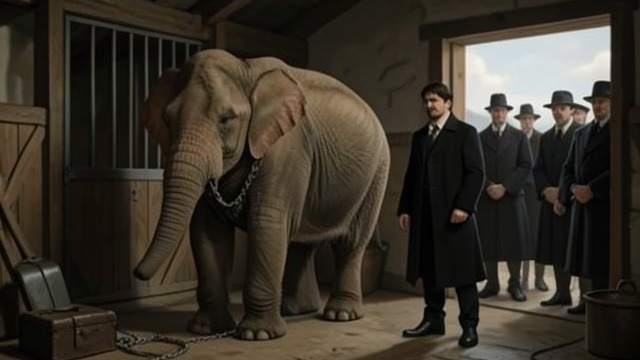
Detained as a Criminal
A creature under guard
Police chain the elephant in a stable after she appears through the roof. The authorities confront an unprecedented event by placing the animal in custody.
Guilt questioned
Leo Matienne argues that the elephant did not choose to cause the damage. His objection challenges the impulse to treat the visible creature as responsible for the magician’s act.
A Chief Without a Rule
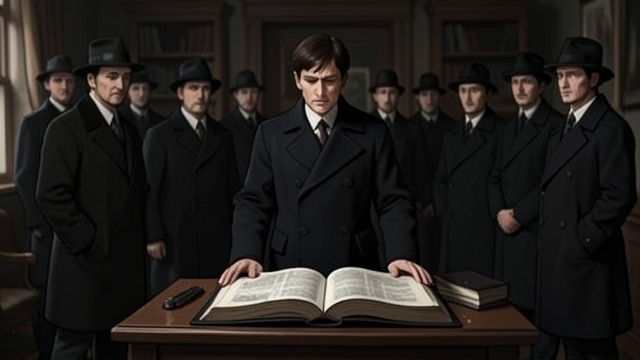
A Chief Without a Rule
The handbook fails
The chief of police cannot find guidance for a magical elephant in the police handbook. Subordinates offer guesses rather than workable solutions.
Law meets uncertainty
The chief’s frustration shows the limits of procedure when reality exceeds its categories. Leo’s question—whether an unwilling elephant can be guilty—makes the dispute moral as well as administrative.
Private Property
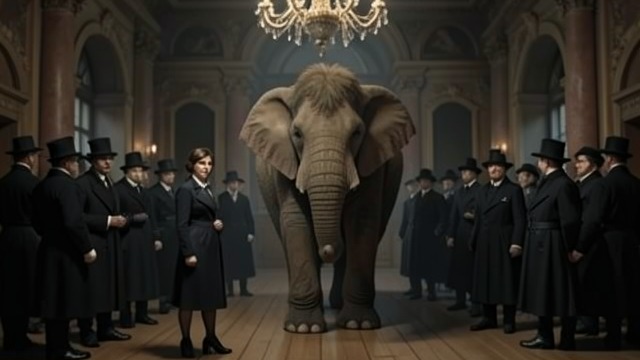
Private Property
Ownership purchased
Countess Quintet pays for the elephant and installs her in a ballroom. The transaction gives one household control over the creature’s movement and public appearance.
Freedom remains absent
The elephant’s transfer changes her keeper, not her condition. The property claim conflicts with her evident homesickness and with citizens’ desire to see her.
Access Without Release
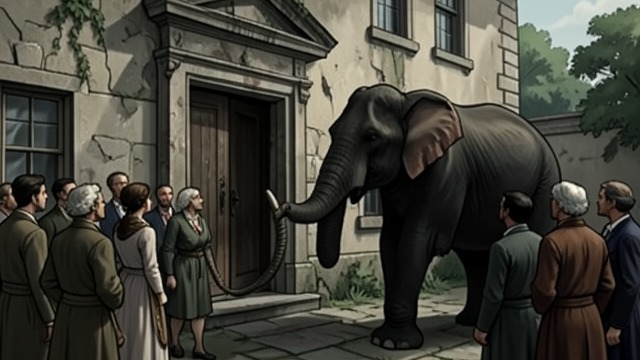
Access Without Release
The crowd admitted
Countess Quintet opens the house to ordinary people for a free viewing. The gesture offers access while preserving her authority over the elephant.
The moral contradiction
Visitors can stand near the elephant, but she remains overwhelmed and captive. Public curiosity does not become protection simply because entry is free.
A Door Opened by Choice
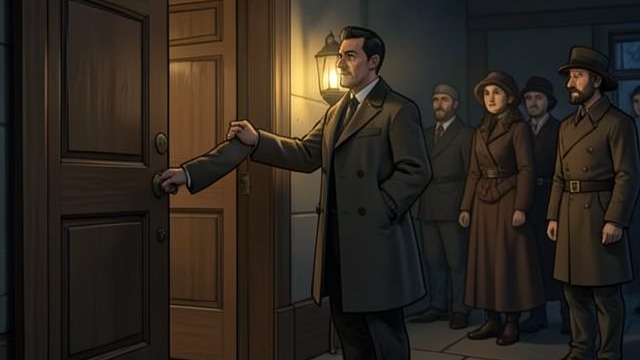
A Door Opened by Choice
Possession challenged
The group knocks at the countess’s door and asks for the elephant. Bartok Whynn weighs the danger of disobeying the household that employs him.
A moral claim prevails
Bartok recognizes the visitors from his dream and lets them pass. Their action rejects ownership as the final word and treats the elephant’s need to go home as more urgent.
The hours after the opera accident
During the police chief's consultations
After Countess Quintet pays for the transfer
On the first monthly viewing day
During the snowy night escape
