The elephant’s homesickness
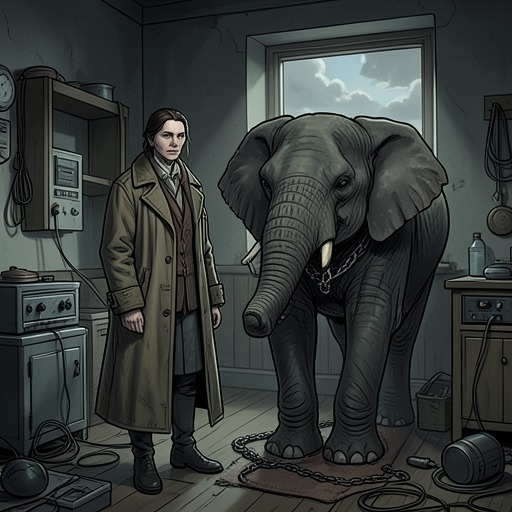
The Magician's ElephantThe elephant’s homesickness is the novel’s account of displacement as more than a change of place: it is the pain of being separated from a world, a family, and a sense of belonging that she cannot recover by simply closing her eyes. After she is summoned into Baltese, she knows that she is not where she should be. Her captivity in Countess Quintet’s ballroom turns that first certainty into sustained anguish, and Peter’s recognition of her heartbreak makes her need to go home a matter of life and death.
Displacement and the First Recognition
After the violent arrival leaves her dizzy, the elephant opens her eyes and finds herself somewhere she does not know. The distinction she can make is not between one familiar place and another: she knows only that this place is not where she should be and not where she belongs. Homesickness begins, then, before she can understand the circumstances of her arrival. It is an immediate recognition of wrongness, not a considered judgment about Baltese or its people.
Her displacement is also involuntary. The city’s police chief cannot find guidance in the handbook for a beast that has appeared from nowhere, destroyed an opera-house roof, and crippled a noblewoman. One policeman proposes classifying the elephant as a criminal, but Leo Matienne objects that she did not choose to crash through the roof. His comparison is pointed: blaming the elephant for the damage would be like blaming a rock thrown through a window rather than the person who threw it. The argument does not itself relieve her distress, but it clarifies the injustice beneath it. The elephant is made to bear the consequences of an event she did not intend and had no power to prevent.
Captivity and Bodily Distress
The Countess Quintet arranges for the elephant to be brought to her home. Because the existing house has no door wide enough for her, a dozen craftsmen work around the clock; within a day they knock down a wall and install an enormous, brightly painted, handsomely decorated door. The elephant is brought through it under cover of night by the chief of police. Once the door is closed and locked behind him, the countess claims her as property, having paid the opera-house owner enough to repair and retile the roof many times over. The scale and ornament of the new entrance serve the countess’s purpose, but they do not make the house a home for the elephant.
The ballroom makes that mismatch impossible to ignore. Chandeliers glitter, an orchestra plays, and the room fills with loud laughter and the smells of roasted meat, cigar smoke, and face powder. These signs of luxury and festivity provoke agony rather than comfort. The elephant tries to will the scene away and keeps her eyes shut as long as she can. Each time she opens them, however, everything is unchanged. The repeated return of the same surroundings makes her inability to escape palpable: wishing the room away cannot alter the fact that she is still there.
Her suffering registers in her body. A terrible pain gathers in her chest; breathing becomes difficult, and the world seems too small. The contrast is stark between the ballroom’s crowded, noisy display and the open life she remembers: her brothers and sisters, her mother, long grass, bright sun, hot days, pools of shade, and cool nights. These are not interchangeable comforts. Together they describe a home made of kinship, landscape, and familiar rhythms, all of which the ballroom denies her.
From Longing to Despair
The countess treats the elephant’s presence as both possession and public entertainment. She arranges a free viewing day on the first Saturday of each month for people excluded from her balls and dinners, presenting the privilege as generosity. The policy changes the audience, not the elephant’s condition: she remains on display in the same place from which she wants to escape. Later, people file past touching and pulling at her, leaning against her, spitting, laughing, weeping, praying, and singing. Their varied responses do not amount to understanding. The elephant is surrounded by attention yet remains profoundly alone.
Her loss reaches beyond unfamiliar surroundings. There are too many things she cannot understand, and her questions turn toward the absent family and environment that define what she has lost. Eventually she stops reminding herself of her name. The detail marks a further erosion of connection: even the act of holding on to her identity no longer sustains her against the confusion and cold. She decides that she would like to die. The thought is not presented as a passing reaction to one unpleasant evening but as the culmination of captivity, separation, and a world she can no longer bear.
Recognition and the Need to Return
Peter’s encounter with the elephant gives her heartbreak a witness. When she stops swaying, holds still, and opens her eyes to look directly at him, she gives him one despairing glance. Peter forgets, for the moment, the other concerns that have occupied him, including Adele, his parents, the fortuneteller, Vilna Lutz, battlefields, lies, promises, and predictions. What takes their place is his recognition that the elephant is heartbroken. He understands that she must go home or she will surely die.
That recognition does not erase the distance between her and the people around her, but it changes the meaning of her distress within the story. The elephant is no longer only a mysterious spectacle or a problem to be regulated and owned. Her expression makes her need legible to Peter, where the countess’s display and the police’s classifications have failed to address it. Elsewhere, Adele dreams that the elephant comes to the orphanage asking to take her somewhere she belongs; Sister Marie cannot understand the elephant’s speech and closes the door, while Adele watches her leave. In the dream, as in the ballroom, the desire for belonging is present but not automatically heard. The elephant’s homesickness thus connects physical displacement with the more difficult question of whether anyone will recognize what another being needs in order to be at home.