early in the summer holidays
A Meeting Over the Garden Wall
[Polly Plummer](entity:character-recall-character-polly-plummer-6c99d8ae3025) met Digory Kirk; he climbed over the garden wall and entered her garden. He had recently come from the country to the city, staying with his aunt and uncle during his mother's illness. His troubles made their first meeting unexpectedly a close acquaintance
during the wet summer holidays
Exploring the Roof Tunnel
Several days of cold and rainy weather led Polly and Digory to explore the attic above two connected houses. Polly showed Digory her smuggler's cave, a hidden space behind the water tank where she kept her treasures and the story she was writing
the morning of the first adventure
The Forbidden Study
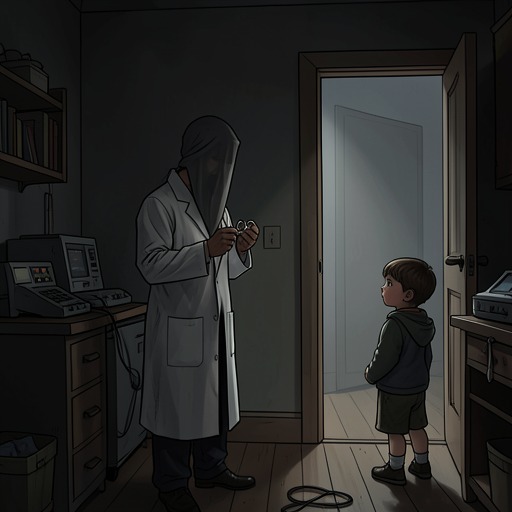
The tunnel did not take Polly and Digory to the empty house, but led them into Andrew Caterly's fully furnished study. The books, the fire, and the ring that made a mysterious hum at first made the place seem only a bit strange; then Andrew stood up from the armchair
immediately after Polly disappears
Andrew’s Atlantean Inheritance
Andrew explained that his aunt, Lady Lefevre, left him an ancient box and told him not to open it, but to burn it directly. He broke the command because he felt himself as a scholar and a magician, not bound by ordinary oaths. He claimed the box came from [Atlantis](entity:location-recall-location-0244f33343b6)
the same morning
Digory Accepts the Rescue
Diggory questioned Andrew, why he sent Polly into a world he himself was too timid to enter. Andrew explained that rescuers must wear a yellow ring and carry two green rings; then he appealed to honor and chivalry, downplaying the risks he himself did not fully understand. Digg
shortly after Digory puts on the yellow ring
The Wood Between the Worlds
Andrew and the study disappeared, and Digory rose from a small pond to a forest full of many similar ponds, warm and peaceful. He soon found Polly resting against a tree; this place made them forget how they had come here, and even who they were, until the piglet wearing a yellow
after the children test the return route
Marking the Home Pool
Diggory speculated that other ponds might lead to other worlds among the trees between the worlds. Polly insisted on confirming they could return before exploring, so they briefly went back to their world and changed their rings before reaching Andrew's study
later that same morning
The Ruins of Charn
The green ring brought Digory and Polly into a city illuminated by red light. Under the dark sky, the tall buildings were in ruins. They explored the empty palace, passing dry fountains, collapsed stone walls, and lifeless courtyards, finally arriving at a room where a row of royal
during the children’s exploration of Charn
The Bell and the Awakening
Polly wanted to leave the magic room without touching anything, but Digory was thinking that he might never know what the bell would sound like. Their argument became heated; as Polly was about to leave, Digory stopped her and rang the bell
immediately after Jadis awakens
Jadis’s Account of Charn
[Jadis](entity:character-recall-character-jadis-12e1ee8e4d7e) led the children through the collapsing palace and cast a spell to destroy the great outer gate. Outside, she told them that [Charn](entity:location-recall-location-charn-e943e7161fa2) was once a powerful city, now lifeless, shrouded under the dying sun; she called herself the last queen of Charn, and the ruler
on the terrace above Charn
Jadis Demands a New World
[Jadis](entity:character-recall-character-jadis-12e1ee8e4d7e) learned that Digory and Polly came from a younger world, and she decided that world was worth conquering. She thought that Andrew must be a great king and a magician, and that it was he who cast a spell to summon her so that she could take his beauty and power
minutes after the children escape Charn
The Witch Enters Andrew’s Study
[Jadis](entity:character-recall-character-jadis-12e1ee8e4d7e) appeared from the pond leading back to her homeland, still holding Polly, but the forest between worlds made her weak and fearful. The children rescued Polly and then returned to Andrew's study, while Jadis clung tightly to Digory. As Jadis entered their world, her strength and
shortly after Jadis leaves the study
Polly’s Bargain with Digory
After Jadius chased Andrew away, Polly prepared to go home through the roof tunnel. Digory asked her to come back, saying he couldn't handle the danger alone; but she pointed out that he had hurt her at [Charn](entity:location-recall-location-charn-e943e7161fa2), disrespected her judgment, and had not apologized yet
later that morning
Andrew’s Vanity and Aunt Letty’s Defiance
Andrew returned to his bedroom, drank alcohol, and carefully dressed himself, fantasizing about a romantic encounter with [Jadis](entity:character-recall-character-jadis-12e1ee8e4d7e). His arrogance made him forget how much fear Jadis had instilled in him, and he also forgot that he could never control her. He went downstairs to ask his sister, Let
the afternoon after Jadis leaves the house
Digory Waits for the Witch
Diggory heard that Leticia Caterpillar was unharmed after falling, and he remained by the front window ever since, waiting for Judith and Andrew to return. He was worried that the witch might be attacking people elsewhere in [London](entity:location-recall-location-london-420923d4a60a), but he could not think of anything to do except to
later that afternoon
Jadis’s Rampage in London
[Jadis](entity:character-recall-character-jadis-12e1ee8e4d7e) returns at the head of a chaotic pursuit, standing on a runaway hansom cab and then riding the horse after the vehicle crashes. A jeweller accuses her of theft, policemen try to question Andrew, and a crowd gathers around the Witch and the frightened horse. Andrew’s attempts to explain himself are lost beneath the commotion.
The Cabby steps forward to calm his horse, [Strawberry](entity:character-recall-character-5f53dab839db), and asks Jadis to get down. She answers by proclaiming herself Empress and tearing a crossbar from a lamp-post to use as a weapon. She strikes policemen and threatens to destroy the city, turning the street into an immediate public danger.
during the fight at the lamp-post
The Children Seize Jadis
Polly appears after being released from her two-hour punishment and joins Digory in trying to stop [Jadis](entity:character-recall-character-jadis-12e1ee8e4d7e). Digory tells Polly to hold on and use a yellow ring when he gives the signal. He repeatedly tries to grab Jadis while she lashes out with the iron bar, until he finally catches her ankle and calls to Polly to act.
The two children vanish from the street with Jadis, Andrew, [Strawberry](entity:character-recall-character-5f53dab839db), and [the Cabby](entity:character-recall-character-6781c7abc4e2) caught in the chain of contact. Instead of escaping the Witch alone, Digory has accidentally brought the other bystanders with them. The transfer leaves the crowd, the wrecked cab, and the injured policemen behind in [London](entity:location-recall-location-london-420923d4a60a).
after the children leave London
The Accidental Arrival in Narnia
The group arrives not in [Charn](entity:location-recall-location-charn-e943e7161fa2) or in the Wood Between the Worlds but in a dark, empty place. [Jadis](entity:character-recall-character-jadis-12e1ee8e4d7e) recognizes it as nothingness, while Andrew panics and [the Cabby](entity:character-recall-character-6781c7abc4e2) steadies the others with a hymn. Digory refuses Andrew’s suggestion that he should use a ring to abandon Polly and the rest of the group.
A distant voice begins to sing. As the music grows, stars appear and then a sunrise spreads across a new valley of earth, rock, and water. The travelers witness the beginning of a world, created by the voice of [Aslan](entity:character-recall-character-aslan-f00e3dfd5571).
at the world’s first dawn
The Creation of Narnia
[Aslan](entity:character-recall-character-aslan-f00e3dfd5571)’s song brings grass, trees, flowers, and finally the animals into being. As the land fills with life, the Witch throws the iron bar at Aslan’s head; it glances away without slowing him, and she flees into the new woods. Andrew tries to use the distraction to get the children’s rings, but Digory keeps him back.
The animals gather around Aslan, who gives selected pairs a new kind of life and speech. He names their world [Narnia](entity:location-recall-location-narnia-396f2630d802), calls it awake, and tells the [Talking Beasts](entity:creature-recall-creature-talking-beasts-c96997a6a71a) that the land and its creatures are theirs to cherish. Their first spontaneous joke breaks the solemnity, and Aslan tells them that speech brings jokes as well as justice.
during Narnia’s first hours
Andrew Among the Talking Beasts
Digory, Polly, and [the Cabby](entity:character-recall-character-6781c7abc4e2) approach the newly awakened animals, who are puzzled by the humans and unsure what to make of them. [Strawberry](entity:character-recall-character-5f53dab839db) remembers fragments of his former life as a [London](entity:location-recall-location-london-420923d4a60a) cab horse and recognizes the Cabby. The Cabby tells him about his care for the horse, and Strawberry agrees to carry Digory toward [Aslan](entity:character-recall-character-aslan-f00e3dfd5571).
Andrew remains apart, interpreting Aslan’s song and the animals’ speech as frightening noises because he refuses to accept what he is hearing. When the beasts approach him, he faints. They debate whether he is an animal or a tree, then plant him and water him, unable to understand why their strange new creature behaves as it does.
later on Narnia’s first day
Digory Confesses to Aslan
[Strawberry](entity:character-recall-character-5f53dab839db) carries Digory to [Aslan](entity:character-recall-character-aslan-f00e3dfd5571)’s council, where Digory admits that he brought the Witch into [Narnia](entity:location-recall-location-narnia-396f2630d802). Pressed to explain, he tells the truth: he woke [Jadis](entity:character-recall-character-jadis-12e1ee8e4d7e) by striking the bell, even though Polly had not wanted him to do so, and he had been pretending that enchantment made him act.
Aslan tells his councillors that evil has entered the new world through Digory, but promises that the worst consequence will fall on himself. He also insists that Adam’s race must help repair the harm. Digory’s confession gives him a path toward responsibility rather than concealment.
during Narnia’s first day
Frank and Nellie Chosen as Monarchs
[Aslan](entity:character-recall-character-aslan-f00e3dfd5571) asks [the Cabby](entity:character-recall-character-6781c7abc4e2) whether he would like to live in [Narnia](entity:location-recall-location-narnia-396f2630d802) and whether he could rule its creatures kindly and justly. The Cabby admits that he is not highly educated and is uncertain about fighting, but promises to do his best and refuses the idea of treating free creatures as slaves.
Aslan calls the Cabby’s wife from their world. She arrives in the clothes she was wearing on washing day, and the couple are named Narnia’s first King and Queen. Aslan charges them with protecting the land, doing justice, and ruling without favoritism or oppression. Their ordinary decency, rather than rank or learning, qualifies them for the task.
after the first council in Narnia
Digory’s Quest for an Apple
[Aslan](entity:character-recall-character-aslan-f00e3dfd5571) asks Digory whether he is ready to undo the wrong he has done. Digory agrees, then breaks down and asks again for something to cure his mother. Aslan meets his grief with compassion but explains that [Jadis](entity:character-recall-character-jadis-12e1ee8e4d7e) will return unless [Narnia](entity:location-recall-location-narnia-396f2630d802) is protected by a tree whose seed Digory must bring back.
Aslan directs Digory toward a garden beyond Narnia and gives him help: [Strawberry](entity:character-recall-character-5f53dab839db) is transformed into the winged horse [Fledge](entity:character-recall-character-fledge-608cfd8c050f). Polly is allowed to accompany Digory, and Aslan tells them to find the green valleys through the mountains rather than fly over their highest peaks. The quest now serves both Narnia’s safety and Digory’s test of character.
the first evening after Narnia’s founding
The First Flight West
[Fledge](entity:character-recall-character-fledge-608cfd8c050f) carries Digory and Polly west over [Narnia](entity:location-recall-location-narnia-396f2630d802), past its river, forests, and cliffs, into the mountains beyond the waterfall. They follow [Aslan](entity:character-recall-character-aslan-f00e3dfd5571)’s directions through the valleys, but night comes before they can find the garden. The journey reveals the scale and beauty of the new world while leaving them unsure how much farther they must travel.
At a mountain valley, Fledge eats grass and cannot understand why the children expect a meal. Polly remembers the remains of a bag of toffee. Digory suggests planting the last piece, reasoning that the lamp-post’s iron bar has grown into a tree; they eat the rest and shelter beneath Fledge’s wings for the night.
the next morning
The Toffee Tree
The planted toffee has become a small tree bearing dark, sweet fruit. Digory and Polly eat its fruit for breakfast, and [Fledge](entity:character-recall-character-fledge-608cfd8c050f) samples one before preferring grass. The little tree confirms the strange vitality of [Narnia](entity:location-recall-location-narnia-396f2630d802) and gives the travelers the food they lacked the previous night.
Refreshed, they resume their flight. A sweet scent guides them to a blue lake enclosed by icy mountains and a green hill at its far end. They recognize it as the place [Aslan](entity:character-recall-character-aslan-f00e3dfd5571) described and land on the slope below the garden.
the second morning of the quest
The Garden’s Warning
Atop the hill, Digory finds golden gates in a high green wall. The inscription permits entry through the gates and taking fruit for others, while warning that those who steal or climb the wall will gain their desire along with despair. Digory enters alone, recognizing that the garden is private and that the errand is his to carry out.
He takes a shining silver apple from the central tree and puts it in his pocket. Its fragrance awakens a powerful hunger in him, but the command to take it for someone else keeps him from eating it. A brilliant bird watches from above as Digory turns toward the gate.
inside the garden, moments after Digory takes an apple
Jadis Eats the Apple
Digory discovers [Jadis](entity:character-recall-character-jadis-12e1ee8e4d7e) in the garden, with the core of an apple in her hand and its juice staining her mouth. She has climbed over the wall and eaten the fruit for herself. Though she appears stronger and more triumphant, her face is unnaturally pale.
Jadis tells Digory that the apple promises youth and endless life. She argues that he should use the rings to take another apple home, cure his mother, and claim power with her. Her own choice has already brought her the strength and long life she desired, but the garden’s warning foreshadows the misery attached to taking the fruit in the wrong way.
immediately after Jadis’s appeal
Digory Rejects Jadis’s Temptation
[Jadis](entity:character-recall-character-jadis-12e1ee8e4d7e) tells Digory that a stolen apple could heal his mother and accuses him of valuing obedience to [Aslan](entity:character-recall-character-aslan-f00e3dfd5571) over his family. The temptation strikes at Digory’s deepest fear: that he may be able to save his mother but choose not to. He nearly yields, knowing the apple could end her suffering.
The Witch’s suggestion that he leave Polly behind exposes her selfishness and breaks the spell of her argument. Digory realizes that Jadis’s concern for his mother is merely another means of getting what she wants. He refuses, gets Polly onto [Fledge](entity:character-recall-character-fledge-608cfd8c050f), and flies away with the apple still untasted.
later that day
The Return to Aslan
[Fledge](entity:character-recall-character-fledge-608cfd8c050f) carries the children east through the mountains and over the waterfall back into [Narnia](entity:location-recall-location-narnia-396f2630d802). Digory remains troubled and is not entirely sure that he has made the right choice, but the memory of [Aslan](entity:character-recall-character-aslan-f00e3dfd5571)’s tears when he spoke of his mother steadies him.
At sunset, Digory approaches Aslan and gives him the apple as requested. The delivery completes the errand and shows that Digory has chosen a promise and the good of Narnia over an immediate, private solution to his mother’s illness.
Narnia’s first day, after the return from the garden
The Planting of the Protection Tree
[Aslan](entity:character-recall-character-aslan-f00e3dfd5571) tells Digory to throw the apple toward the riverbank, where its seed can grow. The apple lands in soft earth, and attention turns to the coronation of [Frank](entity:character-recall-character-fb5f1ba0ee79) and [Helen](entity:character-recall-character-1586adcc6a04). Nearby, the Narnians uncover Andrew, who has spent the day confined in an enclosure after their attempts to feed and plant him left him soaked, muddy, and frightened.
Aslan explains that Andrew cannot hear his voice as anything but a growl, because he has made himself unable to receive what might help him. Aslan gives the exhausted magician sleep instead of forcing a lesson on him. The seed grows swiftly into a silver apple tree, and Aslan commands the Narnians to guard it: [Jadis](entity:character-recall-character-jadis-12e1ee8e4d7e) will not come within a hundred miles of its life-giving presence.
shortly after the Protection Tree is planted
Frank and Helen’s Coronation
The new king wears a formal suit and makes his debut. Digory sees that [Frank](entity:character-recall-character-fb5f1ba0ee79)'s former sharpness and quarrelsome nature have transformed into a more generous manner. The Narnian dwarf crafts a crown from the branches of a golden tree that grows where Andrew's coin landed; the king's
after the coronation
The Apple’s True Cost
When Digory and Polly told [Aslan](entity:character-recall-character-aslan-f00e3dfd5571) that [Jadis](entity:character-recall-character-jadis-12e1ee8e4d7e) had eaten an apple, Aslan explained that the fruit gave her what she sought: an inexhaustible power and endless years. But because she had stolen the apple for herself, the remaining fruit became a terrible thing for her; the immortality
after Aslan explains the apple’s consequences
The Gift for Digory’s Mother
[Aslan](entity:character-recall-character-aslan-f00e3dfd5571) distinguished the fruit that [Jadis](entity:character-recall-character-jadis-12e1ee8e4d7e) coveted, from the gift that Digory earned through obedience and service. He told Digory that the apple he brought could cure his mother, and would not bring the catastrophic consequences of stealing the apple, and allowed him to pick one from the new tree
during the return through the Wood Between the Worlds
The End of Charn
[Aslan](entity:character-recall-character-aslan-f00e3dfd5571) showed the children that the pond once leading to [Charn](entity:location-recall-location-charn-e943e7161fa2) is now a dry hollow. Charn's world has completely ended, as if it had never existed; the children were told to take its fate as a warning. Aslan warned that their own world has not yet become corrupt to this
minutes after returning to London
Digory Gives His Mother the Apple
The crowd reappeared outside the Caterpillar's house, still the same group of people as when they left, and the room was in a state of disorder. [Jadis](entity:character-recall-character-jadis-12e1ee8e4d7e), [Strawberry](entity:character-recall-character-5f53dab839db), and the driver were nowhere to be found, as if no one had noticed the children had disappeared and then returned
that evening
The Apple Core Is Planted
Diggory buried the apple core in the garden. The next day, the doctor said that his mother's improvement was extraordinary, but also reminded them not to have unrealistic hopes. Diggory and Polly met again, carefully discussing her recovery, while Polly confirmed that she had collected the ring. They
over the following six weeks
Mabel’s Recovery
Diggory's mother was gradually becoming stronger. Within two weeks, she could sit outside; within a month, the house was completely renewed: the rooms were bright, flowers bloomed, she sang again, and played with Diggory. As the family's life improved, Aunt Letitia also
the centuries after Narnia’s founding
Narnia’s Peaceful First Reign
[Frank](entity:character-recall-character-fb5f1ba0ee79) and [Helen](entity:character-recall-character-1586adcc6a04) and their descendants ruled [Narnia](entity:location-recall-location-narnia-396f2630d802), their second son becoming King [Archenland](entity:location-recall-location-archenland-33432cf8967b). For hundreds of years, Narnia enjoyed peace before [Jadis](entity:character-recall-character-jadis-12e1ee8e4d7e) or other enemies threatened this land. The lamp-post that Jadis accidentally brought from [London](entity:location-recall-location-london-420923d4a60a) is still shining in the forest, the place
when Digory is middle-aged
The Wardrobe’s Making
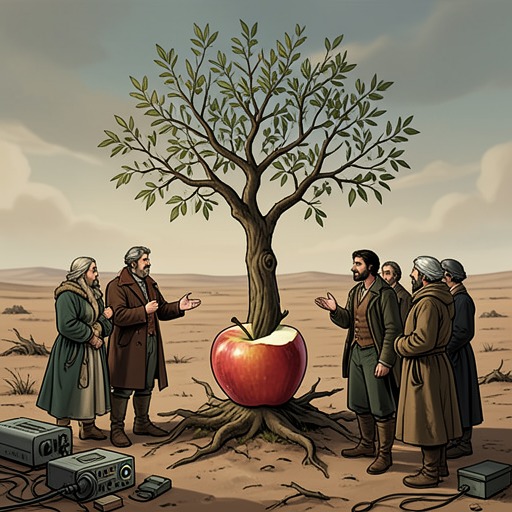
Many years later, Digory became a professor and became the owner of the old Catterick house. A fierce storm uprooted the great tree that had grown from an apple nucleus. He could not bear to see it cut into firewood, so he had some of the wood made into a
in Andrew’s later years
Andrew’s Quiet Old Age
The Dorigis took Andrew to live in the country, so that Aunt Letitia would not have to care for him alone, and also to prevent him from causing trouble. Andrew never again tried magic, because he had realized that his experiments might put him in danger he could not control