
The Danger of Self-Justification
The Magician's NephewThis flow traces the shared rhetoric by which Andrew and Jadis excuse harm as the right of exceptional people.
increasing Bearing strength in each event
 decreasing
Bearing strength in each eventdecreasingAndrew’s Exceptional Claim

Andrew’s Exceptional Claim
Rules selectively applied
Andrew argues that ordinary moral rules are for ordinary people, not great thinkers. He treats his intelligence as permission to break promises and experiment on living creatures.
Digory sees through it
Digory recognizes that the language of a lonely destiny conceals self-interest. The scene provides an early measure for judging later claims of power.
Jadis’s Royal Argument

Jadis’s Royal Argument
The ruler above the rules
Jadis insists that a queen cannot be judged by the standards applied to ordinary people. She treats the people of Charn as existing for her will.
The same logic enlarged
Her justification resembles Andrew’s, but its consequences include the annihilation of a world. Political rank and magical power magnify rather than excuse her choices.
Andrew Sees a Commodity
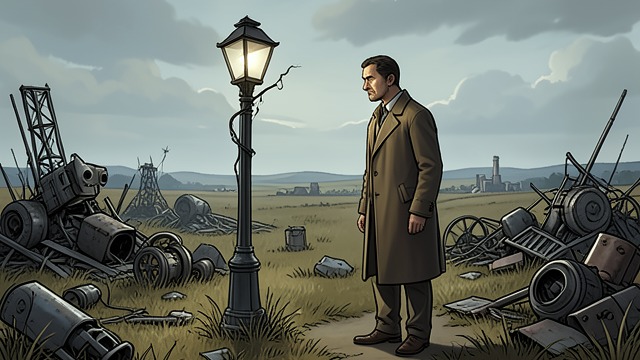
Andrew Sees a Commodity
Wonder reduced to profit
Andrew watches the lamp-post grow and imagines producing railway engines and battleships from scrap. He turns the new world’s living growth into a business opportunity.
The pattern persists
Even after entering a world he once wanted to study, Andrew thinks chiefly about money, health, and survival. His practical reasoning blocks wonder and ethical reflection.
The Consequence of Desire
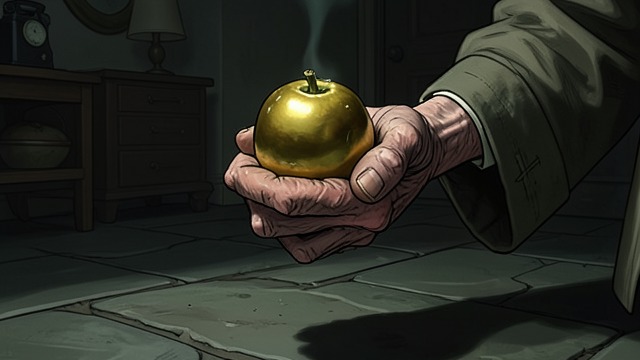
The Consequence of Desire
A wish granted literally
Jadis receives the endless life and strength she wanted. Yet the fruit’s proper use matters, and its scent becomes a source of dread to her.
Satisfaction becomes misery
Aslan explains that people can obtain their heart’s desire without liking what follows. The lesson applies to Andrew’s ambitions as well as Jadis’s, though their outcomes differ.
A Warning About Tyrants

A Warning About Tyrants
The pattern reaches outward
Aslan warns that their own world may be ruled by tyrants who disregard justice and mercy. Charn’s history is not safely confined to another universe.
Responsibility replaces exceptionalism
The children are told to bury the rings and prevent further misuse. The command rejects the idea that dangerous knowledge belongs to anyone simply because they can obtain it.
during his account of his experiment
when Jadis recounts the destruction of Charn
during Narnia’s early growth
after Jadis eats the apple
just before the children return to their world
