
The Competing Meanings of Law
The Man Who LaughsThe novel places laws that protect property and hierarchy beside legal practices that punish the poor and fail to repair injury.
increasing Bearing strength in each event
 decreasing
Bearing strength in each eventdecreasingThe Child Protection Paradox
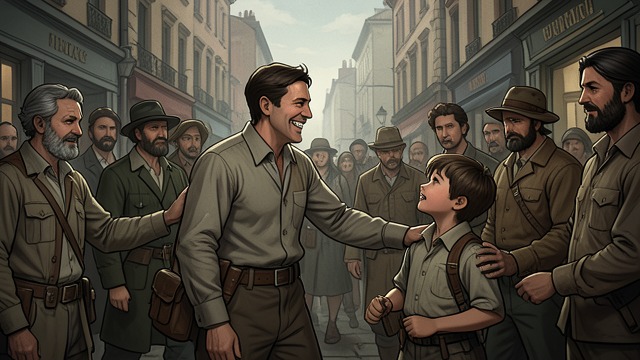
The Child Protection Paradox
A law against abuse
The government targets the Comprachicos’ trade in children.
The decree reflects a new effort to control the wandering network.
Its declared purpose is protection rather than profit.
A harm produced indirectly
Poverty makes some families fear accusation more than abandonment.
Children are left behind to make escape easier.
The novel distinguishes good legal aims from outcomes shaped by social conditions.
Silence Under Arrest
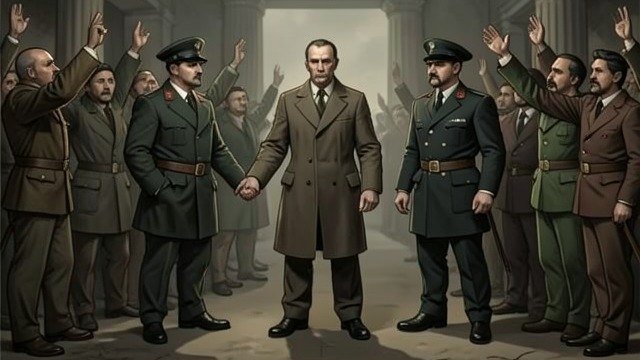
Silence Under Arrest
No charge explained
Gwynplaine is commanded to follow without being told why.
The officers expect obedience and prevent others from intervening.
The procedure makes legal power feel arbitrary to its subject.
Safety through silence
Ursus counsels Gwynplaine not to speak until questioned.
Fear makes silence a practical means of survival.
The same silence can protect the vulnerable and assist authority.
Torture as Procedure
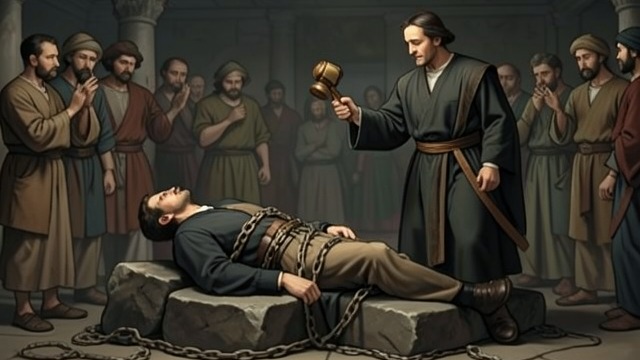
Torture as Procedure
Pain given legal names
Officials describe the peine forte et dure as a lawful test.
Hardquanonne lies chained beneath stones while the court questions him.
Formal language disguises physical cruelty as ordinary justice.
A confession purchased
His identification of Gwynplaine satisfies the court’s demand for proof.
The procedure kills the person it compels to speak.
The episode questions whether legality can make injustice humane.
Inheritance Restored
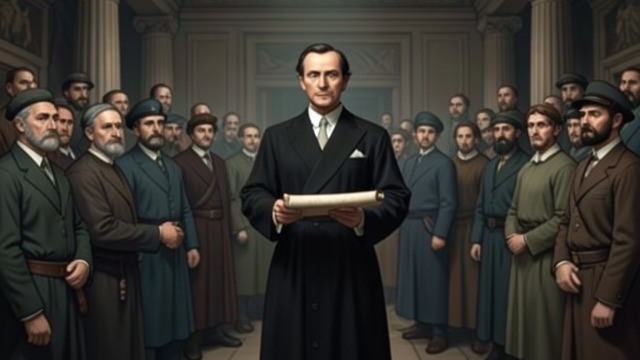
Inheritance Restored
Law corrects a wrong
The Crown and Chancellor acknowledge Gwynplaine’s legitimate descent.
His peerage and estate are restored through official procedure.
The law proves capable of reversing a political dispossession.
No full remedy
Restored property cannot return his childhood or heal his face.
The process also removes him from his adopted family.
Legal justice repairs status while leaving human consequences unresolved.
The Lords’ Legal Blindness
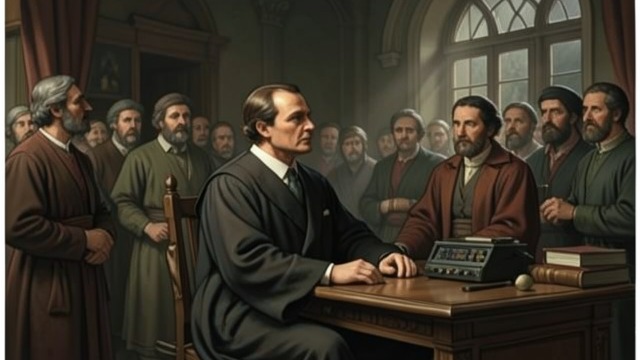
The Lords’ Legal Blindness
Rights without listening
Gwynplaine’s seat gives him a formal right to speak.
His account of suffering receives no serious consideration.
The law recognizes his rank but not the people he represents.
Procedure’s limit
The House can vote budgets and confer titles.
It cannot by ceremony make a privileged class responsive to the poor.
The novel separates lawful authority from moral justice.
After William III’s anti-Comprachicos decree
When the wapentake removes Gwynplaine from breakfast
During the interrogation of Hardquanonne
After the Southwark confrontation
During the House debate on the royal subsidy
